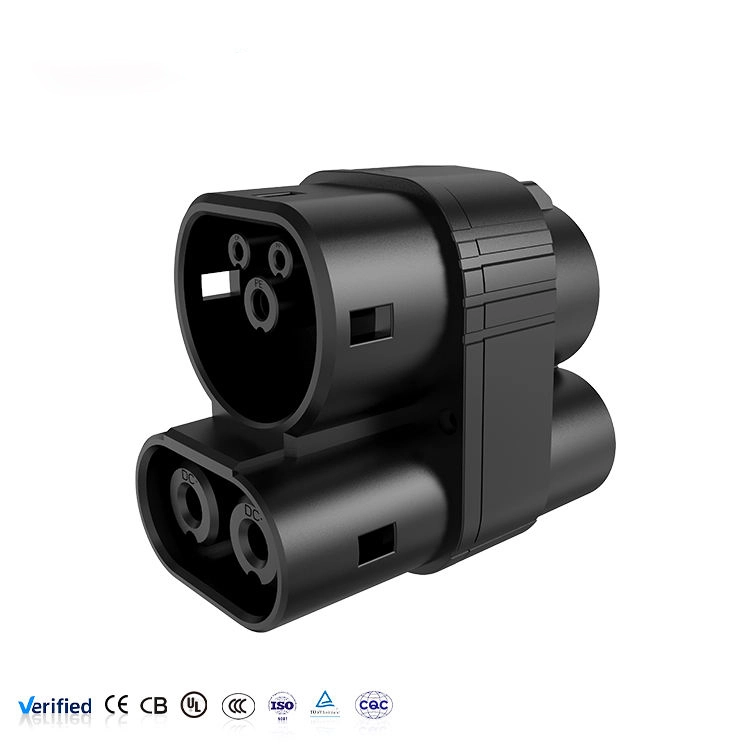
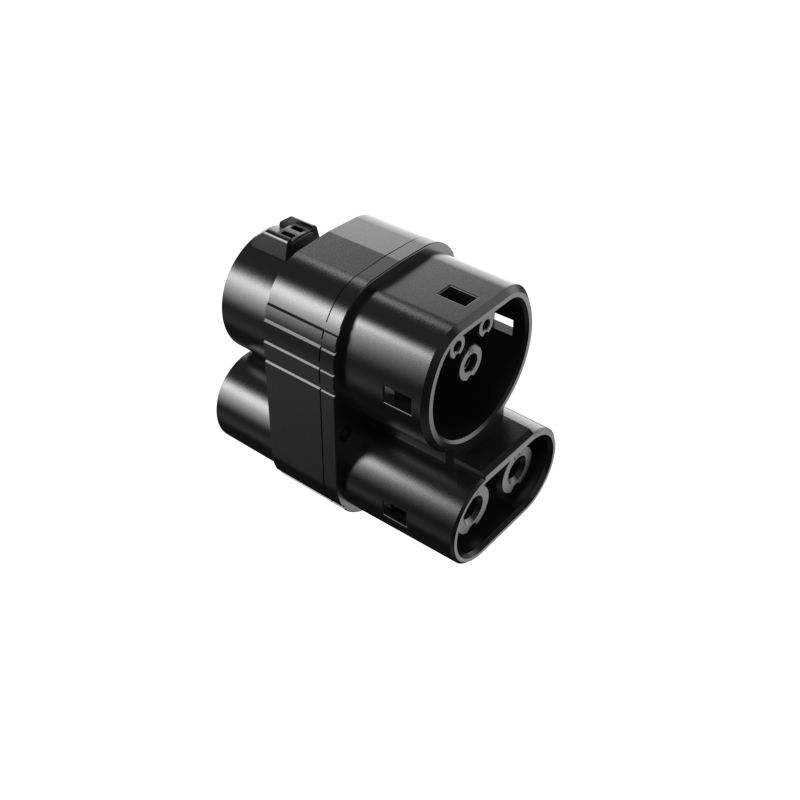
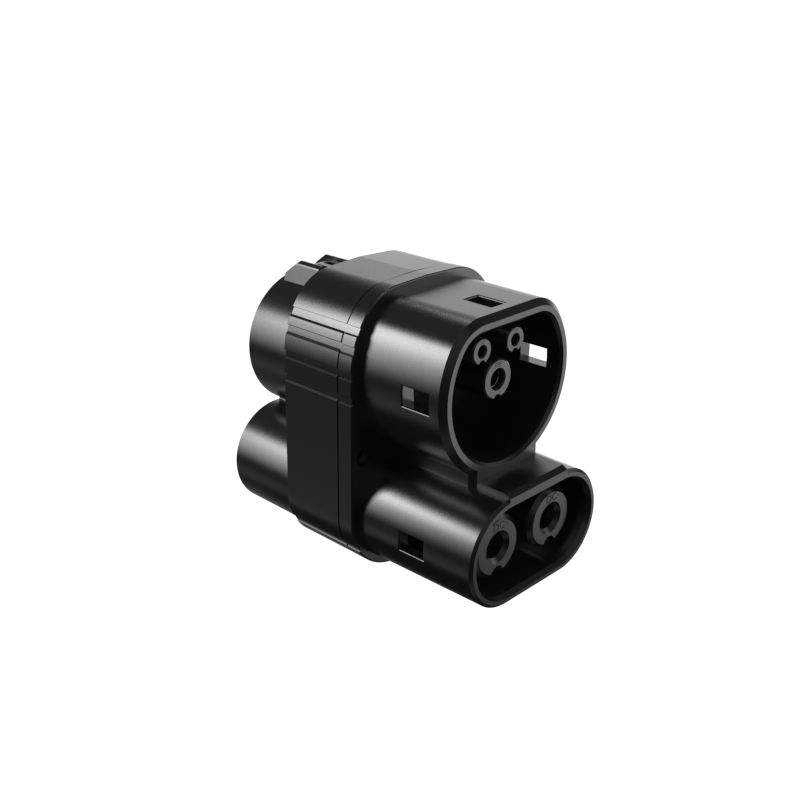
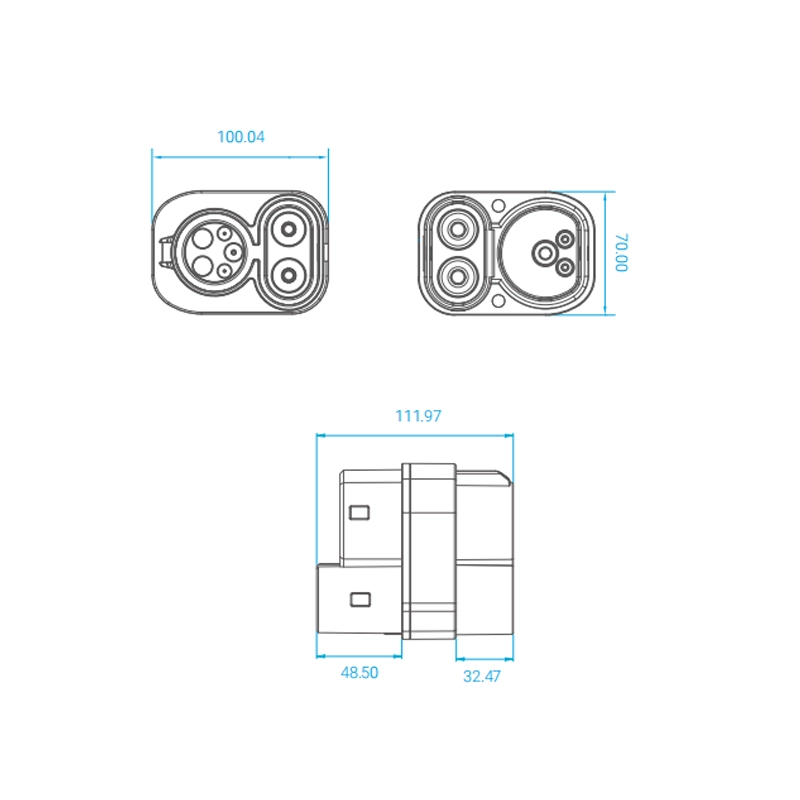
Rated Current: | 150A DC MAX |
Application | Vehicle End, Charging Pile, Charging Pile to Vehicle end |
Operating Voltage: | 240-250V |
Rated Voltage: | 1000V |
Protection Grade | IP55 |
Contact Pin: | Copper alloy, Silver plating |
Case Material | Thermoplastic |
Durability | >10000 times |
Operating Temperature | -30°C to +50°c |
storage Temperature | -40°C to +85°C |
Best EV Charging Adapters
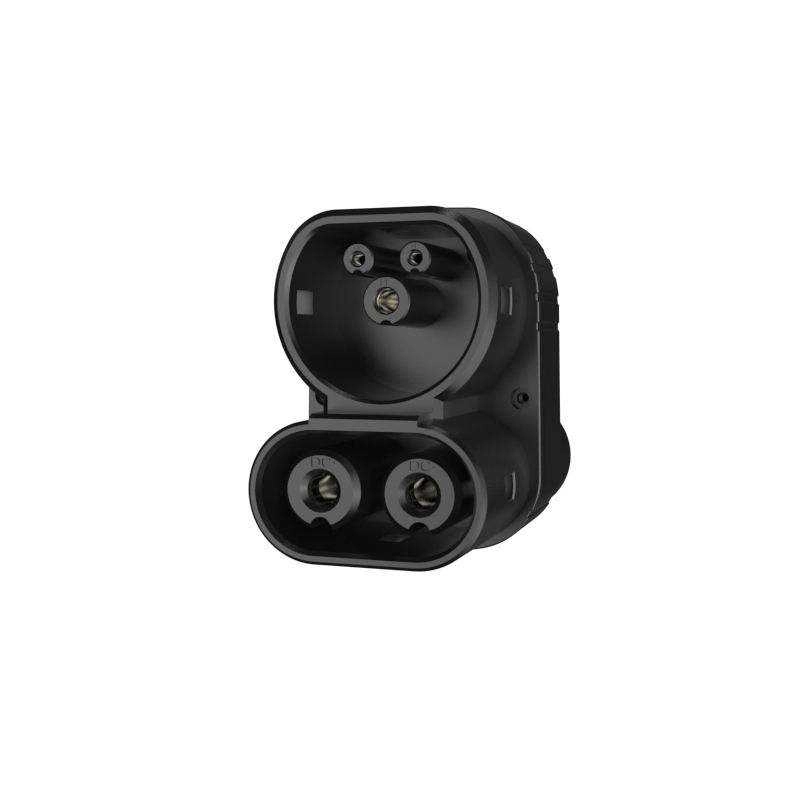
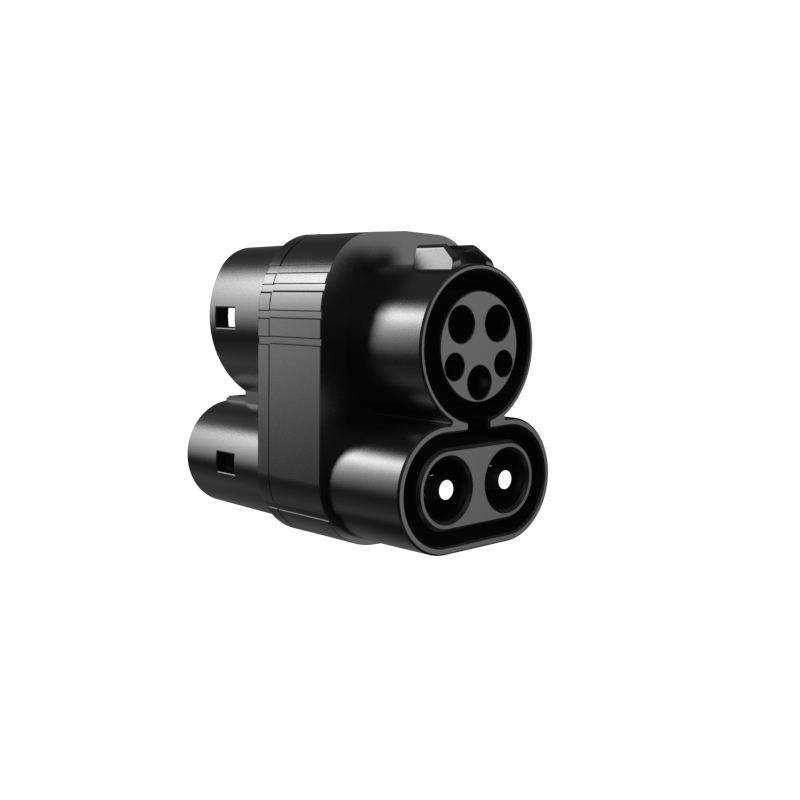
The EV charging adapter combines advanced engineering with user-centered design, offering a seamless charging experience for electric vehicle owners. Its small and exquisite appearance reflects modern aesthetics while ensuring that it easily fits into any storage space. Designed for convenience, it includes a storage bag of highest portability, allowing users to carry it effortlessly wherever they go.
Reliability stands at the core of its design — the adapter integrates a built-in thermostat to prevent thermal disorder, guaranteeing stable performance even under continuous use. In terms of quality, it meets automotive-grade standards, ensuring durability and safety in every charge. Together, these features make the EV charging adapter a compact, reliable, and premium solution for modern electric mobility.

Customized ev charging station series products
With successful projects across Europe, Asia, the Middle East, and Latin America, Anengjienergy has positioned itself as a trusted partner for B2B clients worldwide.
Wide portfolio of EV charger types (3.5kW–480kW).
Global certifications: CE, ISO, and national safety standards.
Integrated remote management platform with real-time data.
Engineering teams offering installation guidance and after-sales support.
By combining innovative design and reliable service, Anengjienergy continues to empower the global transition toward smart, sustainable EV infrastructure.
I bought EV charging adapters for my vehicles, and they work flawlessly. They fit multiple EV brands and make charging easy anywhere. Compact, safe, and durable design. Excellent EV charger supplier with great quality and customer service. Highly recommend!
This EV charger adapter is exactly what I needed. It connects smoothly and charges efficiently without overheating. Perfect for home or travel use. Great quality, fast delivery, and excellent support from a reliable EV charger supplier.
I found a great EV charging adapter that works perfectly with my car and public stations. It’s lightweight, easy to use, and very sturdy. Now I can charge my EV anywhere without compatibility issues. Excellent product and trustworthy EV supplier!
I use this EV charger adapter for Hummer and Tesla, and it performs amazingly. The fit is precise, charging speed is stable, and setup was effortless. Perfect for switching between different EV models. Great product from a professional EV charger manufacturer.
This EV charger adapter for Tesla makes charging so much easier. It’s safe, reliable, and compatible with various charging stations. Great build quality and compact design. Definitely a must-have accessory for Tesla owners looking for convenience!
I’m impressed by the variety of EV charger adapter types available. From Type 1 to CCS and CHAdeMO, everything fits perfectly. Great for users with multiple EVs. High-quality materials, easy to connect, and dependable EV charging accessories overall.
What are EV Charging Adapters?
EV charging adapters are hardware accessories that allow one type of EV connector/interface to work with a different charging plug or station. For example, a vehicle with a CCS1 inlet using a charging station with a NACS (North American Charging Standard) plug might use an adapter to make the connection.
These adapters expand charging access, especially during a time when charging standards are evolving. For example, vehicles may support one plug type today but future stations may use a different one.
Why might you need an EV Charging Adapter?
Here are key reasons:
Connector mismatch / transitioning standards: As standards like NACS gain adoption, vehicles and chargers might be mismatched. Adapters bridge that gap.
Access to more charging stations: Using an adapter can unlock chargers you couldn’t otherwise use — e.g., a Tesla plug station for a non-Tesla vehicle (with the correct adapter).
Future-proofing your EV setup: If your EV supports one plug today, adapter options may allow you to adapt to future infrastructure changes.
Convenience on road trips: You may encounter stations with different plug types — having the right adapter gives flexibility.
What are the main technical & safety considerations for adapters?
When selecting an EV charging adapter, keep these important factors in mind:
Certification and safety standards: For example, in North America, the standard UL 2252 covers EV charging system components including adapters. Using uncertified adapters may be unsafe or disallowed by charging networks.
Current & voltage rating: The adapter must handle the power level (amps & volts) of the charger and vehicle. Mismatched ratings can lead to reduced performance or hazards.
Connector compatibility: Know the plug types: J1772 (AC/Level2), CCS1, NACS, etc. Ensure the adapter matches both sides (vehicle inlet, charger plug).
Charging network policies: Some networks may prohibit use of third-party adapters (especially for high-power DC chargers) due to liability or safety concerns.
Physical locking / interlock features: Quality adapters may include locking mechanisms to prevent accidental disconnection or tampering.
Durability & environment: Outdoor charging may require weather-resistant construction, mechanical robustness, etc.
Comparison Table: Adapter Types & Use Cases
Here’s a table summarising typical adapter use-cases, power levels, and associated risks/considerations.
| Adapter Scenario | Typical Power Level | Use Case | Key Risks/Considerations |
|---|---|---|---|
| J1772 to Tesla (AC Level2) | Up to ~48A/240V | Tesla vehicle uses generic J1772 AC charger | Compatibility of vehicle’s onboard charger, correct mounting & locking |
| NACS to CCS1 (DC fast) | Up to ~500A/1000V in some products | Non-Tesla vehicle uses Tesla Supercharger network (when allowed) | Certification (UL2252), network policy, vehicle firmware support |
| CCS1 to NACS (DC fast) | Similar high power | Tesla vehicle uses CCS network charger | Advisability of third-party adapter, warranty/vehicle manufacturer approval |
| Household plug adapter (e.g., NEMA) | Low power (Level1) | Plugging charger into non-standard outlet | Electrical code compliance, circuit capacity, safety |
Conclusion: Adapters open flexibility, but the higher the power (especially DC fast charging), the more important it is to verify certification, vehicle compatibility, and network policies.
Where to buy & what to check before purchase?
Specialist EV accessory retailers (e.g., adapters for NACS ↔ CCS) like the brand listings you’ll see in product section.
General electronics/vehicle accessory stores — ensure they handle EV-specific adapters, not generic plugs.
Manufacturer direct or authorised dealers (especially when dealing with high-power DC adapters).
Does the adapter support the plug types you need (vehicle inlet vs charger plug)?
Is the adapter certified (UL2252 or equivalent) for the power you intend to use?
Is the charging network you use permitting that adapter? Some forbid third-party adapters.
Is the adapter rated for the current/voltage of the station you’ll use (especially DC fast)?
Does your vehicle manufacturer accept third-party adapters — could warranty or firmware be impacted?
Is the adapter portable, durable, with good locking/mechanical design (especially important for public fast charging)?
Are there user reviews or evidence of successful use?
Important Caveats & Warnings
Even when an adapter physically fits, vehicle firmware, charging station firmware, or network policy may block or de-rate the charging.
Some networks explicitly forbid third-party adapters for safety/liability reasons. Eg. EVgo forbids non-approved adapters.
Using an adapter not certified for high-power DC charging may result in reduced performance, equipment damage or safety risks. Reddit users highlight this concern:
“There are several vendors selling Tesla CCS1 adapters … Some aren’t rated properly and … the charger will push whatever current the car allows.”
Manufacturer warranties may be voided if using non-approved adapters — check with your EV manufacturer.
Certification: UL2252 (or equivalent) is a minimum recommended certification for adapters.
Discover More
Electric Vehicle Charging Station Products
Welcome To Communicate