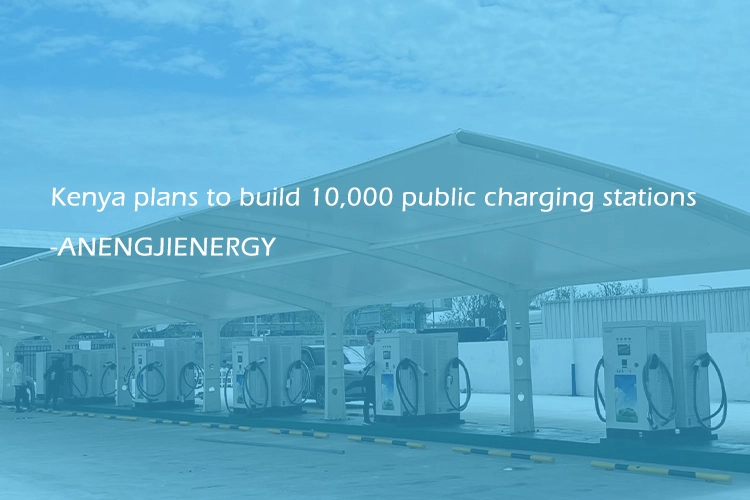
According to a strategy document from Kenya’s Ministry of Energy and Petroleum, Kenya plans to build a charging network in three phases: Phase 1 will invest 1.18 billion shillings to build charging stations in 17 key cities and along major transport corridors, such as the Mombasa-Busia corridor. Phase 2 will invest 1.81 billion shillings to expand the charging network to 23 additional cities. Phase 3 will invest 3.13 billion shillings to connect regional capitals and satellite towns.
This plan, part of the National Energy Compact 2025-2030, aims to address infrastructure deficiencies that hinder the adoption of electric vehicles, particularly outside of Nairobi.
The current plan calls for charging stations to be installed every 25 kilometers along major highways. Kenya Power, the Kenyan utility, is spearheading this major project. The company stated that in the first phase of the expansion alone, 45 fast-charging stations will be installed in six counties: Nairobi, Mombasa, Kisumu, Nakuru, Eldoret, and Nyeri. In addition to government spending and direct investment from Kenya Power, the financing model also includes private sector investment.