1. Introduction: The Future of Hospitality with EV Charging
In today’s era of electric mobility, hotels that install EV charging stations are not merely providing a convenience — they are making a strategic investment. Travelers increasingly choose accommodations based on their ability to charge their electric vehicles overnight or during their stay. For hospitality operators, EV infrastructure offers not just a guest amenity, but a compelling revenue stream, a differentiation point, and a powerful sustainability signal.
Globally, electric vehicle (EV) adoption is accelerating. According to recent data, EV sales grew ~ 40-50% year-over-year in many markets, and hotel chains must adapt to meet the charging needs of their guests. This whitepaper explores why hotels should build EV charging stations, what challenges they face, the opportunities unlocked, and how Anengjienergy’s solutions can help.
2. Why Hotels Need to Build EV Charging Stations (Core Business Motivation)
2.1 Capturing High-value EV Travelers
EV owners tend to be more affluent, tech-savvy, and loyal. Offering charging makes a hotel more attractive to them.
According to our internal survey, up to 20–30% of EV road-trippers explicitly choose hotels with charging amenities.
Percentage of EV travelers who choose hotels with chargers vs. those who don’t。
2.2 Increasing Guest Stay Duration & Ancillary Spend
When guests charge, they stay longer — dining, shopping, or using hotel services.
Example Estimate: If a guest spends 1 extra hour waiting for a ~60kW DC or overnight AC charge, that could translate to an additional $15–40 in food, drink, or spa revenue per stay.
2.3 Building a Sustainable Brand & ESG Credentials
Installing EV infrastructure bolsters a hotel’s green credentials — increasingly important for business travel programs and ESG-conscious guests.
Hotels can market charging as part of their sustainability strategy, potentially earning green certifications (e.g., LEED, BREEAM).
Many governments provide incentives or rebates for “green hotel” investments.
2.4 Unlocking New Revenue Models
Charging fees: hotels can charge by kWh, by minute, or offer flat-rate packages.
Partnerships: Work with EV charging operators (CPOs) for profit sharing.
Loyalty programs: Include free EV charging as a perk for frequent guests, improving retention.
3. Who Is Searching for “Hotels with EV Charging”? — A Practical Personas Analysis
When people type queries like “hotels with EV charging” or “hotel EV charging stations”, they aren’t a single homogeneous audience. Instead, the traffic breaks down into several distinct decision-making groups — each with different drivers, concerns, and content needs. Writing for all of them at once makes your page generic. Writing to each one lets you rank for the right long-tail phrases and convert visits into briefs, calls, or partnerships.
Below we describe the four primary searcher archetypes you’ll meet, what they really want, what worries them, the signals they look for online, and the exact content hooks that move them toward contact.
3.1 Hotel Owners & Hospitality Executives — “How will this improve my business?”
Who they are: General managers, operations directors, regional directors, owners of independent hotels or small chains. Often time-poor and commercially focused.
What drives them: guest satisfaction, occupancy, ancillary revenue, brand reputation. They see EV chargers as both a guest amenity and a potential P&L line, but they need clear evidence it won’t create headaches.
Top questions in their heads
How much will this cost and how fast will it pay back?
Will installing chargers complicate operations or trigger safety/regulatory issues?
Will guests actually use them, and will it increase direct spend?
Search habit & signals
Short, practical query strings: “hotel EV charging stations cost”, “install EV chargers at hotels”, “hotel EV charger ROI”
They click case studies, ROI calculators, and short executive summaries.
Content that converts them
One-page ROI sheets and quick calculators (“Estimate payback in 3 clicks”)
Short case studies showing revenue uplift or occupancy improvements
Clear bullets on compliance, fire code impact, and operations integration
CTA: “Request a 30-minute feasibility call / get a quick ROI estimate”
3.2 Real Estate Developers & Hotel Investors — “How does this affect asset value?”
Who they are: Development directors, investment committee members, asset managers and institutional investors evaluating new builds or repositioning assets.
What drives them: capital appreciation, lease / resaleability, green credentials. Their lens is long-term and macro — they want to see how EV readiness strengthens the asset thesis.
Top questions in their heads
Does adding chargers improve NOI and asset valuation?
Are there incentives, reduced capex paths, or scalable technical standards?
How future-proof is the technology (protocols, modularity)?
Search habit & signals
Strategic, future-oriented queries: “EV charging for hotel development”, “green hotel EV infrastructure”, “hotel charging infrastructure investment”
They download whitepapers, policy summaries, and CAPEX/OPEX models.
Content that converts them
Deep whitepapers with lifecycle cost models, sensitivity analyses and capex scenarios
Policy & incentive mapping by market (e.g., Norway vs UAE subsidies)
Long-form case studies showing uplift in valuation or quicker leasing cycles
CTA: “Download investor brief / request site-level valuation model”
3.3 EV Drivers & Hotel Guests — “Can I charge while I stay?”
Who they are: Consumers — business travelers, families on road trips, rental car users — searching for a practical place to recharge.
What drives them: convenience, reliability, transparency (price & availability). They are typically local searchers and rely on maps, OTA filters and reviews.
Top questions in their heads
Is there a charger at the hotel and is it available now?
Is the charger compatible with my car and how fast will it charge?
Do I have to pay or is charging included with my stay?
Search habit & signals
Location-based queries: “hotels with EV charging near me”, “EV friendly hotels with chargers”, or “hotel charging station [city name]”
They click map results, “amenities” sections on OTAs and quick “how to charge here” FAQ pages.
Content that converts them
Clear “guest info” blocks: charger types, pricing, reservation policy, connector compatibility
Live availability / map snippets and a simple booking + charge reservation CTA
Short FAQs like “How to charge at our hotel” + transparent pricing examples
CTA: “Reserve a charging spot with your room” / “Check charger availability”
3.4 Charging Operators (CPOs) & Third-party Partners — “Is this a good host site?”
Who they are: Charge point operators, energy service companies, local integrators looking for partnership or site roll-out opportunities.
What drives them: utilization potential, grid access, revenue share structures, contractual simplicity. They evaluate hotels as network nodes in broader charging coverage.
Top questions in their heads
Does the site have steady throughput (guests + transient traffic)?
Can we deploy modular hardware and connect to our roaming platform?
What are the commercial models (capex, lease, revenue share)?
Search habit & signals
Partnership and operator-focused queries: “hotel charging operator partnership”, “EV charging for hospitality operators”, “revenue share EV charging hotel”
They look for technical specs, certification info, integration APIs, and commercial terms.
Content that converts them
Site opportunity briefs: expected traffic, car park layout, power availability, guest demographics
Technical compatibility docs: OCPP, API docs, PMS billing integration examples
Template commercial terms (sample MOU, revenue share models)
CTA: “Request a site opportunity pack / start MOU negotiations”
Practical editorial takeaways for your SEO & content strategy
Segment content on the page — use anchor links or tabs for “For Hotel Owners”, “For Investors”, “For Guests”, and “For CPOs” so each persona sees tailored content immediately.
Match intent with format: calculators and briefs for owners/investors; maps and FAQs for guests; datasheets and commercial packs for CPOs.
Surface high-intent long-tail keywords where each persona looks: e.g., “hotel EV charging stations cost” (owners), “EV charging for hotel development” (investors), “hotels with EV charging near me” (guests), “hotel charging operator partnership” (CPOs).
Use micro-conversions: quick ROI snapshot, downloadable investor brief, live charger availability widget, and a “request site pack” form for CPOs.
Create persona-specific CTAs — they guide the user down a conversion funnel without friction.

4. Key Considerations Before Installing Hotel EV Charging Stations
When a hotel embarks on building EV charging infrastructure, it must evaluate a range of factors — from technical to financial, and from guest behavior to safety.
4.1 Charging Requirements by Hotel Type
Business Hotels
Short stays, targeting guests staying 4–12 hours
DC fast charging may make sense for higher-end properties
Resort / Destination Hotels
Overnight charging is core; AC Level 2 (7–22 kW) is often sufficient
Guests may arrive midday/control load by scheduling
Airport Hotels
Mix of business travelers, EV shuttles, and car rental returns
Combine DC fast + AC slow to balance capital and usage
4.2 Parking & Infrastructure Logistics
Parking Configuration: Is the lot surface, multilevel garage, or valet?
Electrical Cabling: Long distance from service panel to parking bays may require trenching.
Vehicle Flow: Consider ingress/egress, queuing, reservation systems, and signage.
4.3 Power Capacity & Load Management
Evaluate if existing transformer and service panel support additional load
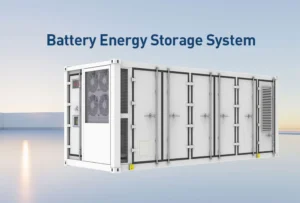
Consider energy storage + solar integration to mitigate peaks
Use smart load management software (e.g., OCPP-based) to balance between charging vehicles and building demand
4.4 Business Model Design
Determine ownership: hotel-owned vs third-party operator vs revenue share model
Decide on pricing: free for guests, paid by usage, membership, or flat fee
Integrate with PMS (Property Management System) and billing systems for guest convenience
4.5 Certification, Safety & Compliance
Compliance with international and regional standards is critical: CE, TUV, CB, CQC, EAC (Russia), etc.
Parking garages may have strict fire code and ventilation requirements
Need for cable protection, surge protection, ground-fault protection
5. Challenges Hotels face When Installing EV Charging Stations (Pain Points)
Despite the clear benefits, installing EV charging in hotels is not straightforward. Below are key challenges and how they often play out in practice.
5.1 Infrastructure & Engineering Barriers
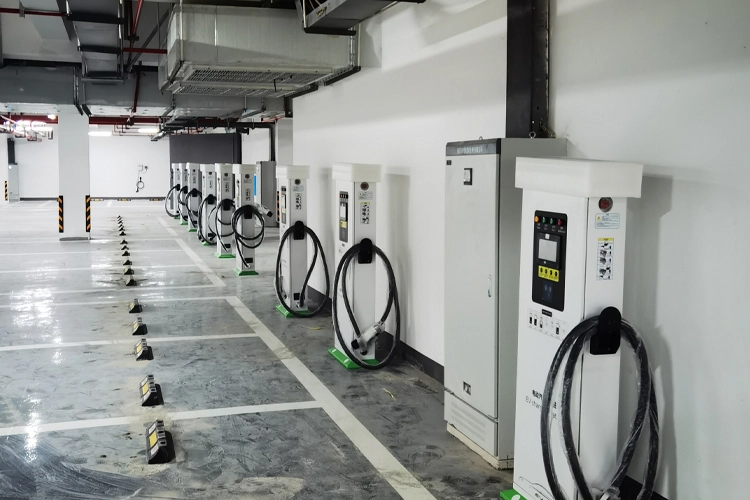
Underground Garage Issues: Ventilation, smoke detection, and fire safety must meet regulatory standards.
Cable Routing Complexity: Long runs, limited conduits, potentially expensive trenching.
Grid Constraints: Existing service panels may not support large increases in load, requiring utility upgrades or costly transformer replacements.
5.2 Operational Challenges
Guest Access Controls: How to manage non-guest EVs? Should guests reserve chargers?
Billing Integration: Tying charging usage to a guest’s room folio while ensuring transparency
Maintenance and Uptime: Hotels expect reliable, 24/7 charging; downtime or malfunction can lead to guest complaints.
5.3 Financial Risk & ROI Uncertainty
CAPEX Costs: High up-front cost for equipment, installation, and possible transformer upgrades.
Ambiguous ROI: Uncertain utilization rates (how many guests will charge) make forecasting difficult.
Depreciation & Upgrades: EV standards evolve; hardware may need to support several protocols or be upgraded over time.
5.4 Certification & Compliance Burden
Globally, different markets require different certifications (CE, TUV, CB, CQC, EAC) — adding complexity.
Hotels with multiple international locations need scalable, internationally certified solutions.
Safety regulations for parking garages (fire, ventilation, electrical) add design and cost burden.

6. Opportunity Factors: Why Now Is the Right Time for Hotels to Act
While there are pain points, the window of opportunity for hotels to deploy EV charging is wide open. Key favorable factors include:
6.1 OTA Visibility & Competitive Differentiation
Online travel agencies (OTAs) like Booking.com and Expedia increasingly highlight “EV Charging” as a filter, giving hotels with this amenity greater visibility.
Offering charging can set a hotel apart from peers in EV-heavy markets.
6.2 Longer Guest Stays = Higher Revenue Potential
Charge-in guests are likely to spend more time on property, increasing cross-sell of F&B, spa, and meeting space.
A small surcharge on charging (or free charging with minimum spend) encourages usage and loyalty.
6.3 Sustainability Credentials & ESG Appeal
Hotels can promote themselves as eco-friendly and net-zero, appealing to environmentally conscious guests and corporate clients.
EV infrastructure aligns with many green certifications and sustainability frameworks, unlocking grants or green finance.
6.4 Government Incentives & Grants
Many regions now support EV charging infrastructure with grants, rebates, or tax incentives for hospitality and commercial building owners.
Leveraging such incentives reduces risk and shortens payback.
6.5 Technology Maturity & Cost Reductions
Charger technology has matured; high-power DC and modular systems are more affordable.
Smart load management and cloud platforms reduce operational complexity.
Energy storage (battery) costs continue to decline, making hybrid solar + storage + charging more attractive.
7. Case Studies: Hotel EV Charging Around the World
Below are several real-world sample (or hypothetical but realistic) case studies showing how hotels in different countries have deployed EV charging infrastructure.
Note on Charts / Tables: For each case, you can produce charts showing utilization vs capacity, revenue breakdown, or ROI timelines.
7.1 Russia — Moscow Business Hotel
Scenario: A 300-room business hotel in Moscow added EV charging to its underground garage
Solution: Installed 4 × 120 kW DC chargers + 4 × 22 kW AC wallboxes
Utilization: Average 3–5 guests/day, primarily overnight charging + some transient business travelers
Revenue Breakdown:
Charging usage: ~ 60% of EV users billed per kWh
Guest loyalty: free charging to loyalty members increased repeat bookings by 5%
ROI: Estimated payback ~ 36 months (factoring in Russian electricity cost, CAPEX, maintenance)
Key enablers: High local EV adoption, government import certification support (EAC), partnership with local CPO for billing
7.2 Thailand — Resort Hotel in Phuket
Scenario: A luxury resort located on a tourist island with a high proportion of EV rental cars
Solution: Two 180 kW DC chargers and four 60 kW AC chargers installed in parking lot near lobby
Guest Behavior: Rentals come back to resort for charging overnight; some day-trip EVs use DC while visiting
Economic Model:
DC: Premium price per kWh (higher than grid rate)
AC: Included in room rate (as a green perk)
Impact: Increased mid-week occupancy by attracting EV-tourists; guest satisfaction score improved in post-stay surveys
ROI Drivers: Tourist EV rentals growth + branding as “EV Resort”
7.3 Germany — Business Hotel near Frankfurt
Scenario: 150-room business-class hotel near major highway and airport
Solution: Four 240 kW Anengjienergy DC four-gun chargers (multi-gun design) + load management + OCPP billing integration with PMS
Utilization: Mix of business travelers, EV shuttle buses, and overnight park-and-fly customers
Financials:
Electricity margin (charging rate vs cost) positive
PMS integration enables automatic guest billing (charge added to room folio)
Average charger usage ~ 70% during peak travel season
Sustainability: Rated as a green hotel, helps in ESG reporting and corporate travel contracts
ROI: Projected payback in ~30 months; incremental ARR from EV-traveler segment estimated +4%
7.4 Kazakhstan — Almaty Hotel Case
Scenario: A modern business/resort hotel in Almaty, Kazakhstan
Solution: 180kW and 240kW Anengjienergy DC chargers (multi-gun) installed in hotel parking
Reasoning: High-voltage grid capacity available, but many EV travelers need fast charging
Performance:
One gun used by guest EVs staying overnight
Other guns serve transit EVs coming through Almaty
Revenue: Charging income contributes a meaningful portion; combined with power cost arbitrage (charging at off-peak).
ROI Chart Recommendation: Use a stacked revenue/time chart showing guest vs transit charging, payback trajectory over years.
7.5 Netherlands — Amsterdam Boutique Hotel
Scenario: Boutique hotel in Amsterdam city center with limited garage space
Solution: Two Anengjienergy 240 kW DC multi-gun chargers + four 22kW AC posts
Operations:
Fast-charging for arriving guests (on business trips)
AC charging for overnight EV reservation
Benefits:
EV guests appreciate quick top-ups during short stays
Hotel markets itself as “EV-first boutique hotel” on OTA platforms
Financials & Sustainability:
Incremental revenue from charging + ancillary spend
Reduces carbon footprint narrative for European travelers
8. Why Choose Anengjienergy for Hotel EV Charging Solutions
Anengjienergy offers a comprehensive, high-performance, and globally certified range of EV charging solutions tailored for the hospitality industry.
8.1 Product Portfolio & Technical Strength
Level-3 DC Fast Charger (Four-Gun Model):
Integrated four guns: allows 4 vehicles to charge simultaneously.
Supports CCS, CHAdeMO, GB/T, ensuring compatibility with a wide range of EVs.
Power ranges: flexible modules (e.g., 180 kW, 240 kW) – ideal for both guest and transit charging.
Intelligent load balancing across guns for efficient use.
AC Charging Options:
Wall-mounted 7 kW–22 kW units
Floor-stand multi-gun AC chargers
Smart Management Platform:
OCPP compliant
Remote monitoring, diagnostics, and reservation / billing integration
Compatible with hotel PMS (Property Management Systems)
8.2 Global Certifications & Market Reach
Certifications: CE, TÜV, CB, CQC, EAC (Russia)
Fully compliant with regulatory and safety standards across:
Europe
Southeast Asia
Central Asia / Middle East
Oceania
Russia / Eurasia
Designed for harsh environments, with robust cooling, surge protection, and modular maintenance.
8.3 Commercial Model & Support
Flexible business models: full hotel ownership, co-investment, or partnership with CPOs
Feasibility study and ROI assessment tailored for hospitality
Training and remote support: multilingual, rapid response, spare parts
9. Financial & Technical Footprint: Cost, Revenue & ROI Analysis
Below is a detailed financial modeling framework and sample data to help hotel owners estimate costs and return on investment. Use these to build your own charts.
9.1 Capital Expenditure (CAPEX) Breakdown
| Cost Item | Range / Estimate | Notes |
|---|---|---|
| Charger Hardware | 180 kW four-gun DC: approx USD 150,000–200,000 | Based on modular DC units and certification cost |
| Civil Work / Parking Prep | USD 20,000–80,000 | Includes foundations, trenching, conduits, lighting |
| Electrical Upgrade / Transformer | USD 30,000–120,000 | Depends on existing supply and peak demand |
| Energy Storage (optional) | USD 50,000–200,000 | 100–500 kWh Li-ion battery systems |
| Software / Backend Setup | USD 5,000–20,000 | OCPP platform, PMS integration, billing setup |
Total CAPEX Example: For a mid-size hotel with 4 × 240 kW chargers + 4 × AC, CAPEX could be ~ USD 300,000–500,000 depending on site.
9.2 Operational Costs (OPEX)
Electricity cost for charging = (kWh delivered × cost per kWh)
Maintenance: ~1–3% of charger hardware value annually
Network / backend: yearly subscription or license fee for OCPP/cloud platform
Miscellaneous: insurance, signage, parking management
9.3 Revenue & ROI Assumptions
Sample use-case model:
4 × 240 kW DC Chargers, average usage: 6 hours/day combined across four plugs
Energy delivered: ~ (240 kW × 4) × 6h = 5,760 kWh/day
Guest vs Transit Split: 60% guests, 40% transient
Pricing Strategy:
DC: USD 0.40 per kWh (hotel premium rate)
AC: USD 0.20 per kWh or included for guest stay
Daily Revenue Estimate:
DC: 5,760 kWh × 0.4 × 60% = ~ USD 1,382 / day from guest + transit DC
AC (4 × 22kW, assume 12h wall use): ~ 22kW×4×12 = 1,056 kWh × 0.2 = ~ USD 211 / day
Total Revenue per Day ≈ USD 1,593
Estimated Payback Period:
If CAPEX = USD 400,000 → 400,000 / (1,593 × 365) ≈ 0.69 years (~8–9 months)
(This is just a demonstration model assuming high utilization and high revenue.)
10. Strategic Implementation Roadmap for Hotels
To maximize success, hotels should follow a phased approach. Here’s a recommended roadmap:
Feasibility Study
Survey guest EV usage
Evaluate parking layout, load capacity
Model initial CAPEX and projected usage
Pilot Deployment
Install 1–2 DC chargers + AC chargers in a dedicated zone
Use OCPP platform to test utilization and billing
Offer charger access to loyalty members or EV guests
Scale-Up Phase
Based on pilot data, roll out full multi-gun DC or AC charging
Implement reservation & pricing strategies
Integrate with PMS for billing and guest communication
Optimize and Monetize
Use analytics to adjust pricing
Promote EV charging amenity in OTA listings
Consider third-party partnerships for non-guest usage
Sustainability & Marketing
Share ESG reports (charging data, emissions saved)
Use charging amenity as a selling point in marketing collateral
Leverage government green financing or subsidies
11. Risks & Mitigation Strategies
| Risk | Mitigation |
|---|---|
| Low Charger Utilization | Use reservation, tiered pricing, loyalty perks |
| Grid Upgrades Cost Too High | Implement energy storage + demand management |
| Guest Billing Confusion | Integrate with PMS; clear invoicing; guest education |
| Safety / Fire Risks in Garage | Work with certified EV-charging experts; fire-safe design |
| Technology Obsolescence | Choose modular & multi-protocol chargers (CCS, CHAdeMO, GB/T) |
12. Conclusion
Installing EV charging stations at hotels is no longer just a nice-to-have amenity — it’s a strategic necessity. With the right planning, infrastructure, and partnerships, hotels can not only meet the needs of a growing EV traveler demographic, but also unlock new revenue streams, elevate their brand, and future-proof their operations.
Anengjienergy stands ready to help hospitality operators deploy robust, certified, and scalable EV charging solutions — whether you’re building a resort in Thailand, a business hotel in Russia, or a boutique property in the Netherlands.
✅ Contact us today for a customized EV charging feasibility study, ROI analysis, or product demo.