Introduction
The South American electric vehicle (EV) market is entering a phase of explosive growth. According to recent 2026 industry forecasts, the regional EV market is projected to reach a valuation of $1.51 billion, with Brazil alone controlling over 65% of sales. Central to this transformation is the deployment of high-power infrastructure. For commercial operators, the most critical performance metric is the efficiency of a DC EV charger, specifically how it addresses the “time-to-charge” barrier for both passenger vehicles and growing commercial fleets.
Understanding the technical nuances of a DC EV charger is essential for optimizing site turnover and ensuring grid stability. This guide provides a comprehensive analysis of charging speeds, infrastructure requirements, and the unique geographical challenges faced across the South American continent.
What Is a DC EV Charger and How Is It Different from a Level 3 Charger?
In the evolving landscape of EVSE (Electric Vehicle Supply Equipment), terminology often overlaps. However, for large-scale commercial deployments, the distinction is purely technical.
DC EV Charger vs AC Charger – Speed Comparison
The primary difference lies in the location of the AC-to-DC conversion.
- AC Charging (Level 1 & 2): These units deliver alternating current to the vehicle. The car’s onboard charger must then convert this to direct current (DC) to store it in the battery. This process is inherently limited by the vehicle’s internal hardware, typically capping at 7kW to 22kW.
- DC Fast Charging: A DC EV charger performs the conversion externally within its power cabinet. By delivering high-voltage DC directly to the battery’s terminals, it bypasses the onboard converter’s limitations, enabling speeds that are 10x to 50x faster than standard AC units.
Why a DC Fast Charger Is Called a Level 3 Charger
“Level 3” is a classification originally derived from SAE J1772 standards. While Level 1 (120V) and Level 2 (240V) use AC power, Level 3 refers to high-voltage DC fast charger systems. In the South American market—from Bogotá to Buenos Aires—the terms are used interchangeably to describe any station capable of delivering 50kW or more.
Common Power Ratings in South America (60kW–240kW)
Market data from early 2026 shows that South American infrastructure is standardizing around four main power tiers to balance equipment cost with grid availability:
- 60kW: Primarily used for urban “dwell-time” locations like supermarkets.
- 120kW: The standard for mid-range commercial charging stations.
- 150kW–180kW: Currently the most sought-after range for highway corridors and fleet charging applications.
- 240kW+: Targeted at ultra-fast transit hubs and heavy-duty electric trucks.
DC Fast Charger Charging Time – How Long Does It Really Take?
The duration of a charging session is determined by the “charging curve.” Unlike a fuel pump that maintains a steady flow, a DC EV charger communicates with the vehicle’s Battery Management System (BMS) to dynamically adjust current based on the battery’s state.
Charging Time for 60kW, 120kW, 150kW and 180kW DC Car Charger
For a modern electric SUV with a 75kWh battery pack, the estimated time to charge from 10% to 80% is as follows:
| Charger Rating | 10% to 80% SoC Time | Estimated Range Added (per 15 min) |
| 60kW DC Charger | ~55 Minutes | 85 km |
| 120kW DC Charger | ~28 Minutes | 170 km |
| 150kW DC Charger | ~22 Minutes | 210 km |
| 180kW DC Charger | ~18 Minutes | 255 km |
How Long to Charge 40kWh vs 60kWh vs 100kWh Batteries
Battery capacity is a direct multiplier for charging time. A delivery van with a 40kWh battery will reach 80% in nearly half the time of a luxury sedan with a 100kWh pack. However, as DC car charger speed increases, the vehicle’s “charge acceptance rate” becomes the bottleneck rather than the charger itself.
Why Most EVs Charge to 80% Faster Than 100%
The “80% Rule” is a safety and longevity protocol. Once a lithium-ion battery reaches approximately 80% State of Charge (SoC), internal resistance increases. To prevent overheating and chemical degradation, the BMS signals the DC EV charger to “taper” the power. Consequently, the last 20% of a charge can often take as long as the first 50%.
What Affects DC EV Charger Charging Time in Real-World Conditions?
Theoretical speeds rarely match real-world performance due to external variables.
Vehicle Battery Management System (BMS) Limitations
The car is the master; the charger is the slave. If an EV is only designed to accept 100kW, it will not charge faster at a 240kW station. Site operators must match their hardware to the dominant vehicle types in their region.
Ambient Temperature in South America (High Heat Impact)
South America’s diverse climate—from the tropical heat of the Amazon to the high altitudes of the Andes—significantly impacts dc fast charger charging time. High ambient temperatures can trigger “thermal derating,” where the station reduces output to protect internal components. Modern liquid-cooled cables are becoming essential for maintaining 180kW+ speeds in high-heat zones.
Multi-Vehicle Load Sharing in Commercial DC Fast Charger Stations
Most commercial DC fast charger units feature dual dispensers. If two vehicles are charging simultaneously, the unit typically uses “dynamic load balancing.” For example, a 180kW unit might split into two 90kW streams, effectively doubling the charging time for each driver.
DC Car Charger Power Requirements and Electrical Infrastructure
Deploying high-speed charging in South America requires a deep understanding of local grid constraints.
Three-Phase Power Requirements for a Level 3 Charger
A DC fast charger requires a robust industrial connection. Unlike home chargers, these systems require Three-Phase 380V or 480V power. In many rural South American highway segments, the lack of 3-phase infrastructure is the primary barrier to deployment.
Transformer Sizing for 150kW and 180kW DC EV Charger
To avoid voltage sags and equipment failure, transformer sizing must exceed the peak demand.
- For a single 150kW unit: A minimum 200kVA transformer is recommended.
- For a cluster of four 180kW units: A dedicated 1MVA transformer is often required.
Managing Demand Charges in Brazil and Chile
In markets like Brazil and Chile, “demand charges” (fees based on the highest peak of power usage) can account for 60% of operational costs. Smart charging software that caps power during peak utility hours is a critical component for any commercial DC car charger deployment.
How to Reduce Charging Time with a High-Power DC Fast Charger Solution
To optimize the dc car charger speed, operators are turning to integrated technology solutions.
Upgrading from 120kW to 180kW DC EV Charger
Moving to 180kW allows stations to support the 800V battery architectures found in newer premium EVs and electric trucks, significantly reducing dwell times and increasing daily revenue per stall.
Using Battery Energy Storage (BESS) to Support Output
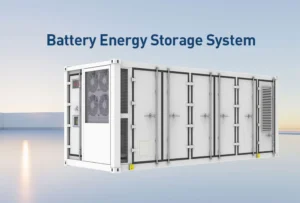
BESS integration is a game-changer for South American sites with limited grid capacity. Onsite batteries can discharge during peak charging events to “boost” the DC EV charger output, ensuring the driver receives maximum speed without triggering massive grid upgrades or demand charges.
Liquid Cooling Technology for 240kW+ Level 3 Charger
For chargers exceeding 200A, traditional air-cooled cables become too thick and heavy for average users. Liquid cooling allows for high-current delivery through ergonomic cables, maintaining peak speeds for longer durations without thermal throttling.
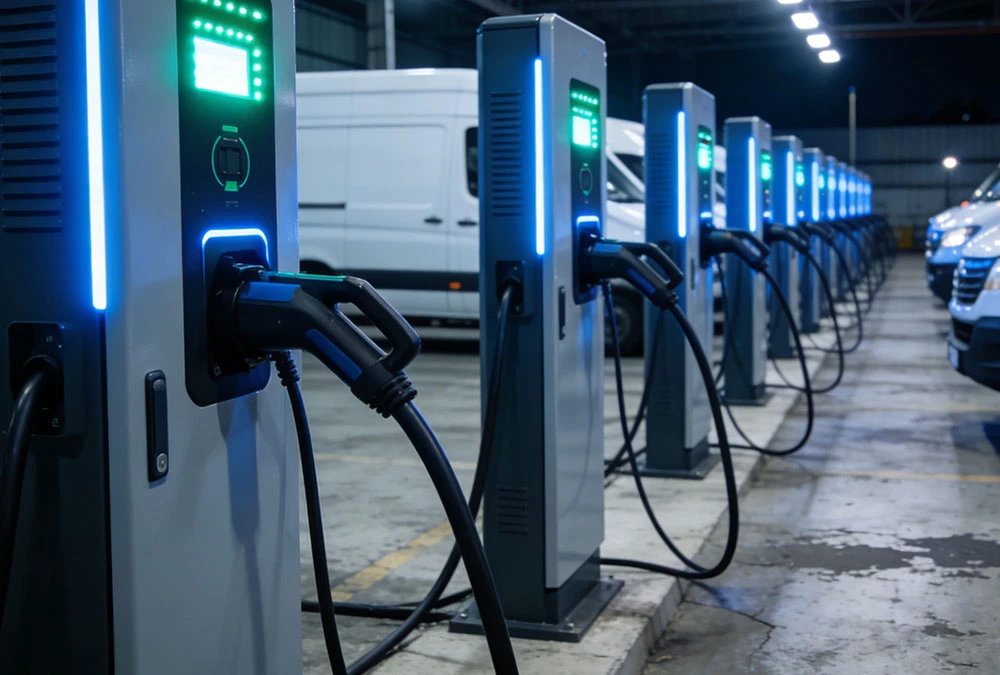
DC EV Charger for Fleet and Commercial Use in South America
The 2026 outlook for South America highlights fleet charging as the fastest-growing segment, particularly in the logistics and public transit sectors.
Bus and Truck Depot DC Fast Charger Applications
Cities like Santiago and Bogotá already host some of the largest electric bus fleets outside of China. These depots require DC fast charger systems capable of sequential charging—powering dozens of vehicles overnight using intelligent energy management to minimize grid impact.
ROI Analysis for Commercial DC Car Charger Deployment
The Return on Investment (ROI) for a DC EV charger in South America is currently calculated between 4 to 7 years. Revenue is driven not just by the electricity margin, but by the “attraction factor” for retail locations and the reduction in fuel costs for logistics fleets.
DC Fast Charger Price and Installation Cost in South America
A successful project requires a realistic CAPEX (Capital Expenditure) budget. Below is an industry-standard breakdown for 2026.
| Cost Component | 150kW DC Station (Est. USD) | 180kW-240kW DC Station (Est. USD) |
| Hardware / Equipment | $32,000 – $48,000 | $55,000 – $85,000 |
| Grid Upgrade / Transformer | $12,000 – $30,000 | $25,000 – $60,000 |
| Civil Engineering & Labor | $8,000 – $15,000 | $15,000 – $25,000 |
| Permits & Software Integration | $3,000 – $7,000 | $5,000 – $10,000 |
Note: High import tariffs in Brazil (returning to 35% for some EV categories by 2026) can influence the final “landed” price of power electronics.
FAQ About DC EV Charger and DC Fast Charger
How long does a DC EV charger take to charge a car?
A DC EV charger can charge most electric vehicles to 80% in 20–40 minutes, depending on charger power (150kW–180kW) and battery capacity. Factors like the vehicle’s charge acceptance rate and ambient temperature can influence this duration.
What is the difference between a DC fast charger and a Level 3 charger?
There is no difference. A DC fast charger is commonly called a Level 3 charger because it delivers high-voltage direct current directly to the battery, bypassing the vehicle’s onboard AC-to-DC converter for significantly faster speeds.
Why is my 150kW DC car charger not charging at full speed?
Charging speed depends on the vehicle’s battery limit, temperature, state of charge (SoC), and grid power availability. If the battery is already above 80% or if the vehicle’s maximum intake is only 100kW, the charger will automatically slow down.
Do DC fast chargers require three-phase power?
Yes. Most commercial DC fast charger units above 60kW require industrial three-phase power and sufficient transformer capacity to handle the high current required for rapid energy transfer.
Can battery storage reduce DC EV charger charging time?
Battery storage helps maintain a stable, high-power output even when the local grid is limited. This ensures the DC EV charger can deliver its maximum rated speed consistently, preventing the grid from throttling the power during peak usage.
Are you ready to optimize your EV infrastructure? Implementing a DC EV charger project in the South American market requires a balance of high-performance hardware and strategic site planning. Would you like us to provide a detailed grid-impact study or a customized ROI projection for your specific location?