Introduction
I have spent years fixing messy field layouts. Most solar asset owners still treat storage as an afterthought. They assume a battery is just an expensive chemical box you bolt onto an inverter. That is a costly mistake. If you launch a utility project today without a rugged, factory-tested Containerized BESS for Solar Farms, you are bleeding cash. Solar generation peaks when the grid rarely wants it. Without heavy-duty storage, your local transmission operator will curtail your output, wiping out your generation margins. The old approach of brick-and-mortar battery rooms is officially dead. Site civil costs are too high, and on-site integration labor is unreliable. A pre-engineered, drop-in container is the only logical choice to secure your investment.
Buyers frequently call me frantic about volatile interconnection demands and structural clip losses. They ask if they can skimp on the enclosure tech to save initial CapEx. My answer is always the same: bad thermal management destroys your cells within three years. A field-integrated containerized battery energy storage system for solar projects solves the real bottlenecks. It handles severe peak shifting, stops solar curtailment, and keeps your project bankable. Let’s look at the hard operational math and layout realities that dictate modern utility asset design.
Why More Solar Farms Are Choosing Containerized BESS Solutions
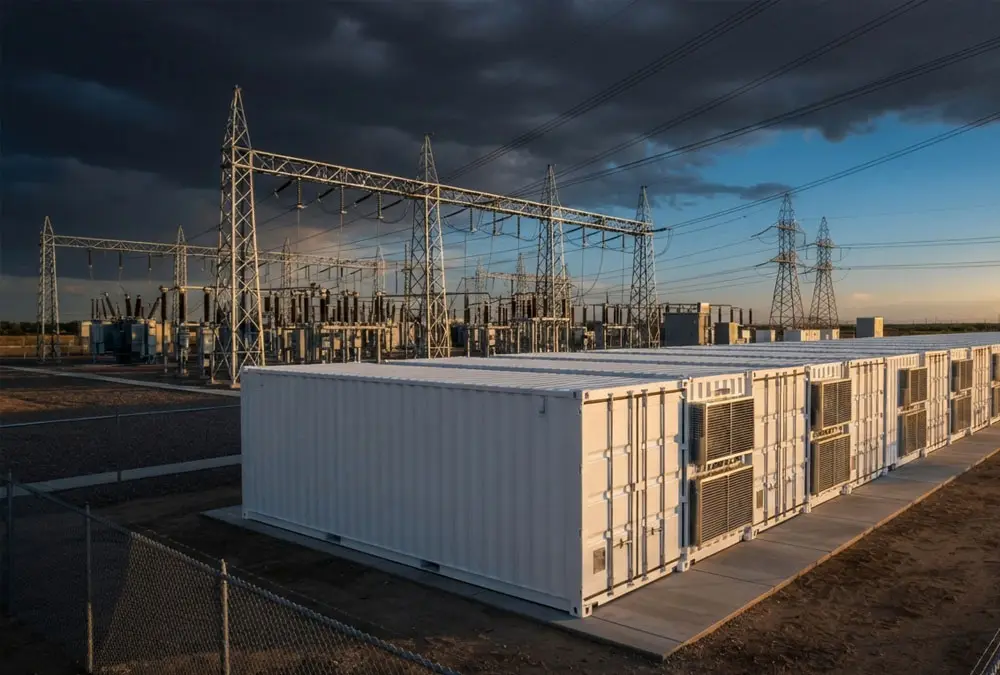
A Containerized BESS for Solar Farms is an all-in-one, outdoor-rated steel enclosure that integrates lithium battery racks, advanced cooling, safety, and power conversion electronics. Utility projects choose these systems because they eliminate complex on-site civil construction and slash EPC deployment times by over 40%. Unlike legacy stationary indoor setups, a turnkey containerized BESS for renewable energy projects arrives factory-tested, pre-wired, and fully optimized to mitigate interconnection delays, lower project risk, and maximize daytime solar harvest value.
Five Reasons Solar Farms Prefer Containerized Battery Energy Storage Systems
- Factory-Integrated Design: Every single cell rack, internal control busbar, and liquid-cooling valve is fitted and tested under controlled factory conditions before shipping.
- Faster Deployment: Eliminates months of concrete block masonry, climate control installation, and complex manual wiring on the construction site.
- Lower EPC Costs: Slashes on-site structural labor hours and reduces material freight costs by packing the entire power plant component layout into a standard shipping footprint.
- Easier Expansion: Features a true modular architecture, allowing asset owners to add matching container blocks as their solar farm arrays grow over time.
- Higher Reliability: The delicate lithium cells remain sealed inside an IP55 or NEMA 3R enclosure, completely protected from harsh site dust, humidity, and construction debris.
What Is a Containerized Battery Energy Storage System (BESS)?
In modern high-voltage engineering, a containerized energy storage solutions for solar farms setup is a complete utility power plant built inside a shipping container frame. It acts as a shock absorber for the local high-voltage grid network.
How a Containerized BESS Works
During peak daylight hours, your solar farm over-generates power beyond your active grid interconnection limit. Instead of curtailing that clean energy, the local site controller routes the excess DC power straight into the storage unit. When the sun goes down or grid demand spikes, the system discharges that stored energy back into the network, capturing the highest possible market price per megawatt-hour.
Key Components Inside a Containerized BESS
- Battery Packs: High-density cell modules stacked in structural steel racks, providing the raw energy core.
- Battery Management System (BMS): High-speed electronics tracking cell voltage, balance, and module temperatures.
- Power Conversion System (PCS): Bidirectional utility inverters changing DC battery voltage into clean, grid-synchronized AC power.
- Energy Management System (EMS): The software brain running localized market dispatch algorithms and peak shaving loops.
- Thermal Management System: Advanced liquid-chilling loops designed to keep internal core cell temperatures within a tight 2-degree variation window.
- Fire Suppression System: Multi-stage gas and water-mist safety hardware built to comply with strict NFPA 855 regulations.
- Monitoring and Communication System: Rugged fiber-optic setups linking the storage yard directly to your main SCADA control center.
Why Utility-Scale Solar Farms Need Battery Energy Storage Systems
Building a solar farm without a storage system today is a major business risk. The global energy mix is changing fast, and intermittent generation assets face tough economic challenges without a backup buffer.
Reducing Solar Curtailment
When the local grid network gets overloaded with clean energy at noon, grid operators force solar plants to disconnect. Implementing a solar farm battery storage container solution lets you save every single generated kilowatt-hour instead of throwing it away, boosting your total annual revenue.
Increasing Self-Consumption of Solar Energy
Storing your own generated power allows you to control your financial assets. You can avoid selling cheap energy during mid-day price dips and hold your capacity until the market demands it most.
Peak Shaving and Load Shifting
Industrial users face massive utility demand charges. A well-sized system executes automated BESS sizing for peak shaving routines, flattening expensive electricity spikes and saving thousands on monthly utility billing.
Grid Stability and Frequency Regulation
As massive coal and gas plants close, the grid loses its natural physical inertia. Large-scale utility scale battery storage container manufacturer assets can inject or absorb active power within milliseconds, stabilizing grid frequency and earning lucrative ancillary service fees.
Backup Power During Grid Disturbances
If an upstream line failure trips your local substation breaker, your solar array will instantly shut down. A dedicated storage container provides the voltage baseline needed to keep your local controls running safely during an outage.
Improving Project ROI
According to 2025 and 2026 clean energy market assessment reports, solar plus storage containerized solution projects command a much higher valuation from institutional infrastructure funds. The reliable capacity revenue loop makes financing easier and shortens capital payback windows.
Containerized BESS vs Traditional Battery Buildings
Building a permanent concrete block structure to house thousands of individual battery modules is outdated. The table below outlines the structural shift across the global energy market:
| Comparison Factor | Containerized BESS | Traditional Battery Room | Operational Benefit & Value to the Buyer |
|---|---|---|---|
| Deployment Time | Extremely Short (Weeks) | Very Long (Months) | Faster Cash Flow: Your asset starts generating revenue months ahead of schedule. |
| Civil Works | Minimal (Flat Slab/Piers) | Extensive (Foundations, Walls) | Lower CapEx Risk: Saves thousands in excavation, permits, and unpredictable weather delays. |
| Factory Integration | 100% Complete | Very Low (Done on-site) | Fewer Field Errors: Prevents wiring mistakes and component damage caused by dust on site. |
| Scalability | Excellent (Plug-and-Play) | Limited (Fixed Space) | Future-Proof Asset: Expand your system size easily if your facility energy load grows. |
| Transportation | Standard Intermodal Freight | Complex Multi-Component Freight | Simpler Logistics: Lowers freight costs and avoids expensive custom oversized permits. |
| Project Risk | Minimal (Turnkey Warranty) | High (Multi-Vendor Blame) | Peace of Mind: One single manufacturer covers the entire system performance warranty. |
Why Containerized BESS Is Becoming the New Industry Standard
The numbers don’t lie. EPC contractors are moving away from building custom on-site battery rooms. The risk of field wiring mistakes and weather delays is simply too high. A standardized container turns complex electrical engineering into a predictable logistics step, making it the new baseline for utility-scale developments.
Key Advantages of Containerized BESS for Solar Farms
Let’s look at the mechanical advantages of using a modular containerized architecture for utility-scale utility battery storage installations.
Modular and Scalable Architecture
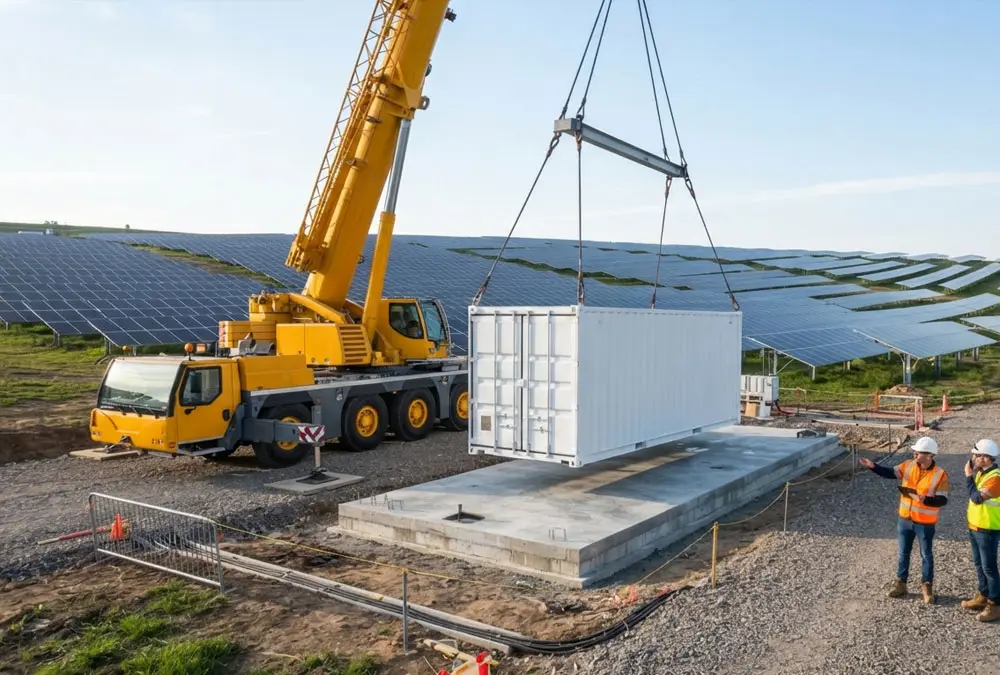
Every commercial battery storage yard should be built with future expansion in mind. A modular layout allows you to plan your civil work once and scale up over time. You can easily add more battery capacity by dropping matching containers onto empty concrete pads as your operational demand increases.
Rapid Deployment and Commissioning
Because the internal components are integrated at the factory, field work is limited to setting the box and landing the high-voltage AC cables. This simple plug-and-play process cuts down on expensive field labor hours and ensures your project meets its strict commercial operation date.
Integrated System Design
A high-quality Containerized BESS for Solar Farms houses everything inside a single, weather-sealed shell. The battery packs, multi-megawatt PCS inverters, liquid-chilling loops, and automated fire protection systems are engineered to work together perfectly, eliminating compatibility issues between different vendors.
Outdoor Durability
These units are built to withstand tough outdoor environments. Using premium anti-corrosion marine coatings, IP55-rated seals, and active climate controls, they operate reliably anywhere from freezing northern regions to hot desert sites.
Repeatable Project Design
Standardizing your hardware footprint simplifies engineering reviews for future projects. Whether you are building solar farms, wind assets, or remote industrial microgrids, using the same container layout cuts down on design time and speeds up grid connection approvals.
Lower Total Project Cost
When you calculate total lifecycle costs—including CapEx, field installation, and ongoing maintenance—pre-assembled containers deliver a much better return than custom-built structures. They eliminate hidden field integration expenses and keep your operational overhead low.
Typical Applications of Containerized BESS
Containerized systems can be configured for a wide range of grid and commercial applications.
Utility-Scale Solar Farms
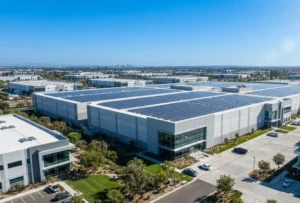
Large projects—ranging from 50MW to 500MW—deploy clusters of 20ft and 40ft containers to stabilize their grid injection profiles. These systems handle massive energy shifts, letting you save mid-day over-generation and discharge it during peak evening market hours.
Commercial & Industrial Energy Storage
Medium-sized industrial facilities use compact containerized ESS configurations to cut their peak demand charges. For operations with space constraints, adding a dedicated 418kWh outdoor container delivers high-capacity demand reduction without taking up valuable indoor square footage.
Solar + Microgrid Projects
Remote communities and mining sites combine solar arrays with containerized storage to create clean, independent microgrids. The integrated system maintains stable voltage levels, letting you run operations smoothly without relying on expensive diesel generators.
Wind + Solar Hybrid Projects
Combining wind and solar generation creates a highly balanced clean energy profile, but managing both inputs requires a reliable buffer. A shared storage container smooths out generation drops from both assets, providing a steady output to the transmission grid.
EV Charging Infrastructure
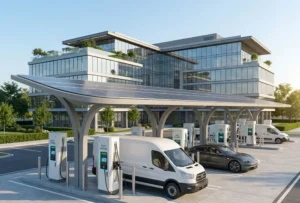
Adding mega-watt level EV fast chargers can overwhelm local distribution grids. Dropping a 1MWh containerized storage system next to a charging hub creates a power buffer, protecting the local grid transformer from sudden vehicle charging spikes.
How to Select the Right Containerized BESS for Your Solar Farm
Do not buy equipment based on the lowest price sheet alone. Sourcing commercial energy storage hardware requires a careful look at key engineering metrics:
Determine Project Capacity
You need to map your exact daily generation curves and interconnection limits. Balance your total storage capacity (MWh) with your inverter output rating (PCS kW) to ensure your system can deliver power continuously throughout your target peak market windows.
Choose the Right Battery Technology
For large-scale stationary projects, Lithium Iron Phosphate (LFP) is the industry standard. LFP chemistry offers excellent cycle life, high thermal stability, and a strong safety profile compared to traditional cobalt-based options. If you need an alternative for unique applications, flow batteries provide very long discharge runtimes, though they come with a much larger physical footprint and lower efficiency.
Evaluate EMS and PCS Integration
Make sure the internal energy management system (EMS) communicates smoothly with your existing solar plant SCADA. The software needs to monitor and balance power flows between your solar panels, battery cells, and the utility grid in real time without communication lag.
Ensure Compliance with Regional Standards
Verify that the entire container assembly holds valid safety certifications like UL 9540, UL 9540A, and CE markings. Your hardware must meet strict local grid codes to clear utility interconnection reviews and qualify for project insurance coverage.
Challenges of Containerized Battery Energy Storage Systems
An honest engineering review requires looking at the real physical and logistical limits you will face during project execution:
Initial Investment
Buying a complete, factory-integrated system requires a significant upfront CapEx commitment. However, trying to save money by cutting corners on enclosure quality or thermal management will lead to higher maintenance costs and shorter asset lifespans down the road.
Transportation Requirements
A fully loaded 20ft or 40ft container is heavy, often weighing over 30 tons. Transporting these units to remote solar sites requires careful logistics planning, heavy-duty flatbed trucks, and high-capacity cranes for safe unloading and placement.
Thermal Management
Lithium cells generate significant internal heat during fast charging cycles. If your cooling system fails or struggles in high ambient temperatures, the battery management system will throttle output to protect the cells, reducing your peak performance when you need it most.
Fire Safety Design
Large battery installations carry inherent safety risks that require serious engineering attention. Your container layout must feature multi-stage gas detection, automated fire suppression, and structural deflagration venting to keep the site safe and fully compliant with local regulations.
Grid Compliance
Utility companies enforce strict power quality rules for grid-connected assets. Your system’s inverters must handle complex voltage support and frequency ride-through requirements perfectly to maintain your active connection approval.
European Containerized BESS Market Trends and Future Outlook
The European energy sector is moving quickly toward mandatory storage integration. Driven by ambitious net-zero targets and volatile wholesale power prices, grid operators are prioritizing flexible, containerized assets to manage growing renewable energy capacity.
Recent policy updates across major EU markets penalize unbuffered solar generation during negative-price periods. This shift is turning a Containerized BESS for Solar Farms from a helpful upgrade into an absolute economic necessity for securing project financing and long-term viability.
Why Choose AnengJI Containerized BESS Solutions
We build turnkey, high-performance energy storage platforms engineered to deliver maximum reliability and value for utility and industrial developments:
Turnkey BESS Solutions
We handle the complete manufacturing and integration process in-house. Your storage assets arrive at the project site fully assembled, thoroughly tested, and ready for immediate high-voltage grid connection.
Flexible Capacity Options
We engineer a versatile line of scalable, liquid-cooled storage systems built to match your specific project scale:
- Commercial Outdoor Cabinets (100kWh & 261kWh): Compact, high-efficiency options optimized for commercial buildings and light industrial peak shaving.
- Industrial Storage Blocks (418kWh): Mid-sized power assets designed for manufacturing operations and high-demand EV charging hubs.
- Utility Containers (1MWh / 2MWh / 5MWh+): Heavy-duty 20ft and 40ft container systems built for large-scale solar farms and independent microgrid grids.
Global EPC Project Experience
Our dedicated engineering team supports you through every step of the project lifecycle. We provide comprehensive load profile analysis, custom system simulation, local grid compliance support, and long-term asset maintenance to keep your investment performing at its peak.
Frequently Asked Questions About Containerized BESS for Solar Farms
What is a containerized BESS?
It is an all-in-one, outdoor-rated industrial enclosure housing battery modules, system controllers, power inverters, and thermal management hardware in a standard shipping footprint.
Why do solar farms use battery storage?
Storage captures excess solar generation during mid-day peak sun hours, preventing costly curtailment and allowing asset owners to sell power when market prices surge.
How long does a containerized BESS last?
Premium LFP container systems deliver a reliable working life of 15 to 20 years, executing 6,000 to 8,000 full operational cycles before capacity drops to 80% of its original rating.
What size BESS is needed for a solar farm?
The ideal size depends on your local grid limits and daily generation profile. A standard 100MW solar farm typically deploys a matching 200MWh or 400MWh containerized storage array.
What is inside a battery storage container?
The container houses high-density battery racks, liquid-cooling loops, bidirectional power inverters, fire suppression systems, and smart energy management controllers.
How safe are containerized battery energy storage systems?
Modern systems are highly secure, utilizing stable LFP cell chemistry, advanced multi-layer monitoring software, and automated fire protection built to pass strict safety standards.
Can containerized BESS be expanded later?
Yes, the modular architecture allows you to scale up easily by dropping and connecting additional container blocks as your facility’s power needs grow.
How much does a containerized BESS cost?
Total project pricing varies based on system capacity and site requirements, with large-scale utility installations typically averaging between $180 and $240 per kWh at the system level.
Build a Smarter Solar Farm with Containerized BESS Solutions
Stop losing valuable solar generation to grid curtailment and volatile market prices. Our dedicated engineering team is here to design a precise, optimized containerized storage configuration built to protect your revenue margins.