Introduction
The global industrial landscape is navigating a pivotal energy transition, moving away from centralized, fossil-fuel-dependent grids toward decentralized, sustainable microgrids. At the heart of this revolution is the C&I Solar Battery Storage System, a transformative technology that allows commercial and industrial entities to capture, store, and intelligently deploy solar energy. As electricity volatility reaches record highs and carbon mandates become more stringent, the integration of a commercial solar battery storage system for factories has evolved from a secondary sustainability goal into a primary financial strategy. For businesses looking to hedge against rising demand charges while maximizing their existing photovoltaic (PV) assets, understanding the synergy between solar generation and battery storage is no longer optional—it is a prerequisite for operational resilience in 2026.
What is a C&I Solar Battery Storage System (Commercial and Industrial Solar + Storage System)
Definition of C&I Solar Battery Energy Storage System (PV + BESS)
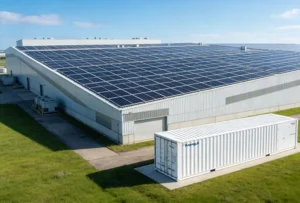
A C&I Solar Battery Storage System (Commercial and Industrial) is an integrated energy solution that combines solar photovoltaic (PV) panels with a Battery Energy Storage System (BESS). Unlike traditional grid-tied solar setups that export excess energy back to the utility, a PV + BESS architecture captures that surplus energy on-site. It is specifically designed to meet the high-load demands of commercial buildings, warehouses, and manufacturing plants, providing a buffer between energy generation and consumption.
How a Solar + Battery Storage System Works
The system follows a sophisticated three-stage energy cycle managed by power electronics:
- Solar Generation (Daytime): During peak sunlight hours, the solar PV array generates DC electricity. This power is either used immediately by the facility or converted via a hybrid solar energy storage system to charge the battery bank.
- Energy Storage (Battery Charging): When solar production exceeds the building’s load, the excess energy is stored in high-density lithium-ion batteries rather than being sent to the grid for minimal compensation.
- Discharge (Peak Demand / Night Use): During the evening or when the facility hits a “peak demand” spike, the solar battery backup system for business discharges the stored energy, flattening the load curve and reducing reliance on expensive grid power.
Difference Between Traditional C&I BESS and Solar Battery Storage
A standard C&I BESS typically performs “energy arbitrage” by charging from the grid during off-peak hours (e.g., at night). However, a C&I solar battery storage system adds a layer of “Zero-Cost Generation.” By utilizing an industrial solar energy storage system with EMS, businesses can decouple their energy costs from grid fluctuations entirely, achieving a significantly higher solar storage ROI than grid-only systems.
Key Applications of C&I Solar Battery Storage Systems
Solar Self-Consumption Optimization
In many regions, feed-in tariffs (the rate utilities pay you for solar energy) are significantly lower than the retail price of electricity. A solar + storage system (PV + BESS) ensures that every kilowatt-hour generated by your roof stays within your facility. By increasing the solar utilization rate from a typical 30% to over 80%, businesses can drastically shorten their payback periods.
Peak Shaving with Solar + Storage
Industrial facilities are often penalized with “demand charges” based on their highest point of electricity usage. By combining real-time PV generation with calculated battery discharge, the system performs “Peak Shaving,” ensuring the facility never crosses a specific power threshold from the grid.
Backup Power for Commercial and Industrial Facilities
Grid instability is a growing threat to precision manufacturing. A commercial solar backup system provides seamless transition to “Island Mode” during a blackout. This protects sensitive machinery, prevents data loss, and ensures that critical HVAC systems in commercial buildings remain operational.
EV Charging Stations with Solar Battery Storage
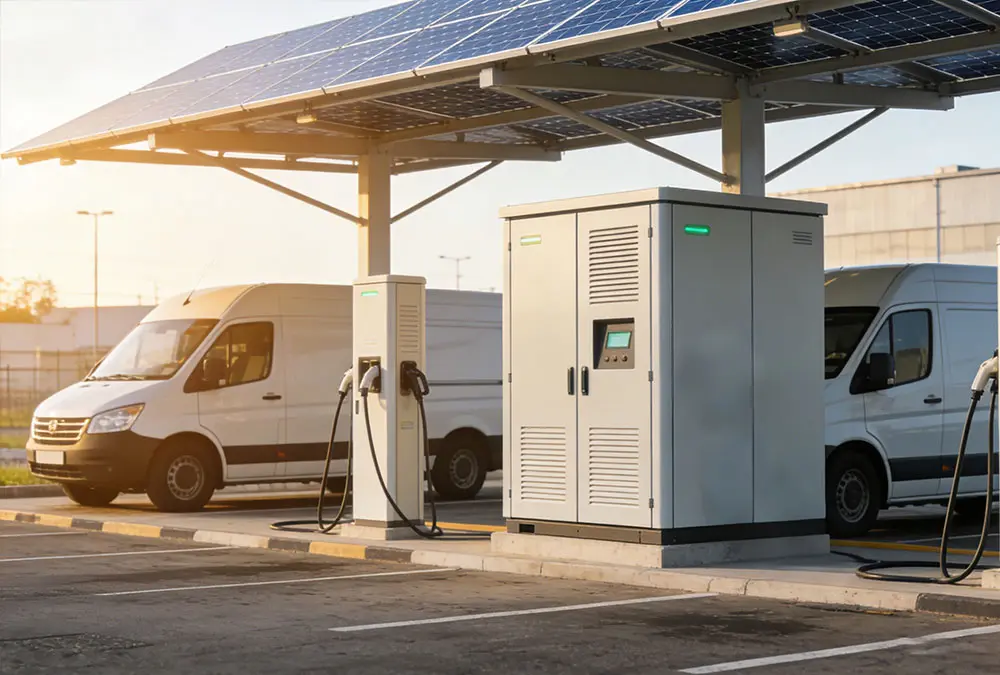
As corporate fleets transition to electric vehicles (EVs), the simultaneous charging of dozens of vehicles can overwhelm a factory’s electrical infrastructure. An industrial solar energy storage solution acts as a buffer, allowing high-speed EV charging using stored solar energy without triggering expensive grid upgrades or transformer replacements.
Common C&I Solar Battery Storage Solutions
On-Grid Solar + Battery Storage Systems
These systems remain connected to the utility but prioritize solar and battery use. They are ideal for urban commercial buildings that want to participate in “Net Metering” while still maintaining the ability to reduce peak demand charges through solar storage with EMS control.
Off-Grid Solar Battery Storage Systems
Often found in remote mining sites or agricultural processing centers, off-grid systems rely entirely on a PV battery storage system. These require larger battery capacities to ensure 24/7 power availability even during consecutive cloudy days.
Hybrid Solar Energy Storage Systems
A hybrid system is the most versatile industrial solar battery system. It can manage inputs from solar, the grid, and even backup diesel generators. This multi-input approach ensures maximum reliability for high-stakes manufacturing environments.
Containerized Solar Battery Storage Systems
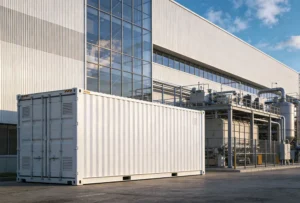
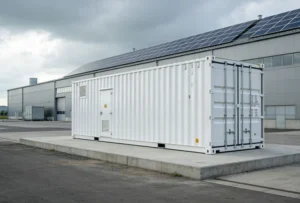
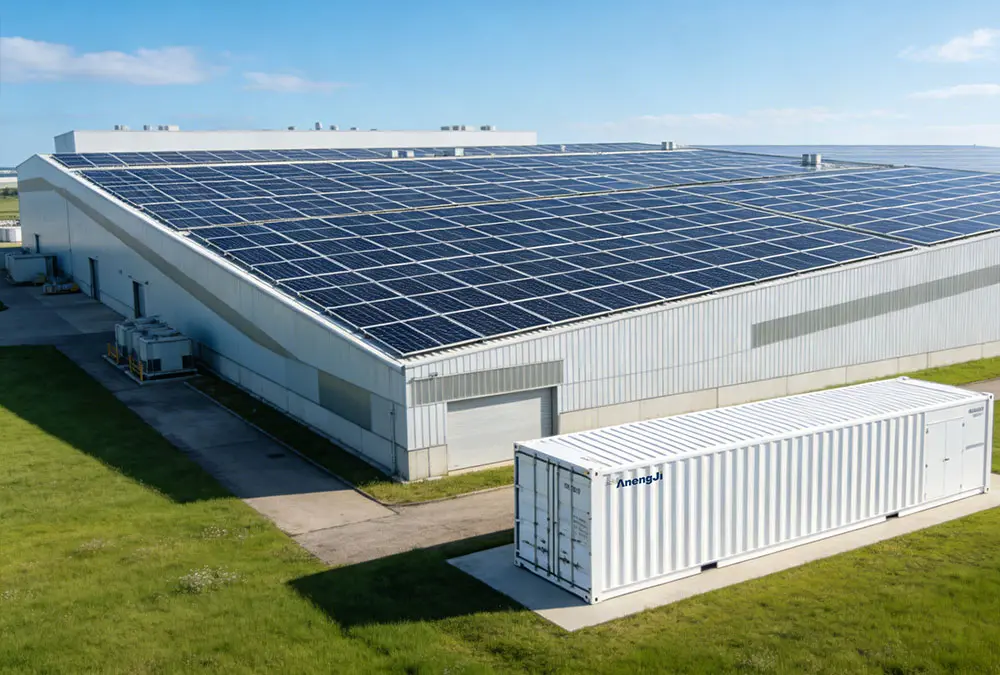
For rapid deployment, containerized solutions house the entire industrial solar energy storage system with EMS inside a 20ft or 40ft ISO container. This “plug-and-play” approach reduces on-site construction costs and is highly scalable for growing industrial parks.
Benefits of C&I Solar Battery Storage Systems
Maximize Solar Energy Utilization
Traditional solar users often face “curtailment” when their production exceeds their needs and the grid cannot accept more power. A C&I solar battery storage system eliminates this waste, turning discarded energy into a stored asset.
Reduce Electricity Costs with Peak Shaving
By discharging stored solar energy during the grid’s “Peak Tariff” windows, businesses can avoid the most expensive electricity rates of the day. This direct reduction in the monthly utility bill is the primary driver of a solar plus battery storage system for commercial buildings.
Improve Energy Independence and Reliability
Decoupling from the grid protects businesses from localized outages and national energy crises. A solar battery storage for commercial use ensures that your production schedule is dictated by your orders, not by the stability of the local utility.
Smart Energy Management with EMS
Modern systems utilize AI-based Energy Management Systems (EMS). These platforms analyze weather forecasts and electricity market prices to decide whether to store solar energy, use it immediately, or sell it back to the grid (if lucrative). This optimization is the “brain” that drives the best C&I solar battery storage system suppliers to the top of the market.
Core Components of C&I Solar Battery Storage Systems
Solar PV System (Power Generation Unit)
The “engine” of the system. High-efficiency monocrystalline panels are typically used in C&I applications to maximize energy yield per square meter of roof or ground space.
Battery Storage System (Energy Storage Core)
Most modern industrial solar energy storage solutions utilize Lithium Iron Phosphate (LFP) chemistry. LFP is preferred over NMC (Nickel Manganese Cobalt) for C&I applications due to its superior thermal stability, safety profile, and 10+ year cycle life.
PCS – Power Conversion System for Solar Storage
The Power Conversion System (PCS) is a bi-directional inverter. It converts DC from panels/batteries to AC for the factory and AC from the grid to DC for charging. For solar-integrated systems, a high-efficiency PCS is critical to minimize “conversion loss.”
BMS – Battery Safety and Monitoring System
The BMS (Battery Management System) acts as the “safety guard.” It monitors the voltage, temperature, and State of Charge (SoC) of every cell in the lithium battery for solar storage, preventing overheating and ensuring long-term health.
EMS – Energy Management System for Solar Optimization
The EMS provides the interface between the solar generation and the battery storage. It performs “Load Following,” ensuring that the battery only discharges when it is economically advantageous to do so.
How C&I Solar Battery Storage Systems Increase ROI
According to McKinsey’s “Powering the Future” report, the value in the BESS market is rapidly shifting from hardware to software and services. For an industrial user, the C&I solar battery storage system cost and ROI are optimized when the system can perform “Revenue Stacking”—executing peak shaving, energy arbitrage, and frequency regulation simultaneously.
Typical ROI and Payback Period
As highlighted in McKinsey’s “Battery 2035” outlook, the cost of lithium-ion cells has dropped significantly, while grid energy prices have risen. This “cross-over” point has reduced the typical payback period for a commercial solar battery storage system for factories to between 3 and 6 years in most industrial markets.
| Metric | Traditional Solar (Grid-Tied) | Solar + Battery Storage (BESS) |
| Self-Consumption Rate | 25% – 35% | 75% – 95% |
| Grid Independence | Low | High |
| Demand Charge Savings | Negligible | Significant |
| Payback Period | 5-8 Years | 3-6 Years (with incentives) |
Comparison of C&I Solar Battery Storage Systems
On-Grid vs. Off-Grid Solar Storage Systems
On-grid systems are essentially “financial tools” designed to lower bills. Off-grid systems are “infrastructure tools” designed to provide power where none exists. For most Polish or European factories, a grid-tied solar storage system with backup capability offers the best balance of cost and security.
Lithium-ion vs. Other Battery Technologies
While lead-acid was the old standard, lithium battery for solar storage (specifically LFP) dominates 2026. LFP batteries offer 6,000+ cycles compared to the 1,000 cycles of lead-acid, making the “Levelized Cost of Storage” (LCOS) much lower over the system’s life.
C&I Solar Battery Storage Use Cases
Manufacturing Plants with Solar Storage
A manufacturing facility in an industrial zone uses solar storage to handle the high “in-rush” current of starting heavy motors. This prevents voltage sags that can crash the factory’s IT network.
Industrial Parks and Microgrids
Multiple factories in a single park can share a large-scale containerized solar battery storage system. This “Community Storage” model allows for lower CAPEX per participant while providing grid-scale stability.
Solar + Storage for EV Charging Infrastructure
Logistics companies are now installing solar storage with EMS control to power their electric delivery vans. This allows them to charge their fleet for “free” using yesterday’s sunlight, significantly lowering their total cost of ownership (TCO).
How to Choose a C&I Solar Battery Storage System
- System Capacity and Solar Matching: Your battery should be sized relative to your solar array. A 1:2 ratio (e.g., 500kW solar to 1MWh battery) is a common benchmark for industrial peak shaving.
- Battery Technology Selection (LFP vs. NMC): Always choose LFP for industrial settings. The safety standards required for solar energy storage for factories make LFP’s non-combustible nature a major advantage for insurance compliance.
- EMS Intelligence: Ensure the EMS supports “OpenADR” or other communication protocols to allow for future integration with Virtual Power Plants (VPP).
Anengji C&I Solar Battery Storage System Solutions
As a leading commercial solar battery storage system supplier, Anengji offers a flagship “4S” integration strategy: Cell, PCS, BMS, and EMS are all engineered to work as a single, harmonious unit.
Key Advantages of Anengji Systems
- High-Efficiency PCS: Our inverters achieve a conversion efficiency of 98.5%, ensuring minimal energy is lost during the solar-to-battery transition.
- Advanced BMS Safety: We utilize automotive-grade monitoring to ensure that your industrial solar battery system operates safely under 24/7 heavy-duty cycles.
- Intelligent EMS Optimization: The Anengji EMS is pre-programmed with global grid profiles, allowing for instant “Plug-and-Play” peak shaving optimization.
Application Scenarios of Anengji Systems
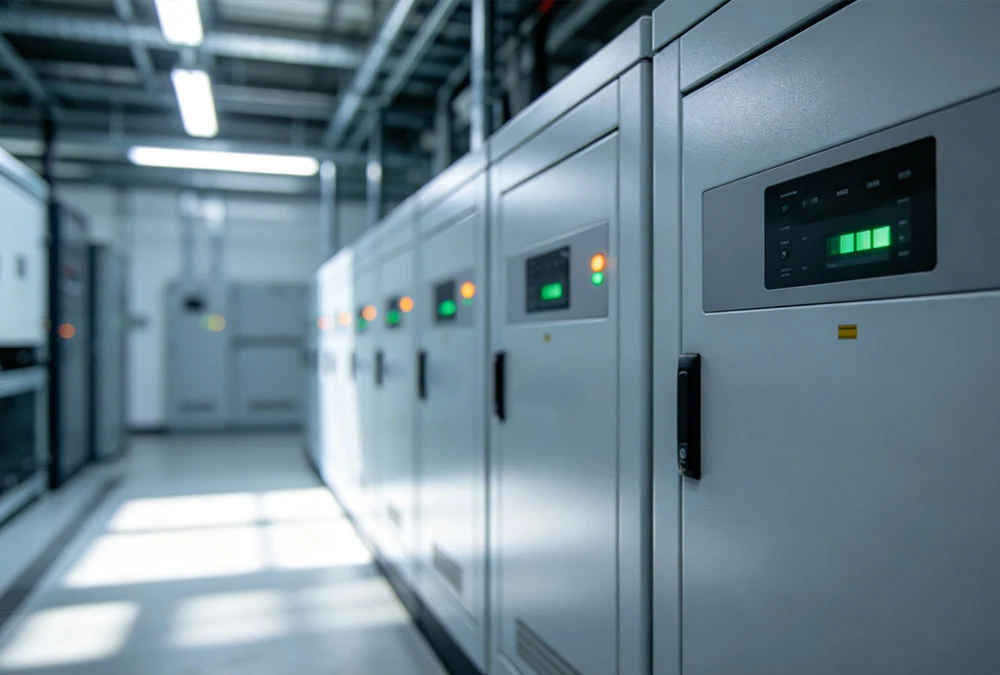
Our 215kWh Liquid-Cooled C&I cabinets are perfect for commercial buildings, EV charging stations, and manufacturing plants. By using liquid cooling instead of traditional air cooling, Anengji systems maintain a more uniform temperature, extending battery life by up to 20%.
Future Trends: Solar + Storage Market Trends 2026
The future of C&I solar battery storage systems lies in AI and grid interaction. By late 2026, we expect “Predictive Dispatch” to become standard. Using satellite weather data, your industrial solar energy storage system with EMS will predict a cloudy afternoon and proactively charge the batteries from the grid during a low-price morning window to ensure your evening peak is covered. Furthermore, the growth of distributed solar + storage systems will allow factories to trade energy with their neighbors in localized blockchain-based energy markets.
Conclusion: Why C&I Solar Battery Storage Systems Are the Future of Business Energy
Investing in a C&I solar battery storage system is no longer a “green” luxury; it is a decisive move toward financial and operational autonomy. By combining the generation power of solar with the strategic discharge of a BESS, businesses can transform energy from a volatile overhead cost into a controlled, predictable asset. As the McKinsey reports suggest, the infrastructure built today—driven by high-density LFP and intelligent EMS—will define the competitive winners of the next decade.
FAQ – C&I Solar Battery Storage System
What is a C&I solar battery storage system?
It is a system that combines solar PV panels with a battery energy storage unit (BESS) designed for commercial and industrial use. It stores excess solar power generated during the day for use during peak times or at night.
How does solar battery storage improve ROI for businesses?
It increases the “Self-Consumption” of solar energy, avoids expensive “Peak Tariffs,” and reduces “Demand Charges,” leading to a faster solar storage ROI compared to solar-only installations.
What are the main components of a solar battery storage system?
The core components include Solar PV panels, the Battery Racks, the PCS inverter for energy storage, the BMS (Battery Management System), and the EMS (Energy Management System).
What is the difference between hybrid and on-grid solar storage systems?
A hybrid system can manage multiple power sources (Solar, Battery, Grid, Generator) simultaneously and can often operate off-grid. An on-grid system is primarily designed to work with the utility grid to lower bills.
Is a C&I solar battery storage system worth it?
Absolutely. For any business with a high daytime load, existing solar arrays, or significant demand charges, a commercial solar battery storage system for factories offers a highly predictable and attractive return on investment in the current energy climate.