
Introduction: From the Voltaic Pile to the “Smart Heart” of Modern Power Systems
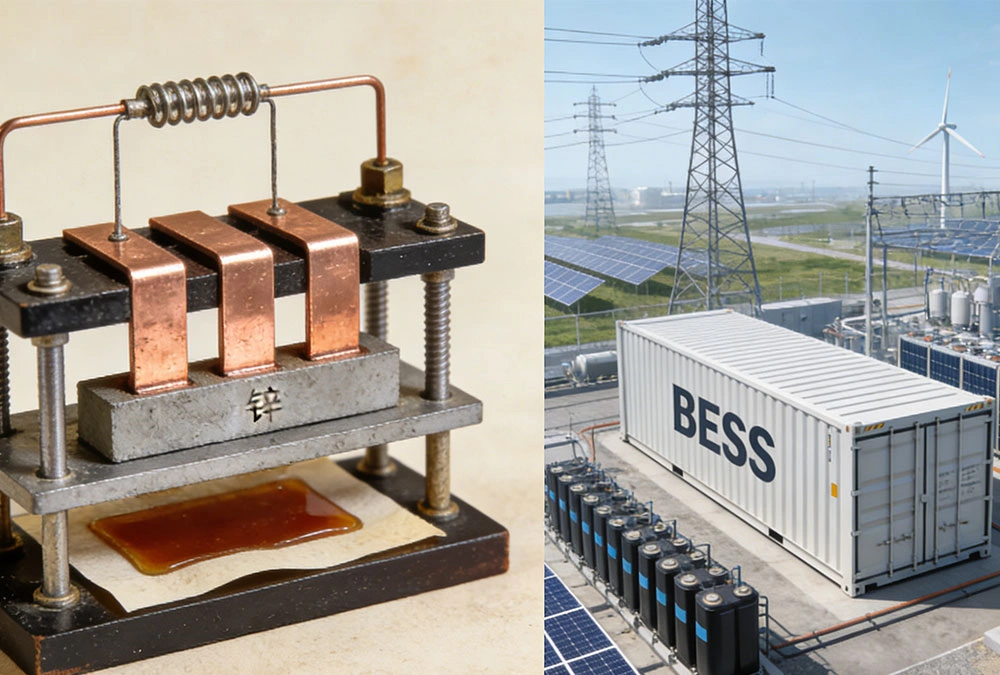
In 1799, Alessandro Volta invented the first device capable of a steady electrical output—the Voltaic Pile. This wasn’t just the birth of electrochemistry; it laid the groundwork for the battery as we know it. Fast forward two centuries, and batteries have moved from the lab to our homes. Today, the Battery Energy Storage System (BESS) is the critical pillar for a world powered by renewable energy.
As we push toward carbon neutrality, the surge in wind and solar power is undeniable. But these sources are “at the mercy of the weather,” which keeps grid operators up at night. Per the IEA, renewables hit 30% of global power in 2024 and will likely top 50% by 2030. This makes flexible, fast-acting renewable energy storage solutions a “must-have” to keep the lights on.
By 2025, global battery storage system for renewable energy capacity hit 120 GWh—an 8x jump since 2020. With markets in the US, China, and Europe leading the charge, BESS is now a matter of national energy strategy. It’s the “smart heart” of the grid, handling peak shaving and load shifting, stabilizing frequency, and powering virtual power plants (VPP). In today’s era of extreme weather, it’s the ultimate backup power system.
1. Understanding BESS Technology: Why It’s More Than Just a “Big Battery”
1.1 Definition and Core Functions of a Battery Energy Storage Solution
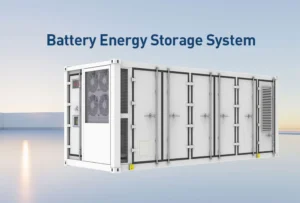
A Battery Energy Storage System (BESS) is a tech-heavy setup that stores electricity as chemical energy and releases it when needed. Its real magic? It “decouples” power production from consumption. You no longer have to use electricity the exact second it’s generated.
Compared to old-school pumped hydro, a BESS reacts in milliseconds, can be built anywhere, and is modular. Whether you need a small unit for a shop or a large-scale energy storage system for a city, BESS fits the bill. It is the perfect partner for distributed energy resources (DER).
1.2 The 5 Core Subsystems: How a Battery Storage System Works
A professional BESS isn’t a single box; it’s an ecosystem of five integrated systems:
- Battery Modules: These are the storage cells. Most buyers today want an LFP battery storage system (Lithium Iron Phosphate). Why? Because it’s safe, has a long cycle life (>6,000 cycles), and stays away from “conflict minerals” like cobalt. The trend is moving toward cell-to-pack (CTP) designs to maximize energy density.
- Battery Management System (BMS): The brain of the operation. It monitors state of charge (SOC) and state of health (SOH). Most importantly, it handles thermal runaway prevention—keeping the system safe and stable.
- Power Conversion System (PCS / Inverter): This converts DC power from the battery to AC power for the grid. High-end systems boast an inverter efficiency of over 98% and support grid ancillary services.
- Energy Management System (EMS): The decision-maker. It looks at power prices and grid demand to decide when to charge. This is how businesses achieve energy arbitrage (buying low, selling high).
- Thermal Management & Fire Suppression: We use liquid cooling systems for high-performance projects and eco-friendly gas suppressants to meet safety standards like UL9540.
Pro Case Study: Australia’s Victorian Big Battery (300 MW/450 MWh) uses Tesla Megapacks and AI-driven EMS. When the grid frequency dipped in 2023, it injected 250 MW in just 0.1 seconds—preventing a massive blackout.

2. Comparing Battery Technologies: Performance, Costs, and ROI
2.1 Technical Specs Comparison (2025 Market Data)
| Tech Type | Energy Density (Wh/kg) | Cycle Life | System Cost ($/kWh) | Response Speed | Best Use Case |
| Lithium (LFP) | 150–200 | 6,000–8,000 | $120–$180 | Millisecond | C&I, Residential, Grid |
| Lead-Acid | 30–50 | 500–1,500 | $80–$120 | Second | UPS, Off-grid backup |
| Sodium-Ion | 100–160 | 4,000–6,000 | $90–$140 | Millisecond | Low-cost massive storage |
| Vanadium Flow | 15–25 | >15,000 | $250–$400 | Second | Long-duration (LDES) |
| Solid-State | 300–500 | >10,000 | >$300 | Millisecond | Future High-End |
2.2 Future Evolution in Battery Energy Storage Solutions
- LFP is King: Thanks to the EV boom, LFP costs have dropped 85% in ten years. As a BESS OEM manufacturer China, we see these systems dominating the market due to their reliability.
- Sodium-Ion is Catching Up: By 2025, we expect sodium batteries to drop below $100/kWh, offering a great alternative where lithium is scarce.
- Flow Batteries for Long Duration: For projects needing 4-12 hours of power, vanadium flow is the winner for long-duration energy storage (LDES).a category the U.S. Department of Energy (DOE) is heavily investing in to ensure a resilient grid.
- Solid-State: These are still in the lab. Expect them to hit the premium market around 2028-2030.
3. Top BESS Applications: From Residential to Utility-Scale Storage

3.1 Behind-the-Meter (BTM) Battery Storage
- Residential Solar + Storage: Homeowners use a BESS to store solar power for the night. In high-cost areas like California or Germany, the ROI is usually 5–7 years.
- Commercial & Industrial Energy Storage: This is a game-changer for businesses. The biggest benefit? Demand charge reduction. Since demand charges can make up 70% of a bill, using a BESS to shave those peaks saves a fortune.
3.2 Front-of-the-Meter (FTM) / Utility-Scale Battery Storage
- Utility-Scale Projects: These massive containerized battery storage systems help utilities delay expensive grid upgrades and handle frequency regulation faster than any gas plant.
- Renewable Intermittency Solution: BESS stores excess wind or solar that would otherwise be wasted, ensuring the grid stays stable.
3.3 Specialized Use Cases: Microgrids and Resilience
- Remote Areas & Islands: BESS can replace diesel generators, cutting costs by 50% and eliminating noise.
- Critical Infrastructure: Hospitals and data centers use BESS as an upgraded UPS for silent, zero-emission backup power systems.
4. Why Invest in BESS? Economic and Environmental Benefits
4.1 Economic Gains: Saving Money and Making Profit
- For Users: ROI for commercial battery storage system supplier projects ranges from 10–15%.
- For the Grid: Every 1 GWh of storage saves roughly $200 million in grid infrastructure costs.
- Energy Arbitrage: In smart markets, a BESS can “buy low and sell high,” netting significant annual profits.
4.2 Social Impact: Energy Independence and Jobs
BESS empowers communities to manage their own power. It’s also a job creator—over 500,000 people work in the storage sector today, and that’s expected to quadruple by 2030.
4.3 Sustainability: Decarbonization and Recycling
One GWh of storage helps cut 500,000 tons of CO2 a year. Plus, we’re getting better at recycling; we can now recover over 95% of the lithium and nickel from old batteries.
5. Challenges and the Future of Smart Energy Storage
While the future looks bright, we still deal with high entry costs and safety concerns. But things are moving fast:
- Lower Costs: We expect system prices to fall under $80/kWh by 2030.
- Better Safety: Techniques like liquid cooling systems and AI monitoring are making fires extremely rare.
- Smart Integration: AI and digital twins will soon make power dispatch optimization 30% more efficient.
Final Thoughts: BESS is the Bedrock of Carbon Neutrality
A Battery Energy Storage System is more than just hardware; it’s an “energy router.” It connects clean energy to the people who need it most. As the world moves away from fossil fuels, BESS isn’t just an option—it’s the lead actor in our energy future.
FAQ: Everything You Need to Know About BESS
What is a BESS and how does it work?
A BESS (Battery Energy Storage System) captures electricity from the grid or renewables and stores it in batteries (like LFP). When demand or prices go up, it discharges that power to save money and stabilize the grid.
How long do battery storage systems last?
Most modern lithium battery energy storage systems last 10–15 years, typically rated for 6,000 to 8,000 cycles before the capacity drops significantly.
Is a 1MWh battery storage system price worth the investment?
For industrial users, yes. Through peak shaving and avoiding peak demand charges, most wholesale battery energy storage projects pay for themselves in under 8 years.
What is the difference between BESS and UPS?
A UPS is for short-term emergency backup (minutes). A BESS is for long-term energy management, grid support, and daily cycling.
Can battery storage replace diesel generators?
Absolutely. For microgrid energy storage, BESS + Solar is now more reliable and cheaper than traditional diesel setups.