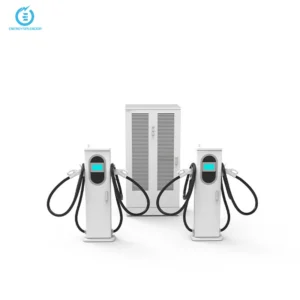
Product Name:DC Charging Station
Model:Main cabinet /Splitterminal
Rated power:480kW/600/720/960kW/600kW
Installation method:Vertical
Feeding method:Bottom in and out
Equipment size:1000*800*2000mm/1300*1000*2200mm/1630*500*370mm
Input voltage :AC380V±15%/DC200-1000V
Input frequency :45-60Hz
Output voltage:DC200-1000V
Output current:800/1200/1600/2000/2400/3200A/600A
Charging cable length:5m
Accuracy:Level 1.0
Efficiency:≥94.5%
Human-computer interaction:7-inch bright color touch screen,LED Indicator
Charge mode:Automatic charging full/Fixed power/Fixed Amount/Fixed time
Charging method:Swipe Card /Scan code
Networking methods:Ethernet/4G
Executive standards:IEC 61851-1:2017;IEC62196-2:2016
Working enviroment:Altitude:≤2000m;Temperature:-20℃~+50℃;
Protection level:IP54
Noise:Forced air cooling/Liquid cooling
MTBF:17520h
Liquid Cooling EV Charging Station Wholesale – Design
Our liquid-cooled EV charging stations are engineered for ultra-high power delivery, with customizable main cabinets offering 480kW, 600kW, 720kW, or 960kW output. Designed for efficiency, they can achieve up to 300km of range in just 10 minutes. The system supports expansion by adding multiple charging guns through modular sub-chargers to meet high-demand scenarios.
Featuring a 7-inch interactive touchscreen กับ LED indicators, the station supports multiple charging methods, including swipe card และ scan code charging. To handle extreme power requirements, it’s equipped with liquid-cooled charging connectors, ensuring stable performance and extended service life even under continuous heavy loads.
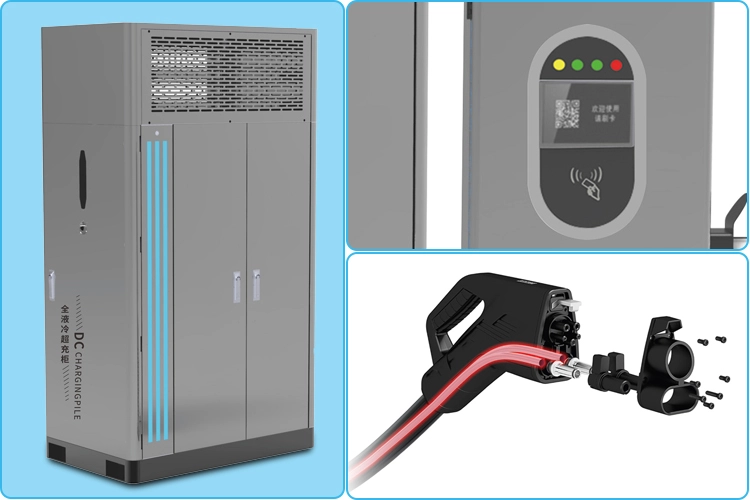
China EV Charging Station Wholesale – 960kW Liquid Cooling DC Charger Connectors
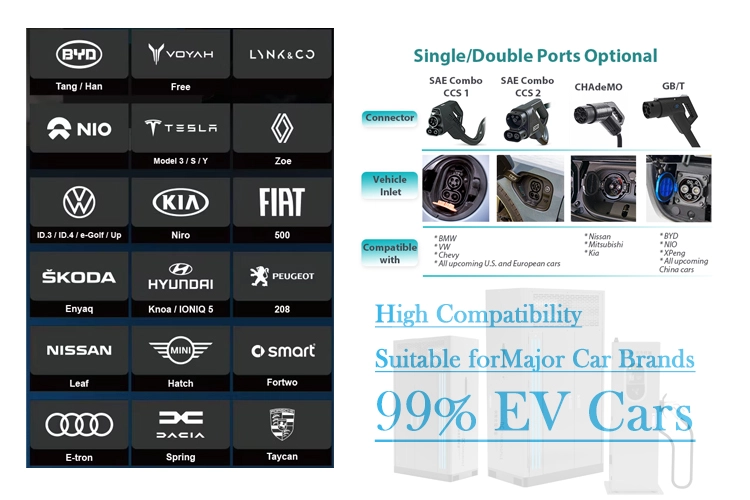
The 960kW liquid-cooled DC charging station is designed for large-scale commercial EV charging networks, offering unmatched charging capacity and adaptability. Through its modular sub-charging units, it can support up to 16 charging connectors simultaneously, allowing 16 electric vehicles to be charged at the same time. Equipped with intelligent dynamic load balancing, the system automatically distributes current efficiently, ensuring each vehicle receives the optimal charging speed without overloading the power supply.
This high-power EV charger is compatible with multiple international standards, including CCS1, CCS2, GB/T, and CHAdeMO, making it suitable for over 99% of electric vehicle models worldwide. The liquid-cooled charging guns ensure stable operation during continuous high-power output, extending equipment life and maintaining charging safety.
Built with industrial-grade components และ precision manufacturing, the station features CE, TUV, and other global certifications to guarantee reliability, safety, and compliance with international markets. Ideal for EV fleets, highway charging hubs, logistics companies, and urban public charging stations, it delivers consistent ultra-fast charging for heavy-duty use.
Wholesale EV Charging Stations-CE TUV Certification
Our commercial EV charging stations are engineered for reliability, safety, and global market compliance, making them an ideal choice for wholesalers and large-scale charging infrastructure projects. Built in accordance with executive standards IEC 61851-1:2017 และ IEC 62196-2:2016, each unit delivers consistent performance and durability for both urban and highway charging applications.
The chargers feature a one-piece integrated shell design, ensuring robust structural integrity and enhanced weather resistance. All switch protection components are sourced from world-renowned brands เช่น CHINT, ABB, Schneider, and LS , guaranteeing long-term stability and operational safety. Our complete production process is certified under international quality management systems, ensuring every product meets stringent performance and safety requirements.
In addition to CE และ TUV certifications, we offer full support for customized certification services to meet the regulations of different countries and regions, enabling smooth market entry for your projects.
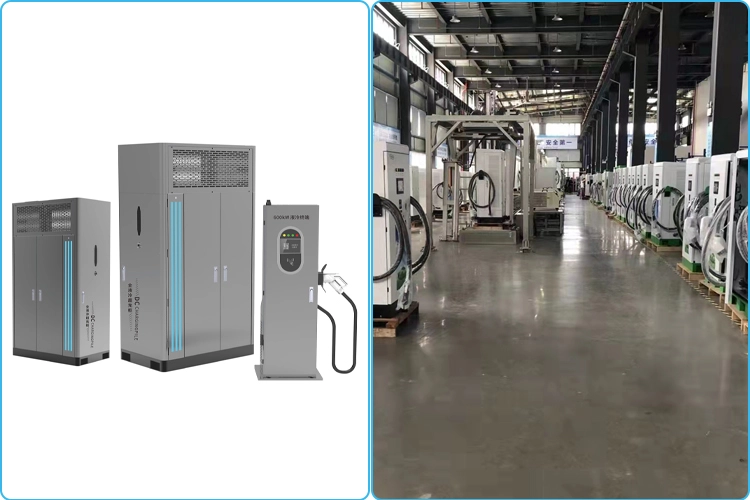
Wholesale Charging Station for EV Cars – Customized
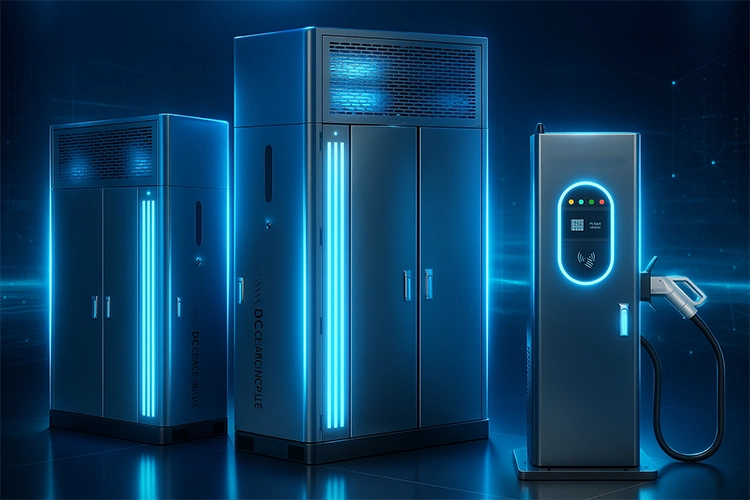
Our wholesale charging stations for EV cars offer full customization to meet the diverse needs of businesses, fleet operators, and public charging networks. We support DC charging stations ranging from 30kW to 1440kW, including liquid-cooled ultra-high-power options, as well as AC charging stations from 3.5kW to 44kW.
Customers can fully personalize the charger’s exterior design, logo, and color scheme, creating a branded solution that fits your market and operational requirements. Our production process is highly flexible, ensuring that every technical and aesthetic detail can be adapted to meet your specific project needs.
With international certifications such as CE and TUV, our chargers deliver safe, reliable, and efficient performance, whether deployed in commercial, public, or industrial settings. We strive to fulfill all customer requirements, providing a turnkey solution for EV charging infrastructure.
We deployed 480kW charge stations at commercial and fleet sites. Ultra-fast DC charging reduces wait times, supports CCS/CHAdeMO EVs, and ensures reliable continuous operation. Modular design enables easy installation, OCPP integration allows remote monitoring, smart billing, and efficient management.
As a charging station operator, we use the 600kW liquid-cooled EV charger in high-traffic sites. Its fast DC charging and liquid cooling keep performance stable under heavy load. Modular design simplifies installation and maintenance, and OCPP support enables smart remote monitoring and efficient management.
As a commercial charging station operator, we installed 720kW supercharging EV stations for high-traffic sites. Ultra-fast DC charging with advanced cooling ensures stable performance under heavy use. Modular design allows easy installation and maintenance, while OCPP support enables remote monitoring and smart management.
We recently added 960kW EV charging stations to our fleet hubs—performance is outstanding. Vehicles charge in record time, cooling systems keep units stable under constant use, and OCPP connectivity makes monitoring and billing effortless. Our team loves how easy they are to maintain.
As an EV charging distributor, we source wholesale charging stations from this supplier(anengjienergy) and are impressed. The units are durable, fast, and compatible with multiple EV models. Installation is straightforward, and OCPP support allows easy integration with management systems, making our projects efficient and reliable.
We supply wholesale commercial EV charging stations to multiple clients, and these units consistently deliver. Fast, reliable, and built for heavy usage, they integrate smoothly with OCPP systems. Our customers appreciate the durability and easy installation, making it a top choice for large-scale projects.
Who is the largest manufacturer of EV charging stations?
From a 2B perspective, the largest manufacturers of EV charging stations include global leaders such as Tesla, ABB, ChargePoint, EVBox, Siemens, and Schneider Electric. These companies supply a wide range of AC and DC chargers for commercial, public, and fleet applications.
พลังงานอนเอน also plays a key role in this ecosystem by providing OEM/ODM manufacturing services for many of these major brands. Our factory offers several advantages:
Customizable production: We can tailor chargers to specific power ratings, connectors, and enclosures to meet brand specifications.
High-quality standards: Certified for industrial-grade AC and DC EV chargers, ensuring reliability and safety.
Scalable manufacturing: Supports both small-batch prototypes and mass production for commercial deployments.
Engineering & support services: Includes factory training, remote technical support, and on-site engineer guidance.
By combining global brand experience with flexible manufacturing, Anengjienergy enables faster go-to-market for EV charging solutions while maintaining high quality and compliance.
Who are the top 5 EV charging companies?
The top 5 EV charging companies currently leading the global market are:
Tesla – Known for its extensive Supercharger network and integrated AC/DC chargers, Tesla provides fast charging solutions for its vehicles and continues to expand globally.
ChargePoint – Offers a wide range of networked Level 2 and DC fast chargers, with advanced management software for commercial properties, workplaces, and public charging.
ABB – Specializes in high-power DC fast chargers up to 350 kW and scalable 3-phase AC solutions, widely used in fleet depots, highways, and public charging hubs.
EVBox – Provides AC and DC chargers for residential, commercial, and public applications, with smart charging management and networked services.
Siemens – Supplies industrial-grade AC/DC chargers and solutions for fleet management, commercial sites, and energy management integration.
Companies like พลังงานอนเอน also support these top brands through OEM/ODM manufacturing, offering customizable charger designs, scalable production, and engineering services. This enables major brands to maintain high-quality standards while meeting diverse commercial and public deployment needs.
The latest technologies in EV charging are focused on increasing speed, flexibility, and integration with smart energy systems. Key innovations include:
Chargers delivering 150 kW to 350+ kW, capable of charging EVs to 80% in 15–30 minutes.
Uses high-voltage 3-phase AC input converted to DC to maximize charging speed.
Modular chargers that can dynamically distribute power between multiple vehicles.
Supports smart load balancing in commercial and fleet charging stations.
EVs can charge without cables via inductive pads installed in parking lots or garages.
Emerging technology for residential, workplace, and fleet applications.
EVs can feed stored energy back to the grid during peak demand.
Supports grid stability and allows commercial operators to monetize stored energy.
Chargers with OCPP-compliant software enable remote monitoring, scheduling, and billing.
Integration with renewable energy (solar/wind) and energy storage for cost optimization.
Companies like พลังงานอนเอน support these new technologies by providing customizable EV charger modules, flexible manufacturing for AC/DC systems, and engineering services to help commercial operators adopt cutting-edge solutions.
This approach allows operators to deploy high-performance, scalable, and future-ready charging stations while maintaining reliability and compliance.
nvesting in EV charging stations can be a lucrative opportunity, especially as electric vehicle adoption accelerates. Here’s a structured guide:
Analyze regions with high EV adoption or government incentives.
Target commercial properties, fleet depots, workplaces, and highway corridors where fast charging is in demand.
Consider partnerships with real estate owners, retail chains, or municipalities to secure prime locations.
AC Level 2 chargers: Suitable for workplaces, residential complexes, and low-demand locations.
DC fast chargers (3-phase 480V or higher): Ideal for public hubs, highways, and fleet operations requiring rapid turnaround.
Dual or flexible chargers: Allow multiple vehicles to charge simultaneously and optimize energy distribution.
Partnering with OEM/ODM manufacturers like Anengjienergy enables:
Customizable charger designs to match brand or site requirements.
Scalable production for commercial deployment.
Engineering support including installation guidance, factory training, and remote technical assistance.
Install smart, networked chargers to manage energy use, monitor usage, and enable billing.
Incorporate load balancing and demand management to reduce electricity costs.
Explore subscription or pay-per-use models to generate recurring revenue.
Assess installation costs, equipment costs, utility upgrades, and maintenance.
Factor in government incentives, tax credits, or rebates for EV infrastructure.
Model charging usage patterns to estimate payback period and long-term profitability.
Investing in EV charging stations is not just about hardware—it requires strategic location planning, smart energy management, and partnerships with reliable manufacturers like Anengjienergy to ensure scalable and future-proof operations.
What is the difference between BEV and PHEV?
The main difference between BEV (Battery Electric Vehicle) และ PHEV (Plug-in Hybrid Electric Vehicle) lies in how they are powered and how they use electricity:
Power Source: Fully electric, powered only by a large rechargeable battery.
Charging: Must be charged from an external source (home charger, public AC/DC charger).
Range: Typically 200–500+ km on a single charge depending on battery capacity.
Emissions: Zero tailpipe emissions.
Examples: Tesla Model 3, Nissan Leaf, Hyundai Ioniq 5.
Power Source: Combines a smaller battery with a traditional internal combustion engine (ICE).
Charging: Can be plugged in to charge the battery, but also uses gasoline or diesel when battery runs low.
Range: Shorter electric-only range (30–80 km), then switches to hybrid mode for longer trips.
Emissions: Lower emissions than ICE vehicles, but not zero.
Examples: Mitsubishi Outlander PHEV, Toyota Prius Prime, BMW 330e.
BEVs are ideal for frequent charging, urban commuting, and zero-emission goals.
PHEVs offer flexibility for longer trips without relying entirely on charging infrastructure.
Charging Infrastructure: Both benefit from AC or DC EV chargers; BEVs rely on charging more heavily, making fast 3-phase or DC charging stations more important.
The future of EV charging is being shaped by rapid growth in electric vehicles, advances in technology, and the need for smart, scalable infrastructure. Key trends include:
DC fast chargers delivering 150–350+ kW will become standard at public and commercial charging hubs.
Enables charging EVs to 80% in 15–30 minutes, reducing downtime for fleet and highway users.
Chargers with OCPP-compliant software allow remote monitoring, predictive maintenance, and dynamic billing.
Integration with energy management systems helps reduce costs and optimize grid load.
Flexible charging stacks that dynamically distribute power across multiple ports.
Allows operators to scale capacity without major infrastructure upgrades, ideal for commercial properties or fleet depots.
EVs can feed energy back into the grid during peak demand.
Supports grid stability and can generate additional revenue streams for operators.
Enables cable-free charging in homes, parking lots, and commercial facilities.
Reduces wear and tear on connectors and enhances convenience.
EV chargers increasingly paired with solar, wind, and battery storage.
Supports green energy adoption and lowers operating costs for commercial stations.
Standardized connectors (Type 2, CCS, CHAdeMO) and communication protocols (OCPP) simplify user experience.
Encourages wider adoption and multi-brand compatibility for public charging networks.
Companies like พลังงานอนเอน are helping shape this future by providing customizable AC/DC charger modules, modular manufacturing, and engineering support, allowing commercial operators to deploy high-performance, scalable, and future-ready charging stations.
ค้นพบเพิ่มเติม
ผลิตภัณฑ์สถานีชาร์จรถยนต์ไฟฟ้า
ยินดีต้อนรับสู่การสื่อสาร