

Introduction
By 2025, the shift to electric isn’t a “maybe” anymore—it’s a massive movement. Data from the IEA shows over 3 million commercial EVs on the road globally, growing at 41% a year. Whether you’re in logistics, municipal services, or public transit, ev fleet charging has moved from a green experiment to a real-world tool for cutting costs. But here is the reality: buying the vans is the easy part. The real challenge is building a reliable, scalable, and smart electric vehicle fleet charging system.
A delivery van that isn’t charged is a broken link in your supply chain. Success requires looking beyond the vehicle itself. You have to dive into fleet charging infrastructure planning, energy cost control, and battery health. This guide breaks down exactly how to build a clear path to efficiency and sustainability with the right EV fleet charging solutions.
1. Compatibility Basics: Connecting Your Commercial EV Fleet Charging Network
When you start planning your commercial EV fleet charging setup, don’t worry about brand names first. Worry about the plug. Thankfully, the market is pretty standardized now. In North America, almost all new commercial EVs—from light delivery vans to plug-in hybrids—use the SAE J1772 port for AC charging and the CCS (Combined Charging System) for DC fast charging for fleets. This means your trucks can likely plug into major networks like ChargePoint or Blink, or the custom systems we build here at our EV charger factory.
Most major providers ensure their fleet EV chargers support everything from light-duty passenger cars to medium-duty vans. As long as the vehicle has a J1772 or CCS port, you’re good to go. This standard makes choosing your fleet charging equipment a lot less stressful than it used to be.
However, compatibility is just the starting point. You need to match the charger to the job. Small electric delivery vans (like a Ford E-Transit) usually do 50 to 100 miles a day and are perfect for overnight Level 2 fleet charging at the depot. But if you’re running heavy-duty electric trucks charging on regional routes, you’re going to need an EV fleet DC fast charger to keep the turnaround fast. Don’t buy a one-size-fits-all solution; match your fleet charging deployment to your actual routes.
2. Choosing the Right Tech: A Three-Tier EV Fleet Charging Strategy
การชาร์จระดับ 2: The Workhorse of the Fleet
For most fleets with a fixed schedule, Level 2 fleet charging is the most practical choice. It uses 240V power and puts out between 6kW and 19kW. It can fully charge a van in 4 to 8 hours—perfect for the overnight shift. It’s easier on the batteries, the hardware is affordable, and you usually don’t need to rebuild your entire electrical grid. By 2025, over 75% of U.S. commercial fleets are using Level 2 as their primary fleet charging infrastructure. If you charge during off-peak hours, you could be looking at electricity costs as low as $0.06 per kWh.
การชาร์จเร็วแบบ DC: When Every Minute Counts
If your vehicles are high-utilization or long-haul, you need DC fast charging for fleets (Level 3). These bypass the vehicle’s onboard converter to pump power directly into the battery, hitting an 80% charge in 20 to 30 minutes. The catch? It’s an investment. A single unit can cost $50,000+, and you’ll definitely need a grid capacity upgrade. The best practice is a “slow by default, fast when needed” EV fleet charging strategy.
การชาร์จระดับ 1: Why It Doesn’t Work for Business
Level 1 uses a standard 120V wall outlet. It’s too slow for business. Charging a 60kWh battery would take over 30 hours. Unless you’re running a tiny pilot project with one van, it’s not a viable part of a commercial EV fleet charging setup.
3. Deployment Models: Building a Scalable Fleet Charging Infrastructure
Depot Charging: The Foundation of Control
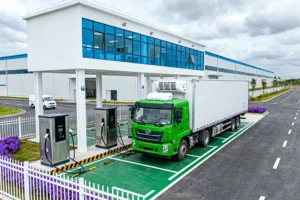
Depot charging for EV fleets is where most companies start. Installing chargers at your own facility gives you total control. You set the schedule, you monitor the usage, and you don’t have to worry about a public charger being broken when your driver shows up. Just make sure you do your homework on power distribution. Before you install 20 chargers, talk to your utility about utility coordination. Plan for the future by leaving extra space for more on-site fleet charging units as your fleet grows.
Public and Mobile Charging: Adding Flexibility
For drivers on the go, a fleet charging network of public stations is a great safety net. You can set up corporate accounts with providers to get bulk discounts. Also, keep an eye on mobile charging solutions—basically giant batteries on wheels. They’re great for construction sites or remote areas where the grid hasn’t reached yet.
Smart Charging Systems: The “Brain” of the Operation
Modern ev fleet charging isn’t just about cables; it’s about smart fleet charging systems. These software platforms track electricity prices in real-time to start charging when it’s cheapest. They also handle load balancing to make sure you don’t trip the main breaker. Without a good charging management system, you aren’t running an efficient operation.
4. Managing Operations: Fleet Electrification Strategy and Battery Health
Managing an electric fleet means shifting from “fuel management” to “energy and asset lifecycle management.” You’re not just watching the tank; you’re watching battery health management and energy spikes.
Charging scheduling is the heart of your operation. Your EV fleet charging software should automatically prioritize vehicles based on their next shift and current state of charge (SOC). For example, if a van finishes a shift at 3 PM but doesn’t go back out until 7 AM, the system should wait for the cheapest midnight power to kick in. This is key for charging cost control.
Route planning is different for EVs too. Electric commercial vehicles love the city. Regenerative braking can recover 15%–25% of energy in stop-and-go traffic. Also, don’t forget the weight. Batteries are heavy, so you need to keep a close eye on your vehicle utilization and payload limits.
Lastly, watch the environment. Batteries like it between 50°F and 77°F. If it’s freezing, park them inside if you can to avoid wasting energy on heating. Keeping the charge between 40% and 60% during long downtimes is the best way to prevent battery degradation. This kind of fleet charging optimization is what keeps your total cost of ownership (TCO) low.
5. The Bottom Line: Costs, TCO, and Commercial EV Tax Credits
EVs cost about 20%–30% more upfront, but the total cost of ownership (TCO) in 2025 is a clear winner. A typical electric van saves about $20,000 over five years compared to diesel. Electricity is roughly 1/3 the cost of fuel, and since there are no oil changes or transmissions to worry about, your operating cost reduction hits 40% immediately.
The government wants to help you pay for this. The Inflation Reduction Act (IRA) offers:
- A 30% tax credit for commercial charging equipment (up to $100k per site).
- Up to $40,000 per vehicle in commercial EV tax credits.
Local programs like California’s HVIP or New York’s NYSERDA offer even more charging infrastructure grants. These programs are often “first-come, first-served,” so work with an EV fleet charging solutions provider who knows how to handle the paperwork and ESG reporting.
6. Your Roadmap: How to Build EV Fleet Charging Infrastructure
Moving to an electric fleet doesn’t happen overnight. Use this EV fleet electrification roadmap to stay on track:
- Pilot: Try 3–5 vehicles to test your actual range and fleet charging power management.
- Small Scale: Move to 10%–20% of the fleet and install your permanent fleet charging infrastructure.
- Full Deployment: Integrate your fleet energy management software and look into solar or storage.
- Optimize: Use your data to refine your charging utilization rate and lower costs further.
Start your utility coordination 6 to 12 months early. Getting permits for electrical work takes time. You don’t want your new trucks sitting idle because the chargers aren’t live yet.
Conclusion: A New Way to Move
In 2025, ev fleet charging is more than just a tech upgrade—it’s a smarter way to run a business. By picking the right tech, using smart fleet charging systems, and taking advantage of EV charging incentives, you’re setting your company up for a decade of savings. When you see a silent electric truck pull out of your depot, you’re seeing an efficient, data-driven operation. The cost of waiting is now higher than the cost of switching. It’s time to move your fleet into the fast lane.
FAQ: Your Fleet Charging Questions Answered
Q: How do I build EV fleet charging infrastructure without blowing my budget? A: Focus on depot charging for EV fleets using Level 2 stations for overnight needs. It’s the most cost-effective way to start. Avoid expensive DC fast chargers unless your routes absolutely require mid-day boosts.
Q: What is the best charging solution for EV fleets in logistics? A: Most logistics companies use a “hub-and-spoke” model. This means on-site fleet charging for daily needs and using a fleet charging network for emergency top-offs on long-haul routes.
Q: Are there specific EV charging incentives for small businesses? A: Yes. Beyond federal commercial EV tax credits, many states offer utility incentive programs that cover the cost of electrical upgrades and fleet charging equipment.