

 Загрузка ...
1. Introduction: The Convergence of Solar Energy and Electric Mobility
The global transition toward carbon neutrality is accelerating, and two technologies are driving this transformation — solar power и electric mobility. As the demand for clean energy and electric vehicles (EVs) rises, the integration of photovoltaic storage and charging systems has become a key strategy to achieve sustainability and energy independence.
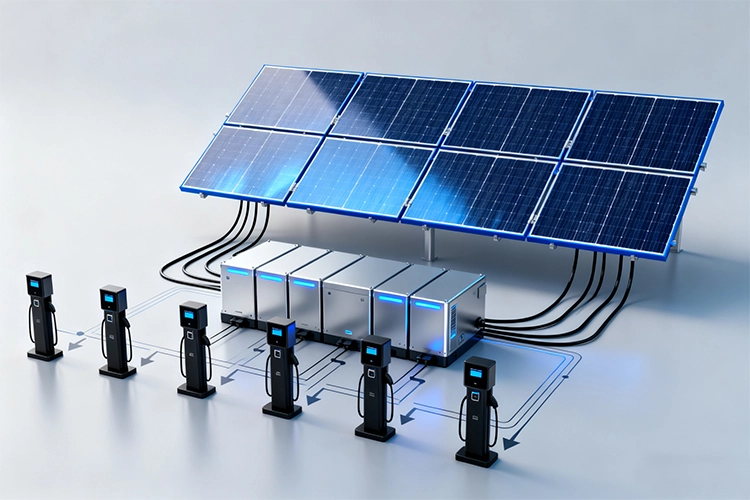
A photovoltaic storage and charging system combines three critical components: photovoltaic (PV) power generation, energy storage (usually via lithium battery systems), and electric vehicle charging infrastructure. This unified system captures solar energy, stores it efficiently, and delivers it to EVs or the grid when needed.
By merging renewable energy and EV infrastructure, photovoltaic storage and charging systems create a closed energy loop — producing, storing, and using power locally. This not only improves grid stability but also reduces carbon emissions and electricity costs for both individuals and businesses.
2. What Is a Photovoltaic Storage and Charging System?
A photovoltaic storage and charging system (often called a solar energy storage and EV charging system) is a comprehensive solution designed to integrate renewable generation with advanced energy management.
It typically consists of:
Photovoltaic Modules (PV Panels): Convert sunlight into DC electricity.
Inverter System: Converts DC to AC for use or grid export.
Energy Storage System (ESS): Lithium-ion or LFP battery packs that store excess solar power.
EV Charging Station: Supplies electricity to electric vehicles (AC or DC fast charging).
Energy Management System (EMS): The smart controller that coordinates generation, storage, and consumption in real time.
Unlike traditional grid-tied charging infrastructure, a PV energy storage and charging system can operate independently or as part of a smart grid. It optimizes power flows automatically — using solar power during the day, discharging stored energy at night, and interacting intelligently with the utility grid when needed.
3. How It Works: From Sunlight to Smart Charging
The working principle of a photovoltaic storage and charging system can be summarized in four main steps:
Solar Power Generation:
Photovoltaic modules absorb sunlight and generate direct current (DC) electricity.
Energy Storage:
When generation exceeds consumption, surplus solar energy is directed to the energy storage system — typically a lithium battery bank.
Charging and Power Use:
Stored energy can be used to charge electric vehicles via AC or DC solar charging stations.
Grid Interaction and Feedback:
When demand is high or grid prices peak, the system can export energy back to the grid — creating value through feed-in tariffs or smart grid balancing.
This closed-loop process ensures energy efficiency, grid stability, and cost savings — the core benefits of a hybrid solar storage system.
4. Technical Components of a Photovoltaic Storage and Charging System
4.1 Photovoltaic Generation Subsystem
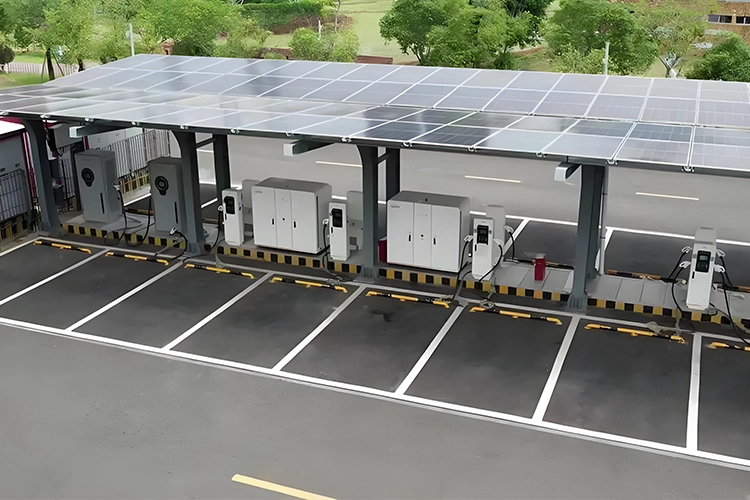
The solar PV array captures sunlight and converts it into electrical energy. Panels are often mounted on rooftops, parking canopies, or solar farms. Modern PV systems use high-efficiency monocrystalline modules with MPPT (Maximum Power Point Tracking) technology for optimized yield.
4.2 Energy Storage System (ESS)
Сайт solar energy storage system is typically composed of lithium iron phosphate (LiFePO₄) batteries, known for their safety and long cycle life. The ESS provides flexibility — charging during solar peaks and discharging during high-demand or night hours. A Battery Management System (BMS) ensures safety, longevity, and optimal energy utilization.
4.3 Charging Subsystem
This includes both AC and DC fast chargers, designed to provide flexible charging solutions. Depending on configuration, a PV charging system can feature:
Level 2 AC Chargers (7–22 kW) for workplaces or commercial centers.
Ускоренные зарядные устройства постоянного тока (50–350 kW) for highway corridors or fleet depots.
Integration with OCPP 2.0.1 allows remote monitoring, smart billing, and load management.
4.4 Energy Management System (EMS)
The EMS is the digital “brain” that controls the system. It monitors energy generation, storage levels, and charging demand to ensure balance and efficiency. Advanced systems use AI-based algorithms to forecast solar output and grid pricing, further optimizing operations.
5. Key Advantages of Photovoltaic Storage and Charging Systems
Energy Independence
By generating and storing solar energy locally, businesses and homeowners can reduce dependence on grid electricity and mitigate energy price volatility.
Environmental Sustainability
This integrated system significantly cuts CO₂ emissions by replacing fossil-fuel-based power with renewable solar energy.
Cost Savings and ROI
Self-consumption of solar energy reduces electricity bills, while solar plus storage setups can generate income through energy resale or EV charging fees.
Grid Stability
During peak loads, stored energy can be released to the grid — enhancing resilience and reducing strain on infrastructure.
Smart Integration
A PV energy storage system can be expanded easily, supporting future upgrades like vehicle-to-grid (V2G) и AI-based power management.
6. Real-World Applications
1.Commercial and Industrial Facilities:
Factories, warehouses, and office parks can deploy solar charging stations to power EV fleets and reduce operating costs.
2.Residential Solar Charging:
Homeowners integrate hybrid solar storage systems to charge their EVs sustainably, even during power outages.
3.Public EV Charging Infrastructure:
Municipalities use solar EV charging networks to expand green mobility and meet carbon reduction goals.
4.Off-Grid and Microgrid Projects:
Remote areas can build photovoltaic energy storage solutions for 24-hour power supply without relying on the main grid.
7. Global Market Development (2025 Outlook)
Сайт photovoltaic storage and charging system market is experiencing rapid growth, driven by global renewable policies and EV adoption:
Europe: The EU’s “Fit for 55” plan and carbon neutrality targets promote solar + storage integration. Germany and the Netherlands are expanding solar charging infrastructure across cities.
Asia-Pacific: China, Japan, and South Korea lead the deployment of PV charging systems supported by national incentives.
North America: The U.S. Inflation Reduction Act (IRA) provides tax credits for solar and energy storage, spurring demand for solar EV charging systems.
Middle East & Africa: Hybrid solar plus storage solutions are being deployed in off-grid and desert environments to support EV charging.
By 2030, the global market for photovoltaic storage and charging systems is expected to exceed USD 35 billion, with an annual growth rate above 20%.
8. Cost and Investment Analysis
The cost of a photovoltaic storage and charging system depends on capacity, component quality, and configuration.
Typical ranges:
PV installation: $800 – $1,200 per kW
Energy storage system: $400 – $600 per kWh
EV charger (AC/DC): $2,000 – $50,000 per unit
EMS & integration: 10–15% of total cost
Return on Investment (ROI):
Payback Period: 3–6 years, depending on energy usage and local tariffs.
Revenue Streams:
EV charging service income
Energy export to grid (feed-in tariff)
Carbon credit sales
Operational savings through energy self-consumption
As solar prices continue to drop and EV penetration rises, the ROI of PV energy storage and charging systems is becoming increasingly attractive.
9. Future Trends (2030 Vision)
The next decade will see groundbreaking advancements in photovoltaic storage and charging technologies:
AI-Powered Energy Management: Predictive algorithms optimizing when to store, use, or sell electricity.
Next-Generation Batteries: Solid-state and sodium-ion technologies improving safety and density.
Vehicle-to-Grid (V2G) Integration: EVs acting as mobile energy storage for solar charging infrastructure.
Smart Grid Connectivity: Seamless energy exchange between decentralized PV charging systems.
Cloud-Based Monitoring: Enabling predictive maintenance and global system control.
These innovations will transform solar plus storage systems into intelligent, adaptive energy ecosystems powering cities, homes, and mobility networks.
10. About Anengjienergy — OEM/ODM Photovoltaic Storage and Charging Expert
Anengjienergy is a professional global manufacturer specializing in photovoltaic storage and charging systems, integrating R&D, production, and intelligent manufacturing. The company provides full-scope OEM/ODM solutions, from solar modules to charging infrastructure and cloud-based management platforms.
Key Capabilities of Anengjie Energy:
Complete range of PV + energy storage + EV charging products.
Custom design and branding for OEM/ODM partners worldwide.
Advanced energy management systems with AI optimization.
Compliance with international safety and quality standards (CE, UL, ISO).
Modular scalability for residential, commercial, and industrial projects.
Through continuous innovation and engineering excellence, Anengjienergy empowers clients to build smarter, cleaner, and more profitable energy ecosystems. Whether for smart cities, EV fleets, or solar microgrids, the company’s photovoltaic storage and charging systems deliver sustainable energy solutions with global reliability.
11. Conclusion
As the world moves toward net-zero carbon emissions, the photovoltaic storage and charging system stands at the intersection of renewable energy and smart transportation. By combining solar generation, advanced battery storage, and EV charging technology, this integrated solution addresses the challenges of modern energy demand and sustainability.
From homes to highways, solar charging stations и hybrid solar storage systems are redefining how we generate and consume power. With visionary companies like Anengjie Energy leading in innovation, the global shift toward clean energy is not only possible — it’s already underway.
Сайт photovoltaic storage and charging system is more than a technological solution; it is the foundation of a future powered by the sun.