

Введение
As electric vehicles (EVs) take over the streets, the strength of the charging grid is what really defines a driver’s experience. DC and AC charger technology acts as the heart of this movement, but the technical jargon and usage gaps often leave owners feeling more confused than confident. According to the IEA’s latest 2025 Global EV Charging Infrastructure Outlook, the world has hit 58.9 million charging points as of September—a 42.8% jump in just a year. Public stations are getting beefier too; average power ratings have climbed 28.3% since January as the global service network matures. Whether you’re plugging in for a slow overnight charge in your driveway or hitting a Быстрое зарядное устройство постоянного тока on a road trip, understanding the AC vs DC EV charger divide is the secret to a stress-free drive. This guide breaks down the technology, charging curves, and real-world costs to help you pick the best setup.
1. The Core Technical Differences Between AC and DC Chargers
To understand AC charging vs DC charging, you have to look at how electricity actually moves. While the power grid provides alternating current (AC), an EV battery charging cycle requires direct current (DC). The main difference between these two EV charger types is simple—it’s about where the power conversion happens. This “conversion point” is the exact reason why one is so much faster than the other, a logic clearly defined in the ISO technical standards for EV systems.
1.1 AC Charger: The Practical Standard for Daily Power
Сайт AC charger is the gear you’ll see most often. Its job is to deliver AC power from the grid to the vehicle, where the car’s own onboard charger (OBC) takes over to convert that AC into the DC the battery needs. These systems are usually categorized as Level 1 (standard 120V wall outlets) or Level 2 (240V power, similar to what runs your dryer or oven). Most home and public Level 2 units push between 7kW and 22kW.
Since the heavy lifting of power conversion happens inside the car, the charging station itself is smaller, cheaper, and easier to build. IEA 2025 statistics show that Зарядные устройства переменного тока для электромобилей still hold over 72% of the global market, dominating residential neighborhoods and office parking lots in North America and Europe. Your speed here is strictly capped by the car’s OBC. If your car only supports 3.3kW, a 7kW station won’t speed things up. However, DOE testing shows that most new US models average 6.6kW on their OBC, hitting over 92% efficiency on a 7kW AC unit—perfectly matching daily energy needs.
1.2 DC Charger: High-Speed Power for the Road
A DC charger skips the car’s middleman. It features an internal rectifier system that converts AC to DC within the station itself, feeding high-voltage energy directly to the battery. These units require industrial-grade 480V power and range from standard 60kW fast chargers to 480kW “ultra-fast” beasts. They look like large refrigerators and are usually found along highways where people need to get back on the road fast.
We’re seeing a massive push for high-power Ускоренные зарядные устройства постоянного тока. By late 2025, there are over 120,000 units globally that push at least 250kW, with Europe hosting 45% of them. These allow for a “10-minute charge for 300+ kilometers” experience. But being an EV charging station manufacturer for these units involves high stakes; the IEA estimates these cost 180 to 220 times more than a Level 2 AC station and put a much heavier load on the grid. To keep up, the European Commission is dropping €21 billion through 2025 to beef up the grid for these high-speed networks.
2. The Charging Curve: Why It Slows Down at 80%

Whether you use AC or DC, you’ll notice a “fast then slow” charging curve. This isn’t a glitch; it’s a safety feature designed to protect your battery’s lifespan and prevent overheating. SAE research proves that this strategy can actually make your battery last 15-20% longer. However, the way these curves look is very different depending on the charger.
2.1 The AC Curve: Slow and Steady “Tapering”
The curve for AC is pretty flat, often called a “cone” shape. Since the power is lower, the onboard charger (OBC) can maintain a steady pace for a long time. Speed only drops off when you hit that final 20% stretch. For an 80kWh battery, a 7kW AC unit takes about 7 to 8 hours to go from 20% to 80%, but filling that final bit to 100% can add another 3 to 4 hours. German VDA data shows this slow rhythm is very healthy for the cells, with energy losses (10-15%) mostly coming from the internal conversion process.
2.2 The DC Curve: The Sprint and the Drop
DC charging is a sprint. It starts at a massive peak when the battery is low. However, once you hit that 80% mark, the car’s thermal management system tells the charger to back off to prevent damage. A 120kW fast charger can get you to 80% in about 25-35 minutes, but the last 20% still takes 30-40 minutes. Even on a 480kW ultra-fast charger, that final stretch takes 15-20 minutes. On the bright side, IEA monitoring shows DC charging efficiency is high, with energy losses of only 5-8% since most work happens in the station.
3. Comparing the Pros and Cons: AC and DC Charging Station
There’s no “best” charger—just the right tool for the job. Here is how they stack up based on 2025 industry data:
| Metric | AC Charger (Level 2) | DC Fast Charger |
| Technology | Relies on car’s OBC for conversion | Station converts AC to DC directly |
| Power Needs | 120V / 240V Household | 480V+ Industrial |
| Output Range | 3.3kW – 22kW | 60kW – 480kW |
| Speed (20-80% on 80kWh) | 7–8 Hours | 15–35 Mins (Fast) / 10–15 Mins (Ultra) |
| Charging Cost (Global Avg) | $0.05–$0.06/kWh (Home/Off-peak) | $0.15–$0.32/kWh (Public Ultra-fast) |
| Battery Health | Gentle; 10-15% less wear vs. DC | High heat; 5-8% more wear vs. AC |
| Best Scenario | Home, Work, Long Stays | Road trips, Fleets, Emergencies |
| 2025 Market Share | 72% (IEA Data) | 28% (IEA Data) |
3.1 The Reality of AC Chargers
The wins for AC are about economics and longevity. First, it’s everywhere—85% of European residential areas have AC coverage. Second, it’s cheap. Filling up at home at night for $8 to $10 is a huge perk compared to gas. Third, it’s gentle. VDA tracking shows that vehicles using mostly AC charging have 10-15% less battery wear after three years than those that only fast-charge. The downside? It’s slow. You can’t use it for a quick top-off, and installing a Level 2 unit in the US still runs $1,200 to $1,800 on average for the electrical work.
3.2 The Reality of DC Chargers
DC is the ultimate cure for “mileage anxiety.” SAE surveys show that the spread of fast chargers has boosted EV owner satisfaction by 62%. They are fast, direct, and compatible with almost every modern EV. But you pay for that speed. The 2025 IEA report shows public DC prices can be 5 times higher than home charging. There’s also the wear factor—frequent fast charging can lead to a 5-8% higher degradation rate over three years. And because they are so expensive ($25k to $32k per unit), they aren’t everywhere yet, and they put a massive strain on the local power grid.
4. Scenario Guide: Which One Should You Choose?
Choosing your charger is about matching your “dwell time” (how long you’re parked) to the speed you need.
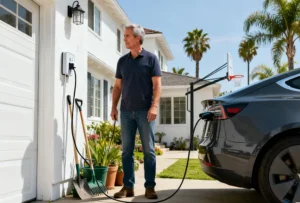
4.1 When AC is the Best EV Charger for Home Use
- Home Charging: This is the choice for 68% of global users. Plug in at night, wake up full. It’s cheap, safe, and easy.
- At Work: If your car is sitting for 4+ hours, Level 2 AC is perfect. It boosts employee EV adoption by 45% according to European data.
- Short Errands: If you’re spending two hours at a mall or supermarket, AC adds plenty of miles without the high public fees.
- Pro Tip: If your car’s OBC supports it, go for an 11kW AC unit—it’s 30% more efficient than the 7kW standard.
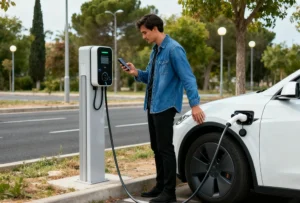
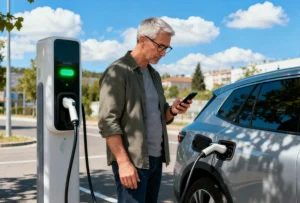
4.2 When to Hunt for a Commercial DC Fast Charging Station
- Road Trips: Stick to the highway service areas. EU road plans for 2025 now place a DC station every 50km along major routes.
- Emergencies: If you’re at 5% and have a meeting across town, a 10-minute ultra-fast charge is a lifesaver.
- Fleet Operations: For Uber drivers or delivery vans, time is money. A DC fast charger manufacturer designs these to keep fleets moving with 28% higher efficiency.
- Note: Match the station to your car. 400V cars should use 60-120kW units; save the 250kW+ stalls for 800V cars to avoid wasting money.
5. 2025 Industry Trends: What’s Next for EV Charging Infrastructure?
The charging industry is in a massive boom. The global market hit $42.6 billion this year, up 35%. Asia leads the way, but the US and Europe are catching up thanks to huge funding like the US Inflation Reduction Act ($7.5 billion for chargers) and China’s plan to hit 28 million chargers by 2027.
Technically, we’re seeing three big shifts:
- Extreme High Power: 480kW stations paired with 800V car platforms are making “5 minutes for 200km” a reality.
- Vehicle-to-Grid (V2G): Your car is becoming a “mobile battery.” In 23 countries, people are already selling power back to the grid during peak hours to lower their charging cost.
- Smart Stations: 80% of new public AC chargers are now cloud-connected for remote scheduling and load balancing, making the grid much more stable.
6. Final Word
Сайт DC and AC charger partnership is the backbone of the electric revolution. They aren’t competing; they are complementary. AC is your low-cost daily nutrition for your battery, while DC is the high-performance fuel for the long haul.
As we move through 2025, the network is getting smarter and faster. For the average driver, the best strategy isn’t to chase the highest kW number—it’s to understand your own “dwell time” and match it to the right charger. This balance is what makes the transition to electric driving truly sustainable and economical.
FAQ: What People Are Asking
Is DC fast charging bad for EV battery life?
Using it occasionally is fine. However, doing it every single day can cause 5-8% more battery degradation over three years compared to AC charging. Use AC for 80% of your needs.
What is the real AC vs DC EV charger comparison in terms of cost?
Home AC charging averages $0.05-$0.06/kWh. A public commercial DC fast charging station can cost $0.15 to $0.32/kWh. You’re paying a premium for the speed and convenience.
Can any EV use a DC fast charger?
Most modern EVs can, but you have to check the plug standard (CCS, NACS, or CHAdeMO) and your car’s maximum intake limit.
What is an OBC and why does it matter?
OBC stands for Onboard Charger. It’s the part inside your car that converts AC to DC. Your AC charging speed is limited by how much power your car’s OBC can handle.