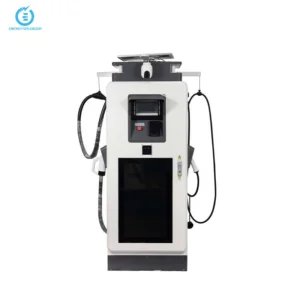


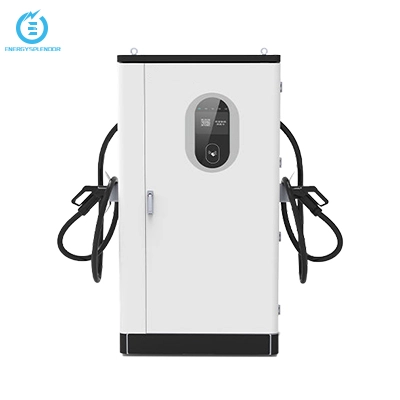


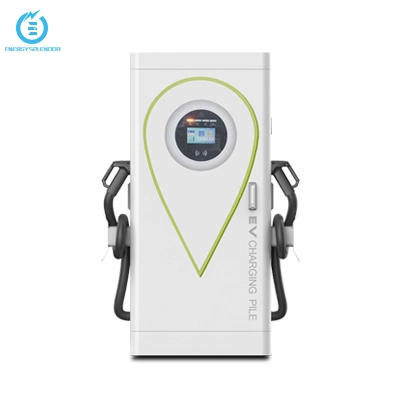


The cost of an EV charging station depends on the power level,
configuration and project requirements.
Please связаться с нами to get a customized quotation.
Yes, we provide DC fast chargers for commercial, public and
highway EV charging station projects.

Портативная зарядная станция для электромобилей, также известная как мобильная зарядная станция для электромобилей или портативное быстрое зарядное устройство постоянного тока, - это устройство быстрой зарядки, которое можно перевозить на электромобиле в любое время.
Чтобы адаптироваться к многовариантным сценариям зарядки электромобилей, мобильные станции быстрой зарядки постоянного тока более удобны, чем стационарные зарядные станции. Кроме того, они оснащены четырьмя универсальными колесами и могут использоваться в любое время в разных местах.
Портативные зарядные устройства позволяют водителям заряжать свои электромобили в любом месте, где есть совместимый источник питания, что делает их идеальными для путешествий, чрезвычайных ситуаций и районов с ограниченной зарядной инфраструктурой.
Эти зарядные устройства предназначены для размещения в багажнике автомобиля, что позволяет водителю легко переносить их и заряжать в случае необходимости.
Они обеспечивают практичный вариант резервной зарядки без предварительных затрат на постоянное домашнее зарядное устройство, особенно для пользователей, которые заряжают аккумуляторы нечасто или арендуют недвижимость.
Портативные зарядные станции идеально подходят для помощи на дорогах, аренды автопарков и тест-драйвов EV в дилерских центрах, обеспечивая быструю и гибкую зарядку на месте.
Мощные портативные быстродействующие зарядные устройства постоянного тока значительно сокращают время зарядки по сравнению с традиционными портативными зарядными устройствами переменного тока, обеспечивая быстрое увеличение дальности действия в случае необходимости.
Многие портативные зарядные устройства заряжаются медленнее, чем стационарные устройства быстрой зарядки постоянного тока, что может увеличить время простоя во время зарядки.
Для их работы требуется совместимая розетка или генератор, которые не всегда доступны в удаленных или аварийных ситуациях.
Портативные зарядки со встроенными аккумуляторами обеспечивают ограниченное количество энергии, которой часто хватает на экстренный пробег, а не на полную зарядку.
Портативные зарядные устройства постоянного тока большой емкости могут быть тяжелыми, что делает их переноску вручную менее удобной.
Портативные быстродействующие зарядные устройства постоянного тока стоят дороже стандартных портативных зарядных устройств переменного тока, что может повлиять на первоначальное решение о покупке.
A Домашнее зарядное устройство постоянного тока это быстродействующее зарядное устройство постоянного тока, предназначенное для бытового использования и позволяющее владельцам электромобилей заряжать свои EV гораздо быстрее, чем стандартные домашние зарядные устройства переменного тока. В отличие от зарядных устройств переменного тока, которые требуют от бортового зарядного устройства электромобиля преобразования переменного тока в постоянный, домашнее зарядное устройство постоянного тока подает постоянный ток непосредственно на аккумулятор, что значительно сокращает время зарядки.
DC fast chargers (Level 3 chargers) supply постоянный ток (DC) directly to your EV’s battery, bypassing the onboard AC-to-DC converter.
Power range: 20 kW – 360 kW (typical home-use units: 20 – 50 kW).
Charging time: 80% charge in 20–40 minutes, depending on your car and charger power.
Connector types: CCS Combo 1/2, CHAdeMO, or GB/T (depending on your region and vehicle).
A Быстрое зарядное устройство постоянного тока needs three-phase power и high amperage circuit.
Typical home electrical systems (single-phase, ≤240 V, 100–200 A) often cannot directly support DC chargers.
You may need:
A dedicated 400–480 V, 3-phase supply.
A new transformer or service upgrade from your utility company.
Professional load calculation and wiring.
If your home cannot support this load, consider a Level 2 (AC) charger instead. It’s much easier and cheaper to install (7–22 kW).
| Item | Typical Range (USD) |
|---|---|
| DC Charger Unit | $10,000 – $40,000 |
| Electrical Upgrade (Transformer, Panel, Cables) | $5,000 – $20,000 |
| Профессиональная установка | $2,000 – $10,000 |
| Total (Approx.) | $17,000 – $70,000 |
Prices vary by brand, country, and existing infrastructure.
Assess your home’s power system
Hire a licensed electrician или EV infrastructure specialist to evaluate your load capacity.
Contact your utility provider
Request approval for higher capacity or 3-phase service.
Choose a certified charger
Look for chargers certified under UL, CE, or equivalent safety standards (brands like ABB, Delta, Kempower, or Tesla).
Obtain permits
Local authorities may require electrical or construction permits.
Professional installation
The technician will:
Install new breakers and heavy-duty wiring.
Mount the charger securely (indoor/outdoor).
Connect to the main panel or transformer.
Configure grounding, surge protection, and safety devices.
Inspection and commissioning
The system must pass a safety inspection before use.
Park and power on the charger
Some units start automatically; others require an app or RFID card.
Connect the charging cable
Plug the DC connector (e.g., CCS or CHAdeMO) into your vehicle.
Authenticate (if needed)
Via app, RFID, or screen interface.
Monitor charging
The charger will communicate with your car to regulate current and voltage.
Stop and disconnect
Once charged (usually to 80%), stop charging via the app or charger screen, then unplug.
Regular maintenance
Keep connectors clean, ensure ventilation, and check for fault codes.
If full DC installation isn’t practical:
DC wallbox (20–40 kW) — compact models by brands like ANENGJIENERGY AC/DC или Настенная коробка Delta DC may work for larger homes with upgraded supply.
High-power Level 2 (22 kW AC) — far more affordable (~$1,000–$2,500) and still charges most EVs overnight.
Only licensed electricians should handle installation.
Follow local electrical codes (e.g., NEC, IEC).
Install surge protection и ground fault detection.
Keep the charger in a dry, ventilated, and shaded area.
Коммерческая зарядная станция EV - это зарядная инфраструктура, предназначенная для предоставления услуг по зарядке электромобилей в общественных или деловых местах. В отличие от домашних зарядных станций, эти станции рассчитаны на более интенсивное использование, обеспечивая надежную, безопасную и эффективную зарядку нескольких электромобилей в день. Они обычно устанавливаются в таких местах, как торговые центры, парковки, гостиницы, офисные здания, остановки на трассах и автопарки, помогая предприятиям привлекать водителей электромобилей и получать дополнительные доходы.
Коммерческие зарядные устройства для EV бывают как переменного, так и постоянного тока. Зарядные устройства переменного тока, обычно мощностью от 7 кВт до 22 кВт, подходят для мест, где автомобили паркуются на длительное время, например, на рабочих местах или в гостиницах. Быстродействующие зарядные устройства постоянного тока мощностью от 30 кВт до 360 кВт и выше могут заряжать EV от 20% до 80% за 20-60 минут, что делает их идеальными для коммерческих объектов, где водителям требуется быстрая зарядка, таких как станции техобслуживания и коридоры автомагистралей.
ower output / speed: For commercial use (businesses, fleet, public parking), faster charging is better (especially if turnover is high). DC fast chargers (100 kW-350 kW+) are more expensive but support quick sessions.
Connectors & standards: Compatibility (e.g., CCS, CHAdeMO, NACS) matters. Also network communication standards (OCPP, ISO 15118) for future proofing.
Network & payment integration: If you plan to charge the public (not just internal fleet), you’ll want billing, user access, management software (remote, data, etc.).
Durability / commercial build: Weather-rated, robust cables/connectors, outdoor rated, high duty cycle.
Site fit & utility readiness: Many sites may not have the required power, so the “best” charger is one your site can support and that fits your workflow. For example one reddit user said:
“If you can’t do at least 150 kW, don’t install a DC fast charger”
Scalability & brand/support: Future expansion, software updates, maintenance support, brand reliability.
Cost & ROI: Lower upfront cost is good, but you also want it to earn or provide the service you expect (fleet turnaround, public station usage, etc.).
Use case alignment: Are you doing a public charging kiosk (high throughput) vs. private fleet depot vs. employee parking? The “best” will vary.
Выходная мощность зарядной станции постоянного тока зависит от нескольких ключевых факторов. Во-первых, мощность объекта мощность источника питания и ограничения трансформатора напрямую влияют на максимальную мощность зарядного устройства. Во-вторых. внутренняя конструкция зарядного устройства и конфигурация модулей определяют, сколько энергии может быть подано непрерывно. В-третьих. Совместимость батареи EV и системы управления батареей (BMS) ограничивает фактическую мощность зарядки, поскольку автомобиль может принимать энергию только в пределах своих конструктивных ограничений. Четвертое, номиналы кабелей и разъемов тока и напряжения (CCS, CHAdeMO) влияют на безопасную подачу электроэнергии. Дополнительно, рассеивание тепла и температура окружающей среды может привести к снижению мощности, если окружающая среда слишком горячая, что снижает производительность для защиты зарядного устройства. Наконец, Стратегии зарядки электромобилей На подачу энергии влияет SOC (состояние заряда), при этом самая высокая скорость зарядки обычно достигается при уровнях заряда аккумулятора 20% и 80%. Понимание этих факторов обеспечивает безопасную, эффективную и быструю зарядку, продлевая срок службы батареи.
If you’re looking for a commercial-grade DC EV charging station for “powers” (high through-put / faster charging), here’s a breakdown of what to consider + a selection of strong product candidates you can evaluate.
Based on typical specs & market analysis:
Expect input power to be 3-phase (often 400 V/480 V AC) since DC fast charging requires high power.
Output voltage ranges for many DC chargers: often up to ~1000 V DC (e.g., 150-1000 V) for wide EV compatibility.
Output power: Commercial DC chargers commonly in the 60 kW to 240+ kW range (some going higher).
Efficiency & power factor: High efficiency (> 95 %) and PF ≥0.98 typical for good units.
Communication / network features: OCPP support, remote management, multiple connectors (CCS1, CCS2, NACS, GB/T) often.
Site infrastructure: Significant electrical service, possibly transformer upgrade. One comment:
“As a general rule, every 200A of 480V 3-phase service input gets you about 125 kW of output…”
So when you select a station, make sure the site’s power capacity (panel, transformer, service drop) supports the charger’s input requirements.
A Complete Guide to DC Charging Connector Types for Electric Vehicles (EVs)
Поскольку электромобили (EV) продолжают набирать популярность, понимание различных типов разъемов для зарядки постоянным током необходимо для эффективной и совместимой быстрой зарядки. Во всем мире производители EV и регионы используют различные стандарты зарядки постоянным током, каждый из которых имеет уникальные конструкции разъемов, протоколы связи и поддерживаемые автомобили. В этой статье мы рассмотрим пять основных типов разъемов для зарядки постоянным током: GB/T, CCS1, CCS2, CHAdeMO и собственный разъем Tesla, что поможет вам выбрать правильный разъем для вашего EV или зарядной станции.
| Тип разъема | Стандарт | Регион | Быстрая зарядка | Распространенные бренды |
|---|---|---|---|---|
| GB/T | Китай | Китай | ✅ | BYD, NIO, XPeng |
| CCS1 | Комбо 1 | Северная Америка | ✅ | Ford, GM, Tesla (США) |
| CCS2 | Комбо 2 | Европа, Азия | ✅ | VW, Mercedes, Hyundai |
| CHAdeMO | CHAdeMO | Япония, Азия | ✅ | Nissan, Mitsubishi |
| Tesla DC | NACS / Разное | Глобальная | ✅ | Tesla |
Разъем GB/T DC для зарядки является официальным стандартом, используемым во всем Китае. Имея большой круглый разъем с прочной конструкцией, он поддерживает быструю зарядку постоянным током высокой мощности и широко совместим с китайскими EV-брендами, такими как BYD, NIO и XPeng. Хотя он не используется на международном уровне, он доминирует в китайской инфраструктуре EV.
CCS1, или Combined Charging System Type 1, - это основной разъем быстрой зарядки постоянного тока в Северной Америке. Он сочетает в себе разъем AC J1772 с двумя дополнительными контактами постоянного тока для высокоскоростной зарядки. CCS1 поддерживается основными американскими автопроизводителями, такими как Ford, General Motors и Tesla (с адаптерами). Он совместим с такими зарядными сетями, как Electrify America и EVgo.
CCS2 - это глобальный стандарт разъема быстрой зарядки постоянного тока, который предпочитают использовать в Европе, Австралии и некоторых странах Азии. Он имеет основание переменного тока типа 2 с двумя контактами постоянного тока под ним, что обеспечивает бесшовную интеграцию для зарядки как переменным, так и постоянным током. Такие бренды, как Volkswagen, BMW, Mercedes-Benz, Hyundai и Tesla (в Европе), используют CCS2 в качестве основного интерфейса для зарядки.
Разработанный в Японии стандарт CHAdeMO когда-то был ведущим стандартом зарядки постоянного тока, известным своей возможностью быстрой зарядки. Его использовали такие модели EV, как Nissan Leaf и Mitsubishi i-MiEV. Однако из-за громоздкого разъема и снижения уровня поддержки во всем мире CHAdeMO постепенно отменяется в пользу системы CCS, особенно за пределами Японии.
Tesla employs different DC connector standards depending on the region:
In North America, Tesla uses its proprietary NACS (North American Charging Standard) plug, known for its compact design and high-speed Supercharging capability.
In Europe, Tesla vehicles use CCS2.
In China, Tesla adapts to the GB/T standard for local compatibility.
Tesla provides adapters to ensure cross-standard support for its vehicles in global markets.
Choosing the right EV charging connector depends on your vehicle’s make, your location, and the DC charging infrastructure available. As global standards consolidate, CCS2 is emerging as the dominant format, but regional variations like GB/T and Tesla’s NACS remain critical to consider.
For EV owners and charging station operators alike, understanding these DC fast charging plug types ensures compatibility, speed, and convenience on the road to a greener future.
Станции быстрой зарядки постоянного тока играют важнейшую роль в развитии электромобилей (EV), обеспечивая быстрое восполнение энергии по сравнению с традиционной зарядкой переменным током. Хотя все зарядные устройства постоянного тока подают постоянный ток на аккумулятор автомобиля, в зависимости от возможностей станции, архитектуры электропитания и интеграции интеллектуальной системы, под капотом используется несколько методов зарядки.
| Способ зарядки | Основной принцип | Выходная мощность | Ключевые примеры использования | Примечательная особенность |
|---|---|---|---|---|
| Зарядка с постоянной мощностью | Фиксированная выходная мощность с динамическим V/I | 250-600+ кВт | Сверхбыстрые зарядные устройства, премиальные автомобили EV | Максимальная эффективность на протяжении всего заряда |
| Зарядка CC-CV | Каскады постоянного тока + напряжения | 30-250 кВт | Стандартные станции быстрой зарядки | Сбалансированная скорость и безопасность батареи |
| Плановая зарядка | Зарядка начинается в установленное время | Переменная | Автопарки, логистика, общественные системы | Экономичность и оптимизация сети |
| Динамическое распределение мощности | Интеллектуальное распределение нагрузки между разъемами | Совместное использование портов | Зарядные узлы, склады | Одновременная зарядка нескольких электромобилей |
| Зарядка с жидкостным охлаждением | Охлаждение кабелей с жидкостной циркуляцией | 350-600+ кВт | Мощные электромобили, электрические грузовики | Безопасная, эффективная сверхвысокая мощность |
Ниже приведены пять основных методов зарядки постоянным током, используемых сегодня в коммерческой и промышленной зарядной инфраструктуре для EV:
Definition: The charging station maintains a fixed output power by dynamically adjusting voltage and current within a defined range.
Benefits: Maximizes charging speed throughout the session.
Application: Ultra-fast chargers (e.g., 350kW, 480kW systems), premium EVs and electric trucks.
Key Feature: Power remains stable while voltage and current fluctuate.
Definition: Charging starts in constant current (CC) mode, and switches to constant voltage (CV) once a threshold is reached.
Benefits: Stable, safe, and battery-friendly.
Application: Standard DC fast chargers for passenger vehicles.
Key Feature: Fast charging up to ~80%, then slower top-off.
Definition: Charging is delayed or scheduled to begin during off-peak hours or based on operator settings.
Benefits: Optimizes electricity costs, reduces grid stress.
Application: Fleets, taxis, buses with centralized management platforms.
Key Feature: Charging starts automatically based on time or pricing signals.
Definition: A centralized charging cabinet dynamically allocates power across multiple charging guns based on demand.
Benefits: Increases site efficiency, reduces wait time, balances load.
Application: Multi-vehicle charging hubs, smart charging depots.
Key Feature: Real-time power adjustment across connected EVs.
Definition: Charging cables are cooled using a liquid circulation system to safely handle very high currents.
Benefits: Enables charging powers exceeding 500kW, shortens charge times dramatically.
Application: High-end EVs, electric buses, heavy-duty trucks.
Key Feature: High power delivery with safe thermal management.
Методы подключения к сети для зарядных станций постоянного тока
Поскольку электромобили (EV) продолжают набирать популярность, зарядные станции постоянного тока играют важнейшую роль в обеспечении быстрой и надежной зарядки. Чтобы обеспечить мониторинг, удаленное управление, выставление счетов и обновление программного обеспечения в режиме реального времени, эти зарядные станции должны быть оснащены надежными способами подключения к сети.
Ниже перечислены наиболее распространенные способы подключения зарядных станций постоянного тока к Интернету или внутренним системам:
A wired Ethernet connection offers a stable and high-speed method for connecting DC charging stations.
Ideal for: Fixed installations such as public charging depots, commercial parking lots, and service stations.
Benefits:High data reliability,Low latency,Strong resistance to interference
Many modern DC charging stations use 4G or 5G mobile networks to connect wirelessly.
Ideal for: Urban environments, roadside charging, and areas without existing network infrastructure.
Benefits:Easy deployment without cables,Real-time data exchange and OTA (Over-the-Air) updates,5G enables ultra-low latency and high bandwidth, making it suitable for smart EV charging infrastructure
Wi-Fi is a flexible networking option when local wireless networks are available.
Ideal for: Underground garages, office buildings, and shopping centers.
Limitations:Signal strength may vary,Less reliable than Ethernet or cellular in high-interference environments
PLC enables data transmission over existing electrical power lines, reducing the need for separate network wiring.
Ideal for: Integrated systems in parking structures or residential complexes.
Benefits:Cost-effective in retrofitting environments
Drawbacks:Limited bandwidth and more vulnerable to interference
While not used for internet access, RS485 and CAN bus protocols are essential for internal communication between the charging station components or with a local controller.
Ideal for: Device-to-device communication
Function: Ensures stable control signals, fault reporting, and energy metering.
Regardless of the method used, every DC charging station must incorporate strong cybersecurity measures, including:VPN tunneling
,Data encryption,Firewall protection,Secure authentication protocols
These measures are vital for protecting user data, preventing unauthorized access, and maintaining system reliability.
Выбор правильного сетевого подключения для зарядной станции постоянного тока зависит от места развертывания, требований к масштабируемости и эксплуатационных потребностей. Будь то 5G, Ethernet или PLC, обеспечение надежного соединения необходимо для создания интеллектуальной зарядной инфраструктуры EV, готовой к будущему.
По мере того как зарядные станции постоянного тока становятся все более совершенными и широко распространенными, операционная совместимость между аппаратными и программными платформами становится критически важным. Именно здесь OCPP (Открытый протокол зарядных пунктов) вступает в игру.
OCPP (Open Charge Point Protocol) is an open-source communication standard that enables charging stations and central management systems (CMS) to communicate effectively—regardless of the manufacturer.
Developed by: Open Charge Alliance (OCA)
Current versions: OCPP 1.6 (widely adopted), OCPP 2.0.1 (latest and more advanced)
Supported by: Most major EV charging hardware and software providers globally
For DC fast chargers, which require advanced functions like remote diagnostics, load balancing, user authentication, and dynamic pricing, OCPP ensures seamless integration between different systems.
Key Benefits:
Interoperability: Connect any OCPP-compliant charging station to any OCPP-compliant backend.
Remote Management: Enables remote monitoring, firmware updates, diagnostics, and control.
Scalability: Easily add new chargers to the network without vendor lock-in.
Real-time Data Exchange: Facilitates communication of charging status, error codes, energy usage, and payment data.
Cost Efficiency: Reduces dependency on proprietary systems and lowers integration costs.
OCPP acts as a translator between:
The Charging Station (Charge Point)
The Central System (Backend or CMS)
Data such as charging session start/stop, authentication via RFID or app, meter values, error codes, and transaction status are exchanged over the network layer (Ethernet, 4G/5G, Wi-Fi) using OCPP messages formatted in JSON over WebSockets (for OCPP 1.6) or JSON over MQTT (for OCPP 2.0.1).
The effectiveness of OCPP depends heavily on the reliability of the network connection:
Ethernet or 5G is ideal for stable, high-bandwidth OCPP communication.
Wi-Fi and PLC may work but are more prone to disruption, which can affect session reporting or remote control functions.
With OCPP 2.0.1, security features have been significantly improved:
End-to-end TLS encryption
Secure firmware updates
Digital certificates for authentication
Stronger session integrity
These enhancements make OCPP a secure and future-proof protocol for modern smart DC charging networks.
OCPP является основой интеллектуальной зарядки EV, особенно для станций быстрой зарядки постоянного тока. Применяя решения, соответствующие стандарту OCPP, операторы могут обеспечить гибкость, масштабируемость и полный контроль над своей зарядной инфраструктурой, обеспечивая при этом последовательный и безопасный опыт для водителей EV.
По мере распространения электромобилей (EV) важно обеспечить бесперебойную и гибкую систему оплаты на зарядных станциях постоянного тока. Операторы должны поддерживать несколько способов оплаты, чтобы удовлетворить потребности частных водителей, операторов автопарков и коммерческих пользователей.
Many DC charging networks issue RFID cards to registered users.
How it works: Users swipe the RFID card on the charging station to start and end sessions.
Advantages:Quick and contactless,Useful for frequent users and fleets,Integrated with: User accounts for postpaid or prepaid billing
Most modern DC charging stations support payments through mobile apps.
Features:Start/stop charging remotely,Real-time status monitoring
,Digital payment via credit/debit card, Apple Pay, Google Pay, etc.
Benefits:User-friendly,Supports loyalty programs, promotions, and subscriptions
In markets like China and Southeast Asia, QR code payments are the norm.
How it works: Scan the QR code on the charger using WeChat, Alipay, or any supported e-wallet.
Advantages:No app download required,Widely adopted and trusted
Some stations are equipped with POS terminals or contactless card readers.
Accepted methods: Visa, MasterCard, American Express, etc.
Compliant with: EMV and PCI-DSS standards for secure transactions
Convenient for: Walk-in or first-time users
For B2B clients or fleet operations, centralized billing is common.
Features:Monthly invoicing,Usage reports,Account-level limits and control,Integrated with: Fleet management platforms and CMS
Next-generation Plug & Charge technology enables fully automated payment.
How it works: The EV and charger authenticate each other via encrypted communication.
Benefits:No app, card, or scan required,Highly secure and seamless user experience
Note: Requires compatible vehicles and chargers
Все платежные операции должны соответствовать стандартам безопасности данных, таким как:PCI-DSS (Payment Card Industry Data Security Standard), сквозное шифрование, безопасная аутентификация пользователей, токенизация для сохраненных методов оплаты
Предоставление нескольких вариантов оплаты на зарядных станциях постоянного тока повышает удовлетворенность пользователей, расширяет круг потребителей и способствует развитию интеллектуальной инфраструктуры зарядки EV. Будь то приложение, RFID или plug-and-charge, безопасная и бесперебойная система оплаты является ключом к будущей возможности зарядки EV.
Чтобы обеспечить безопасную, надежную и интеллектуальную зарядку, современные Станции зарядки электромобилей постоянного тока оснащены передовыми механизмами защиты. Эти системы защищают не только зарядное оборудование, но и автомобиль и пользователя. Ниже приведены 12 основных функций защиты Обычно встраиваются в высококачественные зарядные устройства постоянного тока.
Защищает зарядное устройство от повреждений, вызванных аномальными колебаниями частоты электросети. Обеспечивает стабильную работу даже в условиях нестабильной сети.
Защищает от внезапных скачков напряжения при ударах молнии или скачках напряжения. Эта функция необходима для установки на улице и в регионах, подверженных грозам.
Контролирует и защищает зарядный разъем, чтобы предотвратить перегрев, износ или неправильное подключение. Обеспечивает надежное и безопасное соединение между зарядным устройством и EV.
Активируется, когда входное или выходное напряжение падает ниже безопасного порога. Предотвращает повреждение внутренних компонентов и обеспечивает эффективность зарядки.
Предотвращает работу зарядного устройства в экстремально холодных условиях. Оно задерживает зарядку или регулирует параметры, чтобы избежать нагрузки на оборудование и повреждения батареи.
Обнаруживает неправильное заземление или замыкания на землю. Это очень важно для предотвращения поражения электрическим током и обеспечения безопасности пользователя.
Механизм мгновенного отключения в случае неисправности или аварийной ситуации. Позволяет пользователям или системам немедленно отключить питание для обеспечения максимальной безопасности.
Предотвращает работу зарядного устройства, когда выходное напряжение падает ниже безопасного рабочего уровня. Помогает поддерживать стабильность системы и избегать неполных сеансов зарядки.
Мгновенно отключает питание при коротком замыкании, чтобы предотвратить электрический пожар, выход из строя оборудования или повреждение батареи.
Защищает зарядное устройство и подключенный EV от вредного воздействия высокого напряжения. Автоматически регулирует или отключает питание при превышении предельных значений.
Контролирует внутренние модули питания на предмет перегрева. Снижает мощность или отключает зарядное устройство, чтобы предотвратить тепловой сбой.
Общесистемная температурная защита, обеспечивающая работу зарядного устройства в безопасных температурных пределах. Особенно полезно в жарком климате или при высокой нагрузке.
DC charging stations handle high power levels and operate in diverse environments. These 12 protection mechanisms ensure:User safety
/Equipment longevity/Consistent performance/Compliance with international standards
By integrating these protections, manufacturers meet the demands of modern EV charging infrastructure, from urban stations to highway fast-charging hubs.