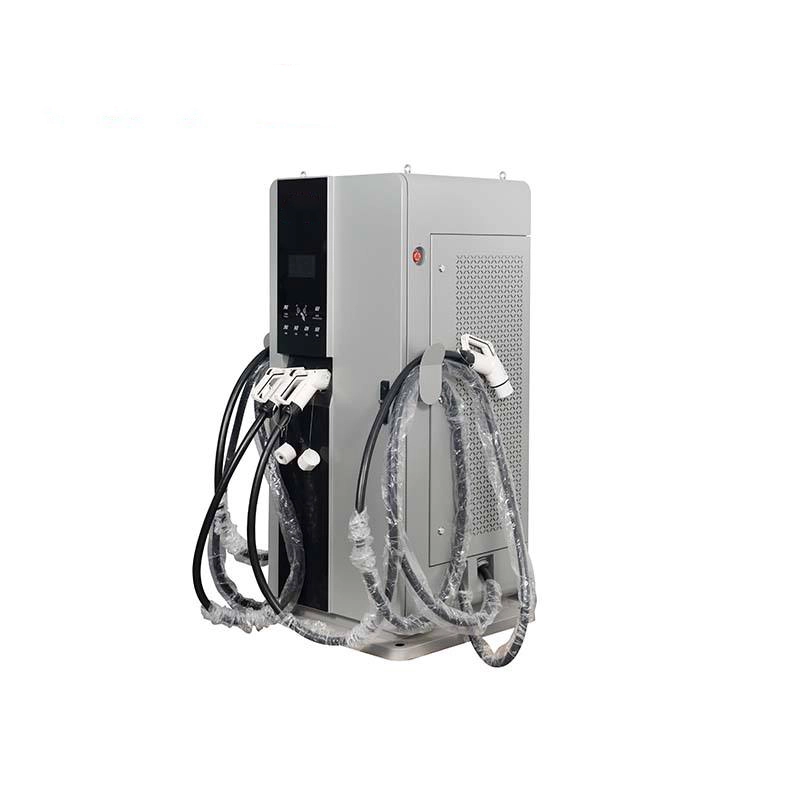
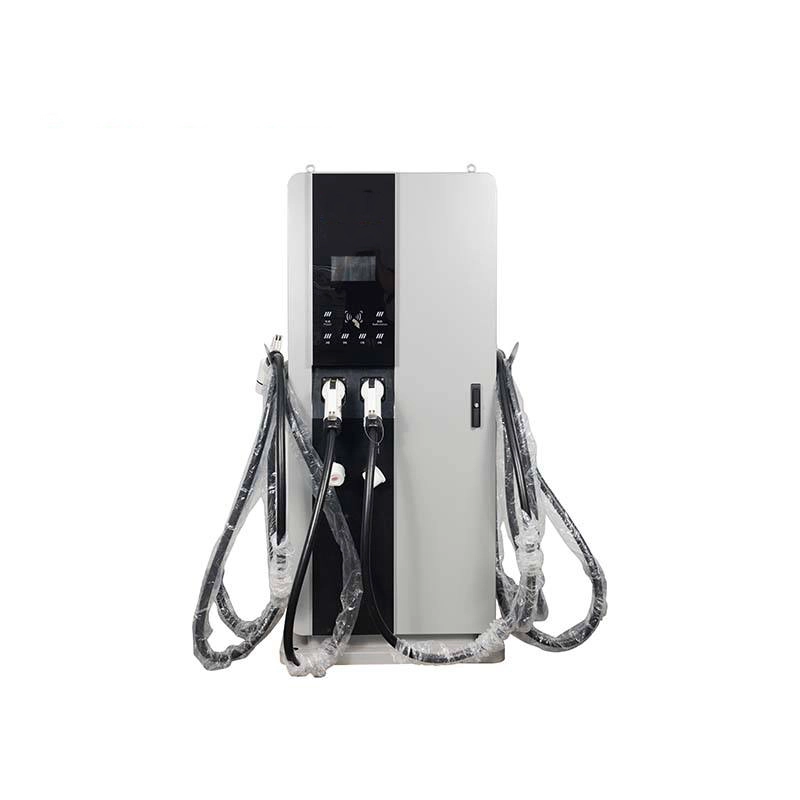
Rated power :160kW/240kW/320kW
Input voltage :AC380V ± 20%
Output voltage :DC200-2000V/AC380V
Output current :0-250A per gun
Cooling methodforced :air cooling
Charging method :swipe card charging/scan code charging/password charging
Protection level :IP54
Working temperature : -20 ℃~+50 ℃
Altitude :<2000m
Product size :750 * 735 * 1820mm
Working humidity :5%~95%, no frost
3 Phase Electric Car Charger Design
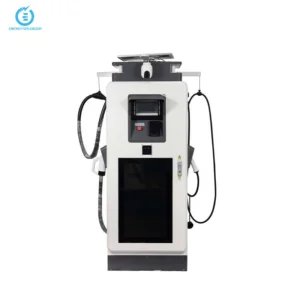
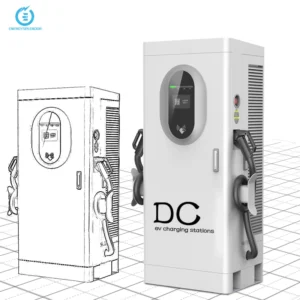
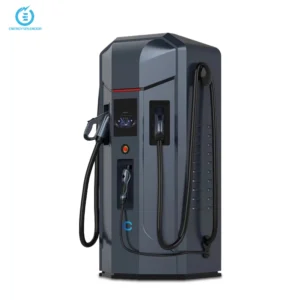
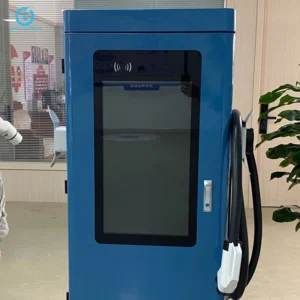
우리의 3 phase electric car charger design supports ABCD four charging guns, allowing simultaneous charging for multiple vehicles to maximize efficiency. Users can choose from swipe card charging, scan code charging, or password charging for flexible and secure payment options.
The standard 5-meter cable length ensures convenient vehicle connection, and we offer customization for longer or specialized cables to meet specific site needs. With advanced power management and robust safety protections, our chargers deliver high-speed, reliable charging suitable for commercial and public applications.
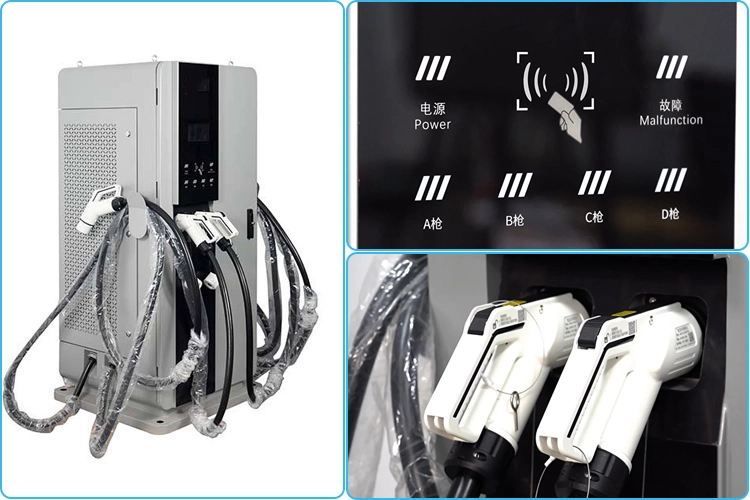
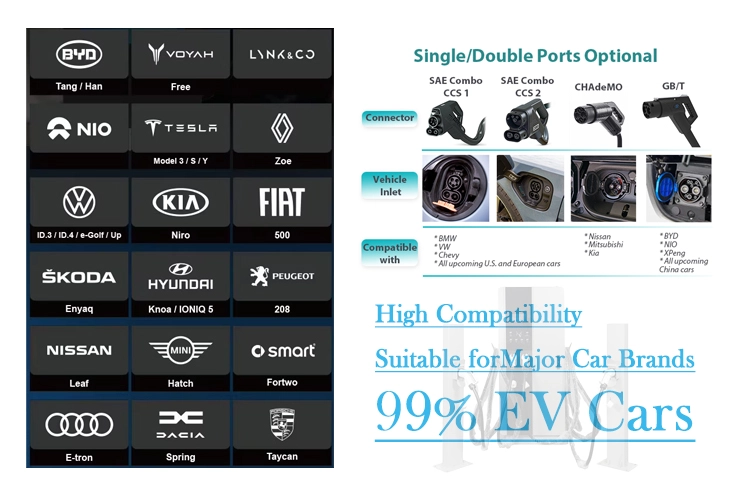
480 Volt 3 Phase Ev Charger With Four Plugs To Meet 99% Of Electric Vehicles Worldwide
우리의 480 volt 3 phase EV charger is engineered with four charging plugs—CCS1, CCS2, CHAdeMO, and GBT—ensuring compatibility with 99% of electric vehicles worldwide. Designed for high efficiency, it delivers fast, stable power for commercial and public charging applications.
The charger features OCPP1.6 protocol, enabling seamless integration with charging station management systems for remote monitoring and operation. Built to CE and TUV international standards, it incorporates comprehensive safety protections, ensuring reliable performance in diverse environments.
160kw 240kw 320kw Level 3 Fast Charging Station
우리의 Level 3 fast charging stations—available in 160kW, 240kW, and 320kW—are built for exceptional performance and durability. The robot-integrated shell manufacturing process ensures precision, strength, and a flawless finish, meeting the highest industry standards.
All units are CE and TUV certified, guaranteeing compliance with international safety and quality regulations. With support for OCPP 1.6 and OCPP 2.0, these chargers integrate seamlessly into modern charging networks, offering remote monitoring, smart energy management, and flexible operation for commercial use.
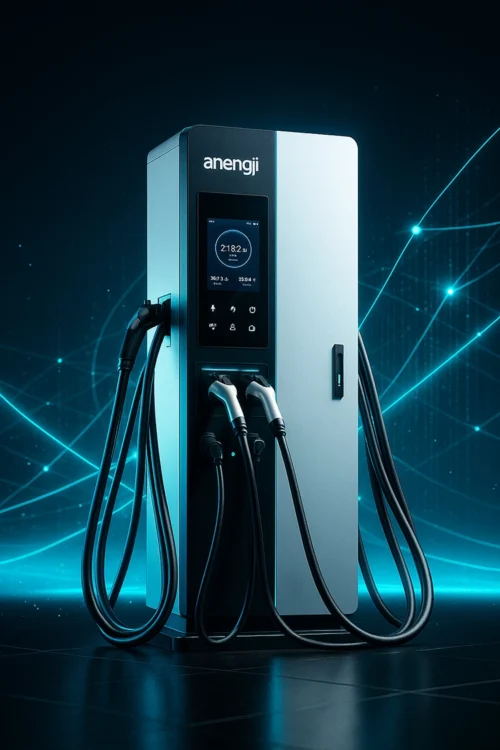
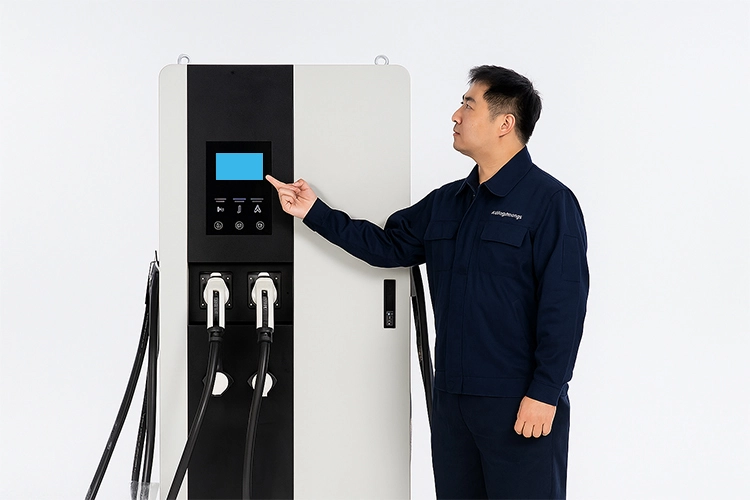
Four Guns Commercial Dc 3 Phase Ev Charging Station Maintenance
우리의 four-gun commercial DC 3 phase EV charging station is designed for both high performance and easy upkeep. With four charging guns supporting multiple standards, it can serve 99% of electric vehicles on the market. The modular internal structure allows quick component replacement and reduces downtime, while the smart monitoring system enables real-time fault detection and remote diagnostics.
Routine maintenance is simplified with accessible panels, dust-proof and waterproof protection, and robust industrial-grade materials. This ensures a long service life and stable operation in various climates and high-traffic commercial environments.
480 Volt 3-Phase Ev Charger Service
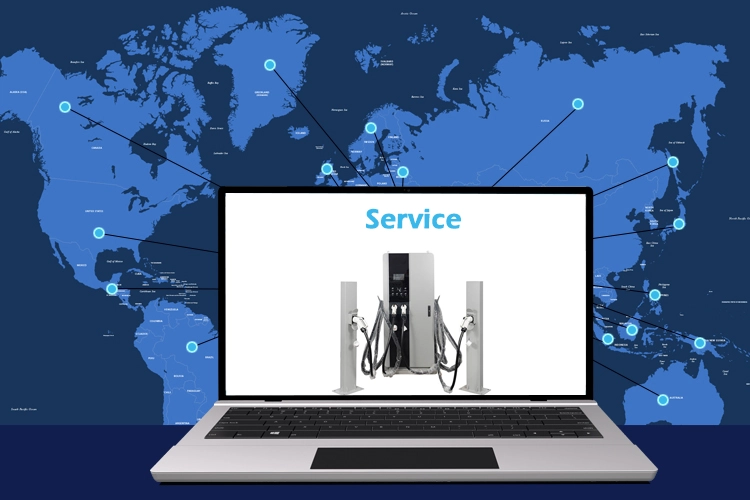
우리의 480 Volt 3-phase EV charger service covers every stage of your project, from pre-sales consultation to long-term operation. We provide custom certification support to meet local market requirements, including CE, TUV, and other standards. Before purchase, our team offers detailed technical consultation to ensure product compatibility and compliance.
For customers and partners, we offer 공장 교육 프로그램 to enhance installation and maintenance skills. During operation, our remote online service allows for quick troubleshooting and software updates, while our on-site engineer guidance service ensures smooth installation, configuration, and commissioning. With professional support at every step, your commercial EV charging station operates reliably and efficiently.
Custom 160kw 240kw 320kw 3 Phase Ev Charging Station
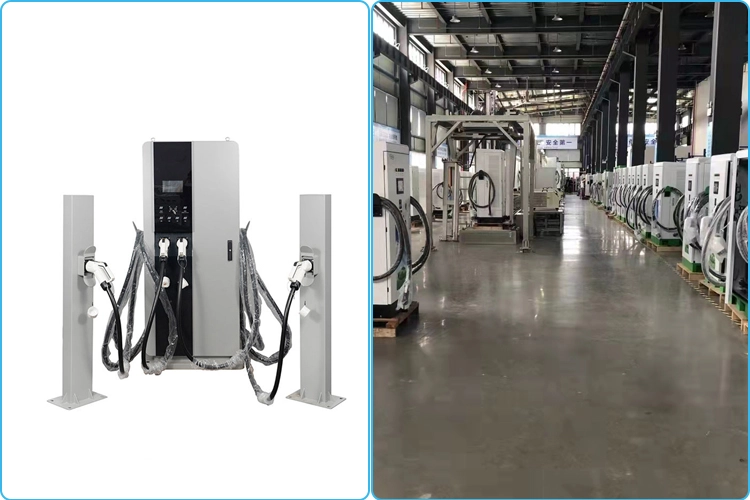
우리의 3-phase EV charging stations offer full customization to meet your specific business and market needs. Power output can be tailored from 60kW to 1000kW, ensuring optimal charging solutions for different applications. We also support custom exterior design, including dimensions, housing materials, and weatherproof protection.
In addition, you can personalize your chargers with custom colors, branding, and logos to enhance your company’s visibility and match your corporate image. From concept to production, our team works closely with you to deliver high-performance, visually distinctive EV chargers that meet international quality standards such as CE and TUV.



As an EV charging station contractor, we’ve found 3 phase chargers to be the perfect solution for high-demand commercial environments. Their higher voltage and current capacity allow faster, more stable charging, supporting multiple EV models with Type 2 or CCS connectors. The robust design ensures consistent performance even during peak usage, while the modular structure makes installation and maintenance straightforward. For operators, the high efficiency reduces energy loss and operating costs, improving ROI. Overall, a reliable and cost-effective choice for commercial EV charging projects.
As a commercial EV charging station supplier, we highly recommend 3 phase power EV chargers for businesses seeking faster and more efficient charging. Their high power output shortens charging times significantly, making them ideal for public stations, fleet depots, and highway service areas. Built with durable components and smart load management, they ensure stability under heavy usage. Easy integration with payment systems and remote monitoring platforms helps operators streamline management and improve profitability. A dependable, high-performance choice for long-term investment.
As an EV charging station contractor, we value the EV 3 phase charger for its exceptional speed, efficiency, and reliability. It supports high-power output, reducing wait times and maximizing station turnover. The robust design, wide voltage compatibility, and advanced safety features make it ideal for commercial, fleet, and public charging projects. Easy to install, scalable, and integration-ready for smart payment and monitoring systems.
As a charging station contractor, we choose EV 3 phase chargers for their fast, stable power delivery and high efficiency. They minimize charging time, boost station capacity, and support various EV standards. Durable build, easy installation, and smart system compatibility make them perfect for commercial, fleet, and public charging applications.
We have integrated Level 3 electric car chargers into several commercial charging stations with excellent results. These DC fast chargers provide high power output—up to 350kW—significantly reducing charging times for electric vehicles and improving user turnover. Supporting major protocols like CCS and CHAdeMO, they ensure compatibility with most EV models, enhancing user convenience.
From an engineering perspective, their modular design simplifies installation and maintenance, reducing downtime and operational costs. The chargers are built to withstand harsh outdoor environments with advanced thermal management for stable, continuous operation.
With OCPP protocol support, remote monitoring, user authentication, and smart billing are seamlessly managed, boosting operational efficiency. Our clients report improved customer satisfaction and increased usage rates thanks to the fast, reliable charging experience these Level 3 chargers offer.
Overall, Level 3 electric car chargers are a top choice for commercial fast-charging infrastructure, providing scalable, efficient, and dependable solutions that help accelerate EV adoption.
As a commercial charging station operator, we’ve installed Level 3 EV chargers in several high-traffic locations with outstanding performance. These DC fast chargers deliver up to 350kW, dramatically cutting charging times and improving customer turnover. The chargers support widely used protocols like CCS and CHAdeMO, ensuring broad compatibility across most EV models.
Their robust, weather-resistant design and efficient thermal management make them ideal for continuous operation in outdoor environments. The modular setup allows for easy installation and maintenance, reducing downtime and operational costs.
Integrated OCPP support enables real-time remote monitoring, user authentication, and flexible billing options, streamlining station management. Feedback from end-users highlights the fast, reliable charging experience, which increases repeat usage and satisfaction.
Overall, the Level 3 EV charger is a reliable, scalable solution perfect for commercial fast-charging networks, helping operators meet growing EV demands efficiently.
How to Install a 3-Phase EV Charger: Step-by-Step Guide
Evaluate electrical infrastructure: Confirm existing building power supply supports 480V 3-phase or appropriate 3-phase voltage.
Load capacity check: Ensure electrical panel and transformers can handle additional load.
Select charger location: Choose accessible, safe, and code-compliant location with sufficient space and parking.
Permitting: Apply for necessary electrical and construction permits per local regulations.
Choose a 3-phase EV charger compatible with site voltage and power requirements.
Include safety devices: circuit breakers, ground fault protection, surge protection.
Obtain compatible cables, connectors (e.g., Type 2 for AC or CCS for DC fast chargers).
Install dedicated circuit: Run wiring from main panel to charger location, sized per charger amperage.
Install circuit breakers in the panel for charger protection.
Install conduit and cable trays if required for cable protection.
Ensure proper grounding and bonding as per electrical codes.
Mount the charger securely to wall, pedestal, or stand as per manufacturer instructions.
Verify charger enclosure is properly sealed against weather (if outdoor).
Connect power and communication cables securely.
Connect the charger to building power supply.
Integrate with network management system if applicable (OCPP compliance).
Configure charger settings: current limits, authentication, billing options.
Perform electrical safety tests: insulation resistance, earth continuity.
Verify proper operation: start/stop charging, user interface, communication.
Confirm load balancing and smart charging functions if available.
Provide site owner/operator with wiring diagrams, user manuals, and warranty info.
Train staff or end users on proper operation and safety precautions.
Schedule regular inspections and preventive maintenance.
Monitor charger remotely if networked to detect faults early.
What Is a 3-Phase Charger?
A 3-phase charger is an EV charging station that uses three-phase electrical power—a system with three alternating currents, each out of phase by 120°, providing a stable and efficient power supply.
Higher power delivery: 3-phase power allows chargers to deliver higher power levels (typically 7 kW to 350+ kW), enabling faster charging.
Improved efficiency: Balanced load across three phases reduces energy loss and voltage drops.
Common in commercial/industrial setups: 3-phase power is standard in many commercial buildings and infrastructure.
There is no standard term “phase 3 charger”; it’s most likely a confusion with “3-phase charger”.
Avoid the term “phase 3 charger” in technical or business contexts to prevent misunderstandings.
Is 3-Phase Better for EV Charging?
3-phase systems deliver more power efficiently, supporting fast and ultra-fast charging (7 kW to 350+ kW).
Enables shorter charging times, essential for commercial, fleet, and highway charging stations.
Balanced load across three conductors reduces voltage drops and power losses.
Results in lower energy costs and improved system reliability.
Easier to support multiple chargers or high-capacity chargers on one electrical infrastructure.
Facilitates load management and power sharing to prevent grid overload.
3-phase power is common in industrial and commercial buildings, simplifying installation.
Reduces need for expensive infrastructure upgrades.
3-phase chargers generate less heat per conductor, improving durability and reducing maintenance.
What is the difference between single-phase and 3-phase charging stations?
| Aspect | Single-Phase Charging Station | 3-Phase Charging Station |
|---|---|---|
| Power Supply | Single AC waveform (one phase + neutral) | Three AC waveforms, each 120° out of phase |
| Voltage | Typically 120V or 230V AC | Typically 400–480V AC (depends on region) |
| 전원 출력 | Lower power (up to ~7.4 kW typical) | Higher power (7 kW up to 350+ kW for DC chargers) |
| 충전 속도 | Slower; suitable for home and light commercial use | Faster; ideal for commercial, fleet, and fast charging stations |
| 효율성 | Less efficient, higher voltage drops | More efficient, balanced load reduces losses |
| 설치 비용 | Generally lower initial infrastructure cost | Higher cost due to more complex wiring and equipment |
| Usage Scenarios | Residential charging, low-demand locations | Commercial sites, multi-port stations, highways, fleet depots |
| Grid Impact | Lower power draw, easier for small grids | Higher power draw, requires stronger grid capacity |
How Many kW Is 3-Phase Power?
The total power PPP in kilowatts (kW) delivered by a 3-phase AC system is calculated by:
P=3×VL−L×I×Power Factor/1000P = \sqrt{3} \times V_{L-L} \times I \times \text{Power Factor} / 1000P=3×VL−L×I×Power Factor/1000
Where:
VL−LV_{L-L}VL−L = Line-to-line voltage (Volts)
III = Current (Amperes)
Power Factor (PF) = efficiency of the load, typically between 0.8 and 1 for EV chargers
Assuming:
Line-to-line voltage VL−L=480VV_{L-L} = 480VVL−L=480V
Current I=50AI = 50AI=50A
Power factor PF=0.9PF = 0.9PF=0.9
P=1.732×480×50×0.9/1000=37.4 kWP = 1.732 \times 480 \times 50 \times 0.9 / 1000 = 37.4\, kWP=1.732×480×50×0.9/1000=37.4kW
So, a 480V 3-phase circuit at 50A can deliver about 37 kW of power.
| Current (A) | Approximate Power at 480V 3-Phase (kW) |
|---|---|
| 30 A | ~25 kW |
| 50 A | ~37 kW |
| 100 A | ~74 kW |
| 200 A | ~148 kW |
Level 2 3-phase chargers typically provide 7 kW to 22 kW per port, often drawing 20–32A.
DC 고속 충전기 can utilize higher current and deliver 60 kW up to 360+ kW, requiring higher amperage circuits.
Can I Install a 3-Phase EV Charger at Home?
Most residential homes, especially in 북미, have single-phase power (120V/240V), not 3-phase.
3-phase power is more common in commercial or industrial buildings, or in some residential areas outside North America (e.g., Europe, parts of Asia, Australia).
To install a 3-phase charger at home, your property must have 3-phase electrical service from the utility.
If your home has or can be upgraded to 3-phase power, you need to coordinate with your local utility to supply 3-phase service, which can be costly and time-consuming.
Installation requires compatible 3-phase EV chargers, proper electrical panels, and wiring rated for the higher voltage and current.
Permitting and inspection will be required as per local electrical codes.
For most homeowners, installing a single-phase Level 2 charger (240V) is sufficient and more cost-effective.
3-phase chargers deliver higher power and faster charging but often exceed residential charging needs.
The cost of upgrading residential infrastructure to 3-phase often outweighs benefits unless for very large battery EVs or multiple EVs charging simultaneously.
자세히 알아보기
전기 자동차 충전소 제품
커뮤니케이션 시작을 환영합니다