

Introduction
As electric vehicle (EV) adoption accelerates worldwide, the demand for efficient charging infrastructure is rising. Choosing the right charging solution—load balancing EV chargers versus non-load balancing chargers—can significantly impact cost, performance, and scalability. This guide explores the key differences, advantages, and ideal use cases for both systems.
What Is a Load Balancing EV Charger?
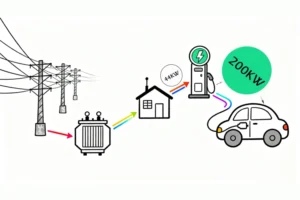
A load balancing EV charger intelligently distributes available electrical capacity across multiple chargers. Instead of upgrading the grid, the system adjusts charging power dynamically to prevent overload and maximize efficiency.
Key Features:
Dynamic power distribution
Real-time monitoring
Scalable and flexible
Supports multiple EVs simultaneously
Best Use Cases: Commercial properties, multifamily residences, fleets, and public charging hubs.
What Is a Non-Load Balancing EV Charger?
A non-load balancing charger delivers a fixed amount of electricity without adjusting for site capacity or demand. While simple to install, it requires dedicated power per charger, making expansion costly.
Key Features:
Fixed charging output
No real-time power adjustment
Lower upfront cost for single installations
Limited flexibility for expansion
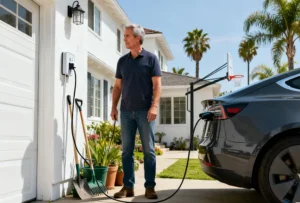
Best Use Cases: Single-family homes or small locations with only one charger.
Comparison: Load Balancing vs. Non-Load Balancing
| 特徴 | Load Balancing EV Charger | Non-Load Balancing EV Charger |
|---|---|---|
| Power Management | Dynamic distribution based on demand and capacity | Fixed output per charger |
| Scalability | Easily scalable to multiple chargers | Requires costly infrastructure upgrades |
| Cost Efficiency | Saves on grid upgrades and peak electricity costs | Higher long-term costs with expansion |
| Best for | Commercial sites, fleets, apartments, public stations | Single residential use |
| Sustainability Integration | Works with solar and smart energy management systems | Limited integration capabilities |
| Fairness to Users | Equal charging for multiple EVs at once | Each charger works independently |
Why Load Balancing Is the Future
With EV adoption projected to reach over 200 million vehicles by 2030, the infrastructure must evolve. Load balancing EV chargers provide:
Lower installation and operating costs
Smarter use of existing electrical capacity
Seamless integration with solar EV charging systems
Long-term flexibility for growing demand
Non-load balancing chargers will continue to serve basic home charging, but commercial and public charging networks require smarter solutions.
Anengjienergy Solutions
At アネンジエネルギー, we provide:
AC EV Wall Chargers for home use (ideal non-load balancing option).
Smart DC Fast Chargers with Load Balancing (20kW–720kW).
Dynamic Load Balancing Software integrated with OCPP 1.6/2.0/2.0.1.
Customizable EV Charger Branding for commercial operators.
Turnkey Services: Planning, installation, after-sales support.
Whether you need a simple home EV charger or a commercial charging network with load balancing, our solutions help reduce costs and improve efficiency.
結論
The choice between load balancing vs. non-load balancing EV chargers depends on your needs.
について homeowners with a single EV, a standard non-load balancing charger is sufficient.
について businesses, fleets, and multifamily properties, load balancing EV chargers are essential for safe, scalable, and cost-effective charging.
Future-proof your charging infrastructure with smart load balancing solutions from Anengjienergy.