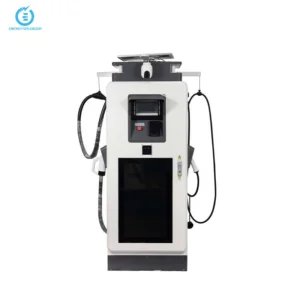


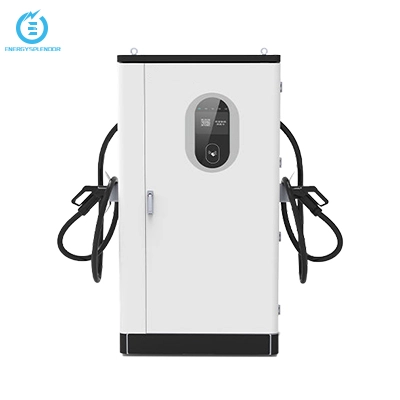


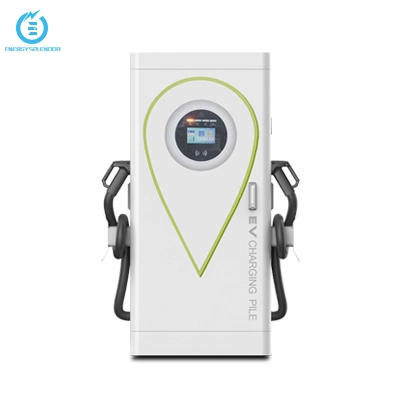


The cost of an EV charging station depends on the power level,
configuration and project requirements.
Please お問い合わせ to get a customized quotation.
Yes, we provide DC fast chargers for commercial, public and
highway EV charging station projects.

EV用ポータブル充電ステーションは、モバイルEV充電ステーションまたはポータブルDC急速充電器とも呼ばれ、電気自動車にいつでも搭載できる急速充電装置である。.
マルチシナリオの電気自動車充電に適応するため、移動式DC急速充電ステーションは固定式充電ステーションよりも便利である。また、4つのユニバーサル・ホイールで設計されており、さまざまな場所でいつでも使用することができる。.
ポータブルEV充電器は、互換性のある電源があればどこでも電気自動車を充電できるため、旅行や緊急時、充電インフラが限られている地域に最適である。.
これらの充電器は車のトランクに収まるように設計されているため、ドライバーは簡単に持ち運び、必要なときに充電することができる。.
特に、充電頻度が低いユーザーや賃貸物件を利用しているユーザーにとっては、常設の家庭用充電器の初期費用をかけずに、実用的なバックアップ充電オプションを提供できる。.
ポータブルEV充電ステーションは、ロードサイドアシスタンス、レンタルフリート、EVディーラーのテストドライブに最適で、高速かつ柔軟なオンサイト充電ソリューションを提供します。.
高出力のポータブルDC急速充電器は、従来のACポータブル充電器と比較して充電時間を大幅に短縮し、必要なときに素早く航続距離を伸ばすことができる。.
多くのポータブル充電器evは、固定式DC急速充電器よりも充電速度が遅いため、充電中のダウンタイムが長くなる可能性がある。.
作動には互換性のあるコンセントや発電機が必要だが、遠隔地や緊急事態では必ずしも利用できるとは限らない。.
バッテリーを内蔵したポータブルEV充電は、フル充電よりも緊急走行に十分な、限られたエネルギーしか供給しないことが多い。.
大容量のDCポータブル充電器は重くなるため、頻繁に手動で持ち運ぶのは不便になる。.
ポータブルDC急速充電器は、標準的なポータブルAC充電器よりも高価であるため、最初の購入決定に影響を与える可能性がある。.
A 家庭用DC EV充電器 は、家庭用に設計された直流急速充電器で、電気自動車の所有者は、標準的なAC家庭用充電器よりもはるかに速くEVを充電することができます。EVのオンボード充電器が交流を直流に変換する必要がある交流充電器とは異なり、直流家庭用充電器は直流電力を直接バッテリーに供給するため、充電時間が大幅に短縮される。.
DC fast chargers (Level 3 chargers) supply direct current (DC) directly to your EV’s battery, bypassing the onboard AC-to-DC converter.
Power range: 20 kW – 360 kW (typical home-use units: 20 – 50 kW).
充電時間: 80% charge in 20–40 minutes, depending on your car and charger power.
Connector types: CCS Combo 1/2, CHAdeMO, or GB/T (depending on your region and vehicle).
A DC fast charger needs three-phase power そして high amperage circuit.
Typical home electrical systems (single-phase, ≤240 V, 100–200 A) often cannot directly support DC chargers.
You may need:
A dedicated 400–480 V, 3-phase supply.
A new transformer or service upgrade from your utility company.
Professional load calculation and wiring.
If your home cannot support this load, consider a Level 2 (AC) charger instead. It’s much easier and cheaper to install (7–22 kW).
| Item | Typical Range (USD) |
|---|---|
| DC Charger Unit | $10,000 – $40,000 |
| Electrical Upgrade (Transformer, Panel, Cables) | $5,000 – $20,000 |
| プロフェッショナル・インストレーション | $2,000 – $10,000 |
| Total (Approx.) | $17,000 – $70,000 |
Prices vary by brand, country, and existing infrastructure.
Assess your home’s power system
Hire a licensed electrician or EV infrastructure specialist to evaluate your load capacity.
Contact your utility provider
Request approval for higher capacity or 3-phase service.
Choose a certified charger
Look for chargers certified under UL, CE, or equivalent safety standards (brands like ABB, Delta, Kempower, or Tesla).
Obtain permits
Local authorities may require electrical or construction permits.
Professional installation
The technician will:
Install new breakers and heavy-duty wiring.
Mount the charger securely (indoor/outdoor).
Connect to the main panel or transformer.
Configure grounding, surge protection, and safety devices.
Inspection and commissioning
The system must pass a safety inspection before use.
Park and power on the charger
Some units start automatically; others require an app or RFID card.
Connect the charging cable
Plug the DC connector (e.g., CCS or CHAdeMO) into your vehicle.
Authenticate (if needed)
Via app, RFID, or screen interface.
Monitor charging
The charger will communicate with your car to regulate current and voltage.
Stop and disconnect
Once charged (usually to 80%), stop charging via the app or charger screen, then unplug.
Regular maintenance
Keep connectors clean, ensure ventilation, and check for fault codes.
If full DC installation isn’t practical:
DC wallbox (20–40 kW) — compact models by brands like ANENGJIENERGY AC/DC or デルタDCウォールボックス may work for larger homes with upgraded supply.
High-power Level 2 (22 kW AC) — far more affordable (~$1,000–$2,500) and still charges most EVs overnight.
Only licensed electricians should handle installation.
Follow local electrical codes (e.g., NEC, IEC).
Install surge protection そして ground fault detection.
Keep the charger in a dry, ventilated, and shaded area.
商用EV充電ステーションは、公共施設やビジネス環境で電気自動車の充電サービスを提供するために設計された充電インフラです。家庭用充電器とは異なり、これらのステーションは、信頼性が高く、安全で、効率的な充電で毎日複数のEVをサポートする、より高い使用量を想定して構築されている。通常、ショッピングセンター、駐車場、ホテル、オフィスビル、高速道路の休憩所、車両基地などの場所に設置され、企業がEVドライバーを引き付けると同時に、新たな収益源を生み出すのに役立っている。.
商用EV充電器には、ACとDCの両方がある。一般的に7kWから22kWのAC充電器は、職場やホテルなど、車両が長時間駐車する場所に適している。30kWから360kW以上のDC急速充電器は、20%から80%のEVを20~60分で充電できるため、サービスステーションや高速道路の通路など、ドライバーが急速充電を必要とする商業用途に最適です。.
ower output / speed: For commercial use (businesses, fleet, public parking), faster charging is better (especially if turnover is high). DC fast chargers (100 kW-350 kW+) are more expensive but support quick sessions.
Connectors & standards: Compatibility (e.g., CCS, CHAdeMO, NACS) matters. Also network communication standards (OCPP, ISO 15118) for future proofing.
Network & payment integration: If you plan to charge the public (not just internal fleet), you’ll want billing, user access, management software (remote, data, etc.).
Durability / commercial build: Weather-rated, robust cables/connectors, outdoor rated, high duty cycle.
Site fit & utility readiness: Many sites may not have the required power, so the “best” charger is one your site can support and that fits your workflow. For example one reddit user said:
“If you can’t do at least 150 kW, don’t install a DC fast charger”
Scalability & brand/support: Future expansion, software updates, maintenance support, brand reliability.
Cost & ROI: Lower upfront cost is good, but you also want it to earn or provide the service you expect (fleet turnaround, public station usage, etc.).
Use case alignment: Are you doing a public charging kiosk (high throughput) vs. private fleet depot vs. employee parking? The “best” will vary.
DC充電ステーションの出力は、いくつかの重要な要因によって決まる。第一に、サイトの 電源容量 とトランスの制限は、充電器の最大出力に直接影響する。第二に 充電器の内部設計とモジュール構成 どれだけの電力を継続的に供給できるかを決定する。第三に EVバッテリーの互換性とBMS(バッテリー・マネジメント・システム) というのも、車両はその設計限界内でしか電力を受け入れないからである。第四に, ケーブルおよびコネクタの定格 電流と電圧(CCS、CHAdeMO)は、安全な電力供給に影響を与える。さらに, 放熱と周囲温度 環境温度が高すぎる場合、充電器を保護するために出力を低下させ、ディレーティングにつながる可能性があります。最後に, EV充電戦略 SOC(充電状態)に基づく電力供給は、一般的に20%から80%のバッテリーレベルで達成される最高充電速度に影響します。これらの要因を理解することで、バッテリー寿命を延ばしながら、安全で効率的な高速充電が可能になります。.
If you’re looking for a commercial-grade DC EV charging station for “powers” (high through-put / faster charging), here’s a breakdown of what to consider + a selection of strong product candidates you can evaluate.
Based on typical specs & market analysis:
Expect input power to be 3-phase (often 400 V/480 V AC) since DC fast charging requires high power.
Output voltage ranges for many DC chargers: often up to ~1000 V DC (e.g., 150-1000 V) for wide EV compatibility.
Output power: Commercial DC chargers commonly in the 60 kW to 240+ kW range (some going higher).
Efficiency & power factor: High efficiency (> 95 %) and PF ≥0.98 typical for good units.
Communication / network features: OCPP support, remote management, multiple connectors (CCS1, CCS2, NACS, GB/T) often.
Site infrastructure: Significant electrical service, possibly transformer upgrade. One comment:
“As a general rule, every 200A of 480V 3-phase service input gets you about 125 kW of output…”
So when you select a station, make sure the site’s power capacity (panel, transformer, service drop) supports the charger’s input requirements.
A Complete Guide to DC Charging Connector Types for Electric Vehicles (EVs)
電気自動車(EV)の普及が急速に進む中、効率的で互換性のある急速充電には、さまざまなDC充電コネクタの種類を理解することが不可欠です。世界的に見ると、EVメーカーや地域によって使用されているDC充電規格はさまざまで、それぞれ独自のプラグ設計、通信プロトコル、対応車両を備えています。この記事では、5つの主要なDC充電コネクタの種類を紹介する:GB/T、CCS1、CCS2、CHAdeMO、そしてテスラ独自のプラグである。.
| コネクター・タイプ | スタンダード | 地域 | 急速充電 | 共通ブランド |
|---|---|---|---|---|
| GB/T | 中国 | 中国 | ✅ | BYD、NIO、XPeng |
| CCS1 | コンボ1 | 北米 | ✅ | フォード、GM、テスラ(米国) |
| CCS2 | コンボ2 | ヨーロッパ、アジア | ✅ | VW、メルセデス、ヒュンダイ |
| CHAdeMO | CHAdeMO | 日本、アジア | ✅ | 日産, 三菱 |
| テスラDC | NACS/変動あり | グローバル | ✅ | テスラ |
GB/T DC充電コネクタは、中国全土で使用されている公式規格です。頑丈なデザインの大型の丸型プラグが特徴で、高出力のDC急速充電に対応し、BYD、NIO、XPengといった中国のEVブランドと幅広く互換性がある。国際的には使用されていないが、中国のEVインフラを支配している。.
CCS1(Combined Charging System Type 1)は、北米における主要なDC急速充電コネクターである。AC J1772コネクターに高速充電用のDCピンを2本追加したものである。CCS1は、フォード、ゼネラルモーターズ、テスラ(アダプター付き)といったアメリカの主要自動車メーカーがサポートしている。エレクトリファイ・アメリカやEVgoなどの充電ネットワークと互換性がある。.
CCS2は、ヨーロッパ、オーストラリア、アジアの一部で世界的に採用されているDC急速充電コネクタ規格である。タイプ2のACベースの下に2本のDCピンがあるのが特徴で、AC充電とDC充電の両方にシームレスに統合できる。フォルクスワーゲン、BMW、メルセデス・ベンツ、ヒュンダイ、テスラ(欧州)などのブランドは、CCS2を一般的な充電インターフェースとして使用している。.
日本で開発されたCHAdeMOは、かつて急速充電機能で知られる主要な直流充電規格だった。日産リーフや三菱i-MiEVなどのEVモデルに採用されている。しかし、コネクターがかさばることや世界的な支持率の低下から、CHAdeMOは徐々に廃止され、特に日本国外ではCCS方式に移行しつつある。.
Tesla employs different DC connector standards depending on the region:
In North America, Tesla uses its proprietary NACS (North American Charging Standard) plug, known for its compact design and high-speed Supercharging capability.
In Europe, Tesla vehicles use CCS2.
In China, Tesla adapts to the GB/T standard for local compatibility.
Tesla provides adapters to ensure cross-standard support for its vehicles in global markets.
Choosing the right EV charging connector depends on your vehicle’s make, your location, and the DC charging infrastructure available. As global standards consolidate, CCS2 is emerging as the dominant format, but regional variations like GB/T and Tesla’s NACS remain critical to consider.
For EV owners and charging station operators alike, understanding these DC fast charging plug types ensures compatibility, speed, and convenience on the road to a greener future.
DC急速充電ステーションは、電気自動車(EV)の成長にとって不可欠であり、従来のAC充電と比較して急速なエネルギー補給を提供する。すべてのDC充電器が車両のバッテリーに直流電流を供給する一方で、ステーションの機能、電源アーキテクチャ、スマートシステムの統合によって、ボンネットの下では複数の充電方法が採用されている。.
| 充電方法 | コア・プリンシプル | 出力 | 主な使用例 | 特筆すべき特徴 |
|---|---|---|---|---|
| 定電力充電 | ダイナミックV/I固定出力 | 250~600キロワット以上 | 超高速充電器、プレミアムEV | 充電中の最大効率 |
| CC-CV充電 | 定電流+電圧ステージ | 30-250 kW | 標準急速充電ステーション | スピードとバッテリーの安全性のバランス |
| 予定充電 | 設定した時間に充電開始 | 可変 | フリート、ロジスティクス、公共システム | コストとグリッドの最適化 |
| ダイナミック配電 | コネクタ間のスマートな負荷分散 | ポート間で共有 | 充電ハブ、デポ | マルチEV同時充電 |
| 液冷充電 | 液体循環式ケーブル冷却 | 350~600キロワット以上 | ハイパワーEV、電気トラック | 安全で効率的な超高出力 |
以下は、商用および産業用EV充電インフラで現在使用されている5つの主なDC充電方式である:
Definition: The charging station maintains a fixed output power by dynamically adjusting voltage and current within a defined range.
Benefits: Maximizes charging speed throughout the session.
Application: Ultra-fast chargers (e.g., 350kW, 480kW systems), premium EVs and electric trucks.
Key Feature: Power remains stable while voltage and current fluctuate.
Definition: Charging starts in constant current (CC) mode, and switches to constant voltage (CV) once a threshold is reached.
Benefits: Stable, safe, and battery-friendly.
Application: Standard DC fast chargers for passenger vehicles.
Key Feature: Fast charging up to ~80%, then slower top-off.
Definition: Charging is delayed or scheduled to begin during off-peak hours or based on operator settings.
Benefits: Optimizes electricity costs, reduces grid stress.
Application: Fleets, taxis, buses with centralized management platforms.
Key Feature: Charging starts automatically based on time or pricing signals.
Definition: A centralized charging cabinet dynamically allocates power across multiple charging guns based on demand.
Benefits: Increases site efficiency, reduces wait time, balances load.
Application: Multi-vehicle charging hubs, smart charging depots.
Key Feature: Real-time power adjustment across connected EVs.
Definition: Charging cables are cooled using a liquid circulation system to safely handle very high currents.
Benefits: Enables charging powers exceeding 500kW, shortens charge times dramatically.
Application: High-end EVs, electric buses, heavy-duty trucks.
Key Feature: High power delivery with safe thermal management.
DC充電ステーションのネットワーク接続方法
電気自動車(EV)が普及し続ける中、DC充電ステーションは、高速で信頼性の高い充電を可能にする重要な役割を担っている。リアルタイムの監視、遠隔制御、課金、ソフトウェア更新を確実に行うには、これらの充電ステーションに堅牢なネットワーク接続方式を装備する必要があります。.
以下は、DC充電ステーションがインターネットやバックエンドシステムに接続する最も一般的な方法である:
A wired Ethernet connection offers a stable and high-speed method for connecting DC charging stations.
Ideal for: Fixed installations such as public charging depots, commercial parking lots, and service stations.
Benefits:High data reliability,Low latency,Strong resistance to interference
Many modern DC charging stations use 4G or 5G mobile networks to connect wirelessly.
Ideal for: Urban environments, roadside charging, and areas without existing network infrastructure.
Benefits:Easy deployment without cables,Real-time data exchange and OTA (Over-the-Air) updates,5G enables ultra-low latency and high bandwidth, making it suitable for smart EV charging infrastructure
Wi-Fi is a flexible networking option when local wireless networks are available.
Ideal for: Underground garages, office buildings, and shopping centers.
Limitations:Signal strength may vary,Less reliable than Ethernet or cellular in high-interference environments
PLC enables data transmission over existing electrical power lines, reducing the need for separate network wiring.
Ideal for: Integrated systems in parking structures or residential complexes.
Benefits:Cost-effective in retrofitting environments
Drawbacks:Limited bandwidth and more vulnerable to interference
While not used for internet access, RS485 and CAN bus protocols are essential for internal communication between the charging station components or with a local controller.
Ideal for: Device-to-device communication
Function: Ensures stable control signals, fault reporting, and energy metering.
Regardless of the method used, every DC charging station must incorporate strong cybersecurity measures, including:VPN tunneling
,Data encryption,Firewall protection,Secure authentication protocols
These measures are vital for protecting user data, preventing unauthorized access, and maintaining system reliability.
DC充電ステーションに適したネットワーク接続の選択は、展開場所、拡張性の要件、運用上のニーズによって異なります。5G、イーサネット、PLCのいずれであっても、信頼性の高い接続を確保することは、将来に対応したインテリジェントなEV充電インフラを構築するために不可欠です。.
DC充電ステーションがより進歩し、普及するにつれて、, 相互運用性 ハードウェア・プラットフォームとソフトウェア・プラットフォームとの関係が重要になってくる。そこで OCPP(オープン・チャージ・ポイント・プロトコル) が登場する。.
OCPP (Open Charge Point Protocol) is an open-source communication standard that enables charging stations and central management systems (CMS) to communicate effectively—regardless of the manufacturer.
Developed by: Open Charge Alliance (OCA)
Current versions: OCPP 1.6 (widely adopted), OCPP 2.0.1 (latest and more advanced)
Supported by: Most major EV charging hardware and software providers globally
For DC fast chargers, which require advanced functions like remote diagnostics, load balancing, user authentication, and dynamic pricing, OCPP ensures seamless integration between different systems.
Key Benefits:
Interoperability: Connect any OCPP-compliant charging station to any OCPP-compliant backend.
Remote Management: Enables remote monitoring, firmware updates, diagnostics, and control.
Scalability: Easily add new chargers to the network without vendor lock-in.
Real-time Data Exchange: Facilitates communication of charging status, error codes, energy usage, and payment data.
Cost Efficiency: Reduces dependency on proprietary systems and lowers integration costs.
OCPP acts as a translator between:
The Charging Station (Charge Point)
The Central System (Backend or CMS)
Data such as charging session start/stop, authentication via RFID or app, meter values, error codes, and transaction status are exchanged over the network layer (Ethernet, 4G/5G, Wi-Fi) using OCPP messages formatted in JSON over WebSockets (for OCPP 1.6) or JSON over MQTT (for OCPP 2.0.1).
The effectiveness of OCPP depends heavily on the reliability of the network connection:
Ethernet or 5G is ideal for stable, high-bandwidth OCPP communication.
Wi-Fi and PLC may work but are more prone to disruption, which can affect session reporting or remote control functions.
With OCPP 2.0.1, security features have been significantly improved:
End-to-end TLS encryption
Secure firmware updates
Digital certificates for authentication
Stronger session integrity
These enhancements make OCPP a secure and future-proof protocol for modern smart DC charging networks.
OCPPは、スマートなEV充電、特にDC急速充電ステーションのバックボーンです。OCPP準拠のソリューションを採用することで、事業者は、充電インフラに対する柔軟性、拡張性、完全な制御を確保することができ、同時にEVドライバーに一貫した安全な体験を提供することができる。.
電気自動車(EV)の普及が進む中、DC充電ステーションでのスムーズで柔軟な支払い体験の確保は不可欠である。オペレーターは、個人ドライバー、フリートオペレーター、商用ユーザーのニーズを満たすために、複数の課金方法をサポートする必要があります。.
Many DC charging networks issue RFID cards to registered users.
How it works: Users swipe the RFID card on the charging station to start and end sessions.
Advantages:Quick and contactless,Useful for frequent users and fleets,Integrated with: User accounts for postpaid or prepaid billing
Most modern DC charging stations support payments through mobile apps.
Features:Start/stop charging remotely,Real-time status monitoring
,Digital payment via credit/debit card, Apple Pay, Google Pay, etc.
Benefits:User-friendly,Supports loyalty programs, promotions, and subscriptions
In markets like China and Southeast Asia, QR code payments are the norm.
How it works: Scan the QR code on the charger using WeChat, Alipay, or any supported e-wallet.
Advantages:No app download required,Widely adopted and trusted
Some stations are equipped with POS terminals or contactless card readers.
Accepted methods: Visa, MasterCard, American Express, etc.
Compliant with: EMV and PCI-DSS standards for secure transactions
Convenient for: Walk-in or first-time users
For B2B clients or fleet operations, centralized billing is common.
Features:Monthly invoicing,Usage reports,Account-level limits and control,Integrated with: Fleet management platforms and CMS
Next-generation Plug & Charge technology enables fully automated payment.
How it works: The EV and charger authenticate each other via encrypted communication.
Benefits:No app, card, or scan required,Highly secure and seamless user experience
Note: Requires compatible vehicles and chargers
すべての決済取引は、PCI-DSS(Payment Card Industry Data Security Standard)、エンドツーエンドの暗号化、安全なユーザー認証、保存された決済手段のトークン化などのデータセキュリティ基準に準拠する必要があります。
DC充電ステーションで複数の支払いオプションを提供することは、ユーザーの満足度を向上させ、顧客の利用範囲を広げ、スマートなEV充電インフラの成長をサポートします。アプリベースであれ、RFID対応であれ、プラグアンドチャージであれ、安全でシームレスな決済システムは、未来に対応したEV充電体験の鍵となる。.
安全で信頼性の高い、インテリジェントな充電体験を保証するために、最新の 直流EV充電ステーション は高度な保護機構を備えている。これらのシステムは、充電装置を保護するだけでなく、車両とユーザーを保護する。以下はその例である。 12の重要な保護機能 高品質のDC充電器によく組み込まれている。.
送電網の異常な周波数変動による損傷から充電器を保護します。不安定な送電網環境でも安定した動作を保証します。.
落雷や電力サージによる突然の電圧スパイクをガードします。この機能は、屋外設置や雷雨の多い地域では不可欠です。.
充電コネクターを監視・保護し、過熱、摩耗、誤接続を防止します。充電器とEVの安全で確実な接続を保証します。.
入力電圧または出力電圧が安全な閾値より低下した場合に作動します。内部コンポーネントの損傷を防ぎ、充電効率を確保します。.
極端な低温条件下で充電器が動作しないようにします。充電を遅らせたり、パラメーターを調整したりして、ハードウェアのストレスやバッテリーの損傷を防ぎます。.
不適切な接地や地絡を検出します。これは、感電の危険を防止し、ユーザーの安全を確保するために重要です。.
誤動作や緊急時の即時シャットダウン機構。ユーザーやシステムの電源を即座に遮断し、最大限の安全性を確保します。.
出力電圧が安全な動作レベル以下に低下した場合に、充電器が動作しないようにします。システムの安定性を維持し、不完全な充電セッションを防ぎます。.
短絡時に瞬時に電源を切断し、電気火災、機器の故障、バッテリーの損傷を防ぎます。.
充電器と接続されたEVの両方を有害な高電圧レベルから保護します。制限を超えた場合、自動的に電力を調整または遮断します。.
内部パワーモジュールの過熱を監視。熱による故障を防ぐため、出力を低下させるか、充電器をシャットダウンします。.
充電器が安全な温度制限内で動作することを保証するシステム全体の温度セーフガード。暑い気候や使用量の多い場合に特に有効です。.
DC charging stations handle high power levels and operate in diverse environments. These 12 protection mechanisms ensure:User safety
/Equipment longevity/Consistent performance/Compliance with international standards
By integrating these protections, manufacturers meet the demands of modern EV charging infrastructure, from urban stations to highway fast-charging hubs.