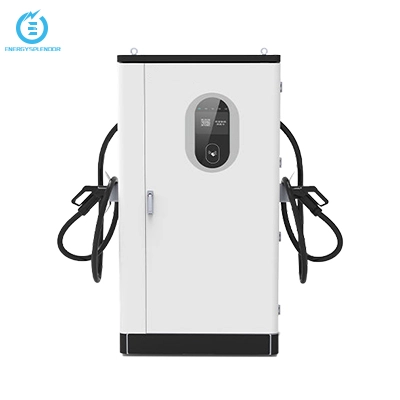


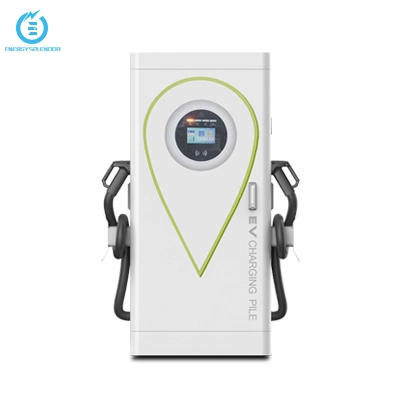


The cost of an EV charging station depends on the power level,
configuration and project requirements.
Please hubungi kami to get a customized quotation.
Yes, we provide DC fast chargers for commercial, public and
highway EV charging station projects.

A portable charging station for EVs, also known as a mobile EV charging station or a portable DC fast charger, is a fast-charging device that can be carried on an electric vehicle at any time.
In order to adapt to multi-scenario electric vehicle charging, mobile DC fast charging stations are more convenient than fixed-location charging stations. They are also designed with four universal wheels and can be used at any time in different places.
Portable EV charger allow drivers to charge their electric vehicles wherever a compatible power source is available, making them ideal for travel, emergencies, and areas with limited charging infrastructure.
These chargers are designed to fit in the vehicle’s trunk, ensuring that drivers can carry them easily and charge when needed.
They provide a practical backup charging option without the upfront costs of a permanent home charger, especially for users who charge infrequently or rent properties.
Portable ev charging station are ideal for roadside assistance, rental fleets, and EV dealership test drives, providing fast and flexible on-site charging solutions.
High-power portable DC fast chargers significantly reduce charging time compared to traditional AC portable chargers, providing quick range extension when needed.
Many portable charger ev charge slower than fixed DC fast chargers, which may increase downtime during charging.
They require a compatible outlet or generator to operate, which may not always be available in remote or emergency situations.
portable ev charging with built-in batteries provide limited energy, often enough for emergency mileage rather than a full charge.
High-capacity DC portable chargers can be heavier, making frequent manual transport less convenient.
Portable DC fast chargers are more expensive than standard portable AC chargers, which may impact initial purchase decisions.
A Home DC EV Charger is a direct current fast charger designed for residential use, allowing electric vehicle owners to charge their EVs much faster than standard AC home chargers. Unlike AC chargers, which require the EV’s onboard charger to convert AC to DC, a DC home charger delivers DC power directly to the battery, significantly reducing charging time.
DC fast chargers (Level 3 chargers) supply direct current (DC) directly to your EV’s battery, bypassing the onboard AC-to-DC converter.
Power range: 20 kW – 360 kW (typical home-use units: 20 – 50 kW).
Charging time: 80% charge in 20–40 minutes, depending on your car and charger power.
Connector types: CCS Combo 1/2, CHAdeMO, or GB/T (depending on your region and vehicle).
A Pengisi daya cepat DC needs three-phase power dan high amperage circuit.
Typical home electrical systems (single-phase, ≤240 V, 100–200 A) often cannot directly support DC chargers.
You may need:
A dedicated 400–480 V, 3-phase supply.
A new transformer or service upgrade from your utility company.
Professional load calculation and wiring.
If your home cannot support this load, consider a Level 2 (AC) charger instead. It’s much easier and cheaper to install (7–22 kW).
| Item | Typical Range (USD) |
|---|---|
| DC Charger Unit | $10,000 – $40,000 |
| Electrical Upgrade (Transformer, Panel, Cables) | $5,000 – $20,000 |
| Professional Installation | $2,000 – $10,000 |
| Total (Approx.) | $17,000 – $70,000 |
Prices vary by brand, country, and existing infrastructure.
Assess your home’s power system
Hire a licensed electrician or EV infrastructure specialist to evaluate your load capacity.
Contact your utility provider
Request approval for higher capacity or 3-phase service.
Choose a certified charger
Look for chargers certified under UL, CE, or equivalent safety standards (brands like ABB, Delta, Kempower, or Tesla).
Obtain permits
Local authorities may require electrical or construction permits.
Professional installation
The technician will:
Install new breakers and heavy-duty wiring.
Mount the charger securely (indoor/outdoor).
Connect to the main panel or transformer.
Configure grounding, surge protection, and safety devices.
Inspection and commissioning
The system must pass a safety inspection before use.
Park and power on the charger
Some units start automatically; others require an app or RFID card.
Connect the charging cable
Plug the DC connector (e.g., CCS or CHAdeMO) into your vehicle.
Authenticate (if needed)
Via app, RFID, or screen interface.
Monitor charging
The charger will communicate with your car to regulate current and voltage.
Stop and disconnect
Once charged (usually to 80%), stop charging via the app or charger screen, then unplug.
Regular maintenance
Keep connectors clean, ensure ventilation, and check for fault codes.
If full DC installation isn’t practical:
DC wallbox (20–40 kW) — compact models by brands like ANENGJIENERGY AC/DC or Kotak Dinding Delta DC may work for larger homes with upgraded supply.
High-power Level 2 (22 kW AC) — far more affordable (~$1,000–$2,500) and still charges most EVs overnight.
Only licensed electricians should handle installation.
Follow local electrical codes (e.g., NEC, IEC).
Install surge protection dan ground fault detection.
Keep the charger in a dry, ventilated, and shaded area.
A commercial EV charging station is a charging infrastructure designed to provide electric vehicle charging services in public or business environments. Unlike home chargers, these stations are built for higher usage, supporting multiple EVs daily with reliable, safe, and efficient charging. They are typically installed in locations such as shopping centers, parking lots, hotels, office buildings, highway rest stops, and fleet depots, helping businesses attract EV drivers while generating additional revenue streams.
Commercial EV chargers come in both AC and DC configurations. AC chargers, typically ranging from 7kW to 22kW, are suitable for locations where vehicles are parked for longer periods, such as workplaces or hotels. DC fast chargers, ranging from 30kW to 360kW or higher, can charge an EV from 20% to 80% in 20–60 minutes, making them ideal for commercial applications where drivers require quick charging, such as service stations and highway corridors.
ower output / speed: For commercial use (businesses, fleet, public parking), faster charging is better (especially if turnover is high). DC fast chargers (100 kW-350 kW+) are more expensive but support quick sessions.
Connectors & standards: Compatibility (e.g., CCS, CHAdeMO, NACS) matters. Also network communication standards (OCPP, ISO 15118) for future proofing.
Network & payment integration: If you plan to charge the public (not just internal fleet), you’ll want billing, user access, management software (remote, data, etc.).
Durability / commercial build: Weather-rated, robust cables/connectors, outdoor rated, high duty cycle.
Site fit & utility readiness: Many sites may not have the required power, so the “best” charger is one your site can support and that fits your workflow. For example one reddit user said:
“If you can’t do at least 150 kW, don’t install a DC fast charger”
Scalability & brand/support: Future expansion, software updates, maintenance support, brand reliability.
Cost & ROI: Lower upfront cost is good, but you also want it to earn or provide the service you expect (fleet turnaround, public station usage, etc.).
Use case alignment: Are you doing a public charging kiosk (high throughput) vs. private fleet depot vs. employee parking? The “best” will vary.
The power output of a DC charging station depends on several key factors. First, the site’s power supply capacity and transformer limitations directly impact the charger’s maximum output. Second, the charger’s internal design and module configuration determine how much power can be delivered continuously. Third, the EV battery’s compatibility and BMS (Battery Management System) will limit the actual charging power, as the vehicle can only accept power within its design limits. Fourth, cable and connector ratings for current and voltage (CCS, CHAdeMO) affect safe power delivery. Additionally, heat dissipation and ambient temperature can lead to derating if the environment is too hot, reducing output to protect the charger. Finally, EV charging strategies based on SOC (state of charge) will influence power delivery, with the highest charging speeds typically achieved between 20% and 80% battery levels. Understanding these factors ensures safe, efficient, and fast charging while extending battery life.
If you’re looking for a commercial-grade DC EV charging station for “powers” (high through-put / faster charging), here’s a breakdown of what to consider + a selection of strong product candidates you can evaluate.
Based on typical specs & market analysis:
Expect input power to be 3-phase (often 400 V/480 V AC) since DC fast charging requires high power.
Output voltage ranges for many DC chargers: often up to ~1000 V DC (e.g., 150-1000 V) for wide EV compatibility.
Output power: Commercial DC chargers commonly in the 60 kW to 240+ kW range (some going higher).
Efficiency & power factor: High efficiency (> 95 %) and PF ≥0.98 typical for good units.
Communication / network features: OCPP support, remote management, multiple connectors (CCS1, CCS2, NACS, GB/T) often.
Site infrastructure: Significant electrical service, possibly transformer upgrade. One comment:
“As a general rule, every 200A of 480V 3-phase service input gets you about 125 kW of output…”
So when you select a station, make sure the site’s power capacity (panel, transformer, service drop) supports the charger’s input requirements.
A Complete Guide to DC Charging Connector Types for Electric Vehicles (EVs)
As electric vehicles (EVs) continue to surge in popularity, understanding the different DC charging connector types is essential for efficient and compatible fast charging. Globally, EV manufacturers and regions use varying DC charging standards, each with unique plug designs, communication protocols, and supported vehicles. This article breaks down the five major types of DC charging connectors: GB/T, CCS1, CCS2, CHAdeMO, and Tesla’s proprietary plug, helping you choose the right one for your EV or charging station.
| Jenis Konektor | Standard | Region | Pengisian Cepat | Common Brands |
|---|---|---|---|---|
| GB/T | Cina | Cina | ✅ | BYD, NIO, XPeng |
| CCS1 | Combo 1 | North America | ✅ | Ford, GM, Tesla (U.S.) |
| CCS2 | Combo 2 | Europe, Asia | ✅ | VW, Mercedes, Hyundai |
| CHAdeMO | CHAdeMO | Japan, Asia | ✅ | Nissan, Mitsubishi |
| Tesla DC | NACS/Varies | Global | ✅ | Tesla |
The GB/T DC charging connector is the official standard used across China. Featuring a large, round plug with a robust design, it supports high-power DC fast charging and is widely compatible with Chinese EV brands such as BYD, NIO, and XPeng. While it’s not used internationally, it dominates the Chinese EV infrastructure.
CCS1, or Combined Charging System Type 1, is the primary DC fast charging connector in North America. It combines an AC J1772 connector with two additional DC pins for high-speed charging. CCS1 is supported by major American automakers like Ford, General Motors, and Tesla (with adapters). It is compatible with charging networks such as Electrify America and EVgo.
CCS2 is the globally preferred DC fast charging connector standard in Europe, Australia, and parts of Asia. It features a Type 2 AC base with two DC pins below, allowing seamless integration for both AC and DC charging. Brands such as Volkswagen, BMW, Mercedes-Benz, Hyundai, and Tesla (in Europe) use CCS2 as the go-to charging interface.
Developed in Japan, CHAdeMO was once a leading DC charging standard known for its fast-charging capability. It’s used by EV models like the Nissan Leaf and Mitsubishi i-MiEV. However, due to its bulky connector and declining global support, CHAdeMO is gradually being phased out in favor of the CCS system, especially outside Japan.
Tesla employs different DC connector standards depending on the region:
In North America, Tesla uses its proprietary NACS (North American Charging Standard) plug, known for its compact design and high-speed Supercharging capability.
In Europe, Tesla vehicles use CCS2.
In China, Tesla adapts to the GB/T standard for local compatibility.
Tesla provides adapters to ensure cross-standard support for its vehicles in global markets.
Choosing the right EV charging connector depends on your vehicle’s make, your location, and the DC charging infrastructure available. As global standards consolidate, CCS2 is emerging as the dominant format, but regional variations like GB/T and Tesla’s NACS remain critical to consider.
For EV owners and charging station operators alike, understanding these DC fast charging plug types ensures compatibility, speed, and convenience on the road to a greener future.
DC fast charging stations are critical to the growth of electric vehicles (EVs), offering rapid energy replenishment compared to traditional AC charging. While all DC chargers deliver direct current to the vehicle’s battery, there are multiple charging methods employed under the hood, depending on the station’s capabilities, power architecture, and smart system integration.
| Charging Method | Core Principle | Keluaran Daya | Key Use Cases | Notable Feature |
|---|---|---|---|---|
| Constant Power Charging | Fixed output power with dynamic V/I | 250–600+ kW | Ultra-fast chargers, premium EVs | Maximum efficiency throughout charge |
| CC-CV Charging | Constant current + voltage stages | 30–250 kW | Standard fast charging stations | Balanced speed and battery safety |
| Scheduled Charging | Charging starts at set times | Variable | Fleets, logistics, public systems | Cost and grid-optimized |
| Dynamic Power Distribution | Smart load balancing between connectors | Shared across ports | Charging hubs, depots | Simultaneous multi-EV charging |
| Liquid-Cooled Charging | Liquid-circulated cable cooling | 350–600+ kW | High-power EVs, electric trucks | Safe, efficient ultra-high power |
Below are the five main DC charging methods used today in commercial and industrial EV charging infrastructure:
Definition: The charging station maintains a fixed output power by dynamically adjusting voltage and current within a defined range.
Benefits: Maximizes charging speed throughout the session.
Application: Ultra-fast chargers (e.g., 350kW, 480kW systems), premium EVs and electric trucks.
Key Feature: Power remains stable while voltage and current fluctuate.
Definition: Charging starts in constant current (CC) mode, and switches to constant voltage (CV) once a threshold is reached.
Benefits: Stable, safe, and battery-friendly.
Application: Standard DC fast chargers for passenger vehicles.
Key Feature: Fast charging up to ~80%, then slower top-off.
Definition: Charging is delayed or scheduled to begin during off-peak hours or based on operator settings.
Benefits: Optimizes electricity costs, reduces grid stress.
Application: Fleets, taxis, buses with centralized management platforms.
Key Feature: Charging starts automatically based on time or pricing signals.
Definition: A centralized charging cabinet dynamically allocates power across multiple charging guns based on demand.
Benefits: Increases site efficiency, reduces wait time, balances load.
Application: Multi-vehicle charging hubs, smart charging depots.
Key Feature: Real-time power adjustment across connected EVs.
Definition: Charging cables are cooled using a liquid circulation system to safely handle very high currents.
Benefits: Enables charging powers exceeding 500kW, shortens charge times dramatically.
Application: High-end EVs, electric buses, heavy-duty trucks.
Key Feature: High power delivery with safe thermal management.
Network Connection Methods for DC Charging Stations
As electric vehicles (EVs) continue to gain popularity, DC charging stations play a critical role in enabling fast and reliable charging. To ensure real-time monitoring, remote control, billing, and software updates, these charging stations must be equipped with robust network connection methods.
Below are the most common ways DC charging stations connect to the internet or backend systems:
A wired Ethernet connection offers a stable and high-speed method for connecting DC charging stations.
Ideal for: Fixed installations such as public charging depots, commercial parking lots, and service stations.
Benefits:High data reliability,Low latency,Strong resistance to interference
Many modern DC charging stations use 4G or 5G mobile networks to connect wirelessly.
Ideal for: Urban environments, roadside charging, and areas without existing network infrastructure.
Benefits:Easy deployment without cables,Real-time data exchange and OTA (Over-the-Air) updates,5G enables ultra-low latency and high bandwidth, making it suitable for smart EV charging infrastructure
Wi-Fi is a flexible networking option when local wireless networks are available.
Ideal for: Underground garages, office buildings, and shopping centers.
Limitations:Signal strength may vary,Less reliable than Ethernet or cellular in high-interference environments
PLC enables data transmission over existing electrical power lines, reducing the need for separate network wiring.
Ideal for: Integrated systems in parking structures or residential complexes.
Benefits:Cost-effective in retrofitting environments
Drawbacks:Limited bandwidth and more vulnerable to interference
While not used for internet access, RS485 and CAN bus protocols are essential for internal communication between the charging station components or with a local controller.
Ideal for: Device-to-device communication
Function: Ensures stable control signals, fault reporting, and energy metering.
Regardless of the method used, every DC charging station must incorporate strong cybersecurity measures, including:VPN tunneling
,Data encryption,Firewall protection,Secure authentication protocols
These measures are vital for protecting user data, preventing unauthorized access, and maintaining system reliability.
Choosing the right network connection for a DC charging station depends on deployment location, scalability requirements, and operational needs. Whether through 5G, Ethernet, or PLC, ensuring a reliable connection is essential for building a future-ready, intelligent EV charging infrastructure.
As DC charging stations become more advanced and widespread, interoperability between hardware and software platforms becomes critical. This is where OCPP (Open Charge Point Protocol) comes into play.
OCPP (Open Charge Point Protocol) is an open-source communication standard that enables charging stations and central management systems (CMS) to communicate effectively—regardless of the manufacturer.
Developed by: Open Charge Alliance (OCA)
Current versions: OCPP 1.6 (widely adopted), OCPP 2.0.1 (latest and more advanced)
Supported by: Most major EV charging hardware and software providers globally
For DC fast chargers, which require advanced functions like remote diagnostics, load balancing, user authentication, and dynamic pricing, OCPP ensures seamless integration between different systems.
Key Benefits:
Interoperability: Connect any OCPP-compliant charging station to any OCPP-compliant backend.
Remote Management: Enables remote monitoring, firmware updates, diagnostics, and control.
Scalability: Easily add new chargers to the network without vendor lock-in.
Real-time Data Exchange: Facilitates communication of charging status, error codes, energy usage, and payment data.
Cost Efficiency: Reduces dependency on proprietary systems and lowers integration costs.
OCPP acts as a translator between:
The Charging Station (Charge Point)
The Central System (Backend or CMS)
Data such as charging session start/stop, authentication via RFID or app, meter values, error codes, and transaction status are exchanged over the network layer (Ethernet, 4G/5G, Wi-Fi) using OCPP messages formatted in JSON over WebSockets (for OCPP 1.6) or JSON over MQTT (for OCPP 2.0.1).
The effectiveness of OCPP depends heavily on the reliability of the network connection:
Ethernet or 5G is ideal for stable, high-bandwidth OCPP communication.
Wi-Fi and PLC may work but are more prone to disruption, which can affect session reporting or remote control functions.
With OCPP 2.0.1, security features have been significantly improved:
End-to-end TLS encryption
Secure firmware updates
Digital certificates for authentication
Stronger session integrity
These enhancements make OCPP a secure and future-proof protocol for modern smart DC charging networks.
OCPP is the backbone of smart EV charging, especially for DC fast charging stations. By adopting OCPP-compliant solutions, operators can ensure flexibility, scalability, and full control over their charging infrastructure—while offering a consistent and secure experience for EV drivers.
As the adoption of electric vehicles (EVs) continues to rise, ensuring a smooth and flexible payment experience at DC charging stations is essential. Operators must support multiple billing methods to meet the needs of private drivers, fleet operators, and commercial users.
Many DC charging networks issue RFID cards to registered users.
How it works: Users swipe the RFID card on the charging station to start and end sessions.
Advantages:Quick and contactless,Useful for frequent users and fleets,Integrated with: User accounts for postpaid or prepaid billing
Most modern DC charging stations support payments through mobile apps.
Features:Start/stop charging remotely,Real-time status monitoring
,Digital payment via credit/debit card, Apple Pay, Google Pay, etc.
Benefits:User-friendly,Supports loyalty programs, promotions, and subscriptions
In markets like China and Southeast Asia, QR code payments are the norm.
How it works: Scan the QR code on the charger using WeChat, Alipay, or any supported e-wallet.
Advantages:No app download required,Widely adopted and trusted
Some stations are equipped with POS terminals or contactless card readers.
Accepted methods: Visa, MasterCard, American Express, etc.
Compliant with: EMV and PCI-DSS standards for secure transactions
Convenient for: Walk-in or first-time users
For B2B clients or fleet operations, centralized billing is common.
Features:Monthly invoicing,Usage reports,Account-level limits and control,Integrated with: Fleet management platforms and CMS
Next-generation Plug & Charge technology enables fully automated payment.
How it works: The EV and charger authenticate each other via encrypted communication.
Benefits:No app, card, or scan required,Highly secure and seamless user experience
Note: Requires compatible vehicles and chargers
All payment transactions must comply with data security standards such as:PCI-DSS (Payment Card Industry Data Security Standard),End-to-end encryption,Secure user authentication,Tokenization for stored payment methods
Offering multiple payment options at DC charging stations improves user satisfaction, expands customer reach, and supports the growth of smart EV charging infrastructure. Whether it’s app-based, RFID-enabled, or plug-and-charge, a secure and seamless payment system is key to a future-ready EV charging experience.
To ensure safe, reliable, and intelligent charging experiences, modern DC EV charging stations are equipped with advanced protection mechanisms. These systems not only safeguard the charging equipment but also protect the vehicle and the user. Below are 12 essential protection features commonly integrated into high-quality DC chargers.
Protects the charger from damage caused by abnormal power grid frequency fluctuations. Ensures stable operation even in unstable grid environments.
Guards against sudden voltage spikes from lightning strikes or power surges. This feature is essential for outdoor installations and regions prone to thunderstorms.
Monitors and protects the charging connector to prevent overheating, wear, or incorrect connection. Ensures a safe and secure connection between the charger and the EV.
Activates when input or output voltage drops below the safe threshold. Prevents damage to internal components and ensures charging efficiency.
Prevents the charger from operating under extremely cold conditions. It delays charging or adjusts parameters to avoid hardware stress and battery damage.
Detects improper grounding or ground faults. This is critical for preventing electric shock hazards and ensuring user safety.
An instant shutdown mechanism in case of malfunction or emergency. Allows users or systems to cut power immediately for maximum safety.
Prevents the charger from running when output voltage drops below a safe operational level. Helps maintain system stability and avoids incomplete charging sessions.
Instantly disconnects power during a short circuit to prevent electrical fires, equipment failure, or battery damage.
Protects both the charger and the connected EV from harmful high-voltage levels. Automatically regulates or cuts off power if limits are exceeded.
Monitors internal power modules for overheating. Reduces output or shuts down the charger to prevent thermal failure.
A system-wide temperature safeguard that ensures the charger operates within safe thermal limits. Especially useful in hot climates or high-usage scenarios.
DC charging stations handle high power levels and operate in diverse environments. These 12 protection mechanisms ensure:User safety
/Equipment longevity/Consistent performance/Compliance with international standards
By integrating these protections, manufacturers meet the demands of modern EV charging infrastructure, from urban stations to highway fast-charging hubs.