

Introduction to Load Balancing in EV Charging
As electric vehicles (EVs) become mainstream, the demand for reliable charging infrastructure is rising. However, installing multiple chargers at a single location often creates a challenge: limited electrical capacity. This is where a load balancing EV charger comes in.
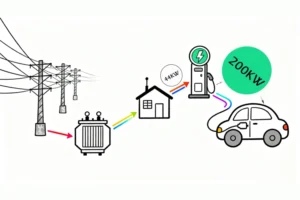
Load balancing allows multiple EV chargers to share the available power intelligently. Instead of overloading the grid or requiring costly upgrades, the system distributes electricity dynamically, ensuring safe and efficient charging for all vehicles.
How Load Balancing Works
A load balancing EV charging station continuously monitors power consumption and automatically adjusts output. For example:
If only one EV is plugged in, it can receive the maximum available power.
When multiple EVs are charging simultaneously, the system divides capacity fairly, preventing overload.
Priority rules can be set—such as giving company fleet vehicles faster charging during business hours.
This makes dynamic load balancing EV chargers ideal for commercial, residential, and multifamily properties.
Types of Load Balancing EV Chargers
Static Load Balancing
Pre-set distribution of electricity.
Simple but less flexible for variable demand.
Real-time monitoring of the site’s total consumption.
Distributes power automatically according to demand and available capacity.
Local Load Balancing
Works within one site (e.g., a parking garage).
Managed via smart platforms and apps.
Ideal for EV charging networks spread across multiple sites.
Benefits of Load Balancing EV Chargers
Avoid Costly Grid Upgrades: No need to increase main electrical capacity.
Scalability: Easily expand from 2 chargers to 20+ without re-wiring.
Energy Efficiency: Optimizes charging during peak and off-peak times.
Fair Distribution: Ensures every vehicle gets a charge, even in busy parking lots.
Lower Operating Costs: Reduces electricity bills through smart management.
Where Load Balancing EV Chargers Are Used
Commercial EV Charging Stations: Office buildings, retail, and hotels.
Multifamily Properties: Apartment complexes where multiple residents charge overnight.
Fleet Operations: Logistics, taxi, and ride-share companies.
Public Charging Networks: Airports, shopping centers, and urban hubs.
Anengjienergy Load Balancing EV Charger Solutions
At Anengjienergy, we provide advanced AC and DC load balancing EV chargers, designed for both small businesses and large commercial operators.
AC Wallbox Chargers: Ideal for homes and offices.
Dual-Port DC Fast Chargers: 20kW–720kW, with OCPP 1.6/2.0 compatibility.
Dynamic Load Balancing Software: Integrated with cloud platforms, supporting remote monitoring and smart billing.
Custom Branding & Turnkey Service: From design and manufacturing to installation and after-sales support.
Whether you are building a commercial EV charging station with load balancing or equipping a residential complex, we ensure safety, efficiency, and scalability.
Future Outlook
As EV adoption accelerates, load balancing EV charging technology will become standard. It is a practical solution that combines energy efficiency, cost savings, and reliability, making it an essential part of modern EV infrastructure.