

Introduction
As the leading ev charging stations manufacturers scale their operations to meet historic demand, the global electric vehicle market has officially entered its “Golden Decade.” By 2026, the industry’s focus has shifted from early “range anxiety” to more fundamental challenges: charging speed, infrastructure reliability, and energy system synergy. Because EVs have significantly lower life-cycle carbon emissions than gas-powered cars, and with the rapid adoption of NACS (North American Charging Standard), electric vehicles are no longer just an eco-friendly choice—they are the core infrastructure of a sustainable transport system. This has triggered an exponential surge in public and commercial EV charging demand.
However, for fleet managers, commercial real estate operators, and infrastructure investors, the current market presents a “surface-level boom” with deep internal divisions. While the number of suppliers has skyrocketed, truly capable ev charging stations manufacturers with technical depth, manufacturing resilience, and ecosystem integration are rare. Not every EV charger factory can support long-term operational needs.
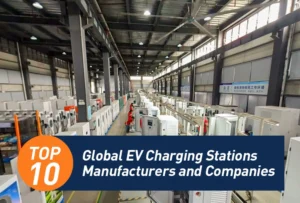
This guide focuses on the 10 most influential ev charging equipment manufacturers in 2025, evaluating them across three core dimensions:
- Manufacturing Capability: Supply chain stability, local compliance, and mass production scale.
- Technical Innovation: Power architecture, smart management, bidirectional charging, and V2G/V2H support.
- Market Focus: B2B, public networks, residential scenarios, and energy fusion.
Top Global Manufacturers At a Glance
| Company Name | Headquarters |
| ABB | Zurich, Switzerland |
| Webasto | Stockdorf, Germany |
| AnengJi | Chengdu, Sichuan, China |
| ChargePoint | California, USA |
| EVgo | Los Angeles, USA |
| Tesla | Texas, USA |
| Wallbox | Barcelona, Spain |
| EVBox | Amsterdam, Netherlands |
| BTC Power | North America (USA) |
| AUTEL | Greensboro, USA |
Top DC Fast Charger Manufacturers (Best for B2B & Fleets)
ABB
Business Type: Global leader in electrical equipment and industrial automation.
Headquarters: Zurich, Switzerland
Products & Services:
- Terra series DC fast chargers (All-in-one & Split systems)
- Heavy-duty commercial vehicle solutions (Buses, logistics trucks)
- Destination AC charging stations
- Grid integration platforms and Energy Management Systems (EMS)
Deep Dive:
ABB isn’t just a “charger company”—they’ve injected a century of power engineering DNA into the e-mobility space. Their core advantage is their full-stack capability, spanning from the grid side to the vehicle terminal. The Terra 360, one of the world’s highest power density chargers (360kW peak), utilizes a modular power architecture that supports dynamic power sharing. This allows a single unit to intelligently distribute power to multiple vehicles simultaneously, maximizing equipment utilization.
More importantly, ABB provides a complete power infrastructure ecosystem, including medium-voltage switchgear, transformers, edge computing gateways, and energy scheduling software. This makes them the first choice for highway operators, port logistics bases, and large-scale bus systems. Their equipment is IP54 certified and compatible with CCS1, CCS2, CHAdeMO, and NACS, ensuring zero compatibility risks for the next decade. In 2026, as “high availability” becomes a mandatory requirement for commercial charging, ABB’s industrial-grade reliability has built an insurmountable moat.
AUTEL Energy
Business Type: Global provider of smart charging and energy solutions.
Headquarters: Greensboro, North Carolina, USA
Products & Services:
- AC/DC charging stations (7kW–360kW)
- Smart charging management platform (Supports OCPP 1.6/2.0)
- Full scenario coverage: Residential, Commercial, Public, and Fleet
- Sales and service network across 70+ countries
Deep Dive:
AUTEL has entered the market with a “Hardware + Software + Service” trinity model, emphasizing seamless integration into the user’s energy life. Their product design balances aesthetics with functionality, making them highly popular in high-end residential and commercial real estate in North America and Europe. On the technical side, AUTEL deeply integrates the ISO 15118 protocol, fully supporting “Plug & Charge” to significantly lower the barrier for users.
With their global layout and localized responsiveness, AUTEL quickly adapts to different regional grid regulations and subsidy policies. Their R&D covers everything from power electronics topology to cloud-based AI scheduling algorithms, ensuring a balance between efficiency, safety, and intelligence. For commercial clients who value brand tone and user experience, AUTEL offers a differentiated value compared to strictly industrial brands.
Webasto
Business Type: Century-old Tier-1 automotive supplier turned charging expert.
Headquarters: Stockdorf, Germany
Products & Services:
- Webasto Pure / Next (AC stations)
- Webasto Unite (Commercial AC platform)
- Modular DC fast charging systems (up to 350kW)
- High-voltage battery systems and thermal management tech
Deep Dive:
As a long-term partner to OEMs like VW and BMW, Webasto has fully migrated its automotive-grade quality systems into the charging equipment field. Their DC fast charging platform uses a “base unit + pluggable power module” design, supporting smooth future upgrades—deploy 150kW today and expand to 350kW tomorrow to avoid stranded assets.
Their legacy in thermal management is particularly outstanding. Liquid-cooling expertise from automotive sunroofs and parking heaters has been innovatively applied to charging cables and power module cooling systems. This ensures the equipment can maintain continuous full-power output in extreme environments ranging from -30°C to +50°C. This “automotive mindset” gives them a unique edge in high-durability scenarios like OEM partnerships, airports, and logistics hubs.
AnengJi
Business Type: New energy system solution operator & EV charger manufacturer.
Headquarters: Chengdu, Sichuan, China
Products & Services:
- Chargeurs rapides à courant continu (60kW–360kW, modular and scalable)
- AC chargers (3.7kW–22kW, wall-mounted/pedestal)
- Integrated Solar-Storage-Charging solutions (PV + Storage + Charging)
- EV charger OEM manufacturer & ODM services
Deep Dive:
AnengJi represents the rising power of Chinese intelligent manufacturing in the new energy infrastructure sector. Drawing on over 20 years of experience in high and low-voltage electrical equipment, their chargers utilize an integrated die-casting process with an IP54 protection rating, allowing stable operation in harsh environments like high humidity, salt spray, and dust.
Their core competitiveness lies in high cost-performance and flexible customization. Compared to international giants like ABB, AnengJi offers the same industrial quality but with a significant cost advantage, while supporting deep OEM/ODM collaboration—from exterior design and communication protocols to back-end systems. Crucially, AnengJi has taken the lead in merging solar, storage, and charging to create “off-grid” or “peak-shaving” microgrid stations, helping commercial clients reduce demand charges and increase green energy usage.
In the context of 2026, where “cost reduction and efficiency” is the main operational theme, AnengJi provides a pragmatic path for hotels, industrial parks, fleets, and distributors to maximize their Return on Investment (ROI).

BTC Power
Business Type: Localized North American charging system manufacturer.
Headquarters: Santa Ana, California, USA
Products & Services:
- DC fast chargers (40kW–480kW)
- AC chargers (7.2kW–19.2kW)
- Flat Matrix Transformer (FMTx) core technology
- Compliant with IIJA and “Buy America” requirements
Deep Dive:
BTC Power is one of the few commercial EV charger manufacturers truly rooted in US domestic production. Their proprietary Flat Matrix Transformer (FMTx) technology achieves industry-leading power density and conversion efficiency, resulting in smaller footprints, better heat dissipation, and longer lifespans.
With over 22,000 systems delivered, they are widely used in gas stations, convenience stores, school bus depots, and municipal fleets. Their product design fully considers North American grid characteristics and O&M habits, and they are 100% compliant with FHWA and IIJA “Made in America” requirements—which is vital for projects relying on federal subsidies. As geopolitics and supply chain security become increasingly sensitive, BTC Power offers a “de-risked” local alternative.
Best Commercial Charging Networks (Public Operations)
ChargePoint
Business Type: World’s largest open charging network + SaaS platform.
Headquarters: California, USA
Products & Services:
- Express Plus (Modular DC fast charging)
- CT4000 series (Smart Level 2 AC stations)
- ChargePoint Cloud (Fleet management, payments, data analytics)
- Residential Flex chargers
Deep Dive:
The essence of ChargePoint is an energy service platform driven by network effects. While their hardware is excellent, the real barrier to entry is their massive network connecting over 200,000 sites and millions of users. Businesses deploying their equipment automatically tap into a high-traffic user pool, significantly increasing site utilization.
Their Express Plus platform uses a “Power Block + Power Link” architecture where the power units are deployed centrally while user terminals remain lightweight, drastically reducing site renovation costs. On the software side, their fleet management tools can link with vehicle telematics to intelligently schedule charging based on electricity prices, routes, and battery status. For commercial real estate and retail businesses that value user reach and operational automation, ChargePoint offers irreplaceable ecosystem value.
EVgo
Business Type: Owner-operator of DC fast charging networks.
Headquarters: Los Angeles, USA
Products & Services:
- 850+ fast charging sites across the US (covering 60+ metro areas)
- Autocharge+ (Plug & Charge)
- EVgo eXtend (Branded white-label services)
- Fleet depot charging solutions
Deep Dive:
EVgo adopts a capital-intensive owner-operator model, owning and maintaining all its equipment to solve the industry pain point of “broken chargers.” Their network uptime consistently exceeds 97%, far above the industry average.
Autocharge+ technology allows for seamless starts via vehicle VIN recognition, giving non-Tesla users a Supercharger-like experience. Meanwhile, the eXtend program has pioneered a “brand empowerment” model where retailers and automakers can operate white-labeled fast-charging stations while EVgo handles the technology and ongoing maintenance. This partnership mechanism makes them an ideal partner for retail giants like Walmart and Target.
Best Residential EV Charger Brands (Best for Homeowners)
EVBox
Business Type: Leading European EVSE manufacturer + energy management software provider.
Headquarters: Amsterdam, Netherlands
Products & Services:
- Elvi (Smart residential charger)
- Livo / Liviqo (Commercial AC chargers)
- Troniq Modular (Modular DC fast charging)
- Everon management platform (OCPP support)
Deep Dive:
The core philosophy of EVBox is openness, modularity, and scalability. Their Elvi home charger uses a “cable and brains” separation design, so you won’t need to replace the whole unit when you get a new car. Their commercial products use a “Hub-and-Spoke” architecture, where one communication hub can manage dozens of satellite chargers, drastically lowering deployment costs.
Most importantly, EVBox staunchly embraces the OCPP protocol. Their hardware isn’t locked to a specific software platform, giving customers maximum freedom. This strategy has allowed them to dominate markets sensitive to vendor lock-in, such as European municipalities and corporate campuses. In the trend toward energy democratization, EVBox represents a technical route of “user sovereignty” rather than “platform control.”
Tesla
Business Type: Vertically integrated clean energy tech company.
Headquarters: Austin, Texas, USA
Products & Services:
- Gen 3 Wall Connector (including Universal Magic Dock)
- Supercharger V3/V4 network
- Powerwall + Solar Roof
- NACS standard setter
Deep Dive:
Tesla has moved from a “closed ecosystem” to a “standard setter.” With NACS becoming the de facto standard in North America, their home Wall Connector now supports all major models via the Magic Dock. The Supercharger V4 is renowned for ultra-high reliability and minimalist maintenance—thanks to in-house chips, liquid-cooled cables, and AI predictive maintenance.
For home users, a Tesla charger is more than just a plug; it’s a home energy hub. It integrates with Powerwall for solar-priority charging, grid peak-shaving, and backup power during outages. This “Vehicle-Charger-Storage-Solar” integrated experience is something no competitor has fully replicated yet. Tesla has proven that the true moat is not in hardware, but in ecosystem efficiency.
Wallbox
Business Type: Smart energy management pioneer.
Headquarters: Barcelona, Spain
Products & Services:
- Pulsar Plus / Max (Smart home chargers)
- Quasar 2 (The world’s first bidirectional home DC charger)
- Supernova (Public fast charging)
- Eco-Smart solar optimization software
Deep Dive:
Wallbox has redefined the aesthetic and intelligent boundaries of home charging. The Pulsar series blends into modern homes with minimalist design, while the companion app provides cost analysis down to the kilowatt-hour.
But the real disruptor is the Quasar 2—the world’s first home DC charger supporting V2H (Vehicle-to-Home) et V2G (Vehicle-to-Grid). This means an EV is no longer just a load; it’s a home energy asset that can power the house during blackouts or sell electricity back when prices are high. Wallbox is transforming the charger from a “power consumer” to an “energy router,” leading a home energy revolution.
How to Choose the Best EV Charging Stations Manufacturers?
Choosing shouldn’t just be about the initial purchase price; you need a full life-cycle decision model:
Interoperability > Brand Hype
Prioritize manufacturers that are fully compatible with OCPP 1.6/2.0 (like AnengJi, ABB, EVBox, Wallbox). Avoid being locked into proprietary protocols to ensure you can freely switch back-end systems in the future.
Supply Chain Compliance = Project Viability
For US projects, you must verify compliance with NEVI and “Buy America” requirements. Local manufacturers like BTC Power and Tesla have a natural advantage; overseas brands must provide certificates of origin and local service networks.
Scalability Determines TCO
Evaluate whether they support dynamic load balancing, power sharing, and OTA (Over-the-Air) updates. Without smart power management, every new station added could trigger expensive grid capacity upgrades.
SLA (Service Level Agreement) is Your Cash Flow Guarantee
In commercial scenarios, a 48-hour on-site response vs. a three-week repair cycle directly determines your customer churn and revenue loss. Be sure to review the manufacturer’s service density and spare parts inventory strategy.
Key Trends Shaping the EV Charging Industry (2026 and Beyond)
Year One of V2G Commercialization
Bidirectional charging is moving from pilots to scale. V2G-capable stations (like Wallbox Quasar 2 and certain ABB platforms) will turn EVs into tradable distributed energy storage units.
Plug & Charge (ISO 15118) Becomes Standard
Payment friction is disappearing. Starting in 2026, newly deployed public chargers that don’t support Plug & Charge will face both user experience and regulatory compliance pressure.
Reliability as a Regulatory Mandate
US federal funding now requires public charger uptime ≥97%. Low-quality manufacturers will be forced out of the market due to high failure rates and fines, leading to an industry consolidation focused on “high quality and high service.”
Conclusion
The charging equipment market of 2026 has moved past its “wild growth” phase and entered an era of infrastructure-level competition. The winners are no longer hardware vendors piling up features, but energy system integrators who can navigate the complex interactions between the vehicle, charger, grid, and storage.
For buyers, choosing a manufacturer is choosing an energy future:
- If you want extreme reliability and grid synergy, ABB is your industrial cornerstone.
- If you value an open ecosystem and long-term freedom, EVBox et AnengJi offer flexible paths.
- If you are positioning for the home energy revolution, Wallbox et Tesla define the new paradigm.
- If you rely on government funding and local compliance, BTC Power et EVgo provide certainty.
If you are looking for a strategic partner that combines twenty years of electrical safety heritage, modular DC fast charging technology, and integrated Solar-Storage-Charging capabilities, AnengJi is ready to provide high-performance, high-reliability customized solutions via Chinese intelligent manufacturing. Contact us today to build a zero-carbon transportation future together.
FAQ: Professional EV Infrastructure Insights
Q: Who are the best ev charging stations manufacturers for commercial fleets?
A: For heavy-duty fleets, ABB et BTC Power are industry leaders due to their high-power modular systems. However, AnengJi is increasingly popular for fleet depot charging because of their scalable DC fast chargers and cost-effective TCO.
Q: What is the benefit of buying from an EV charger factory direct?
A: Buying factory direct, especially from an OEM/ODM manufacturer like AnengJi, allows for deep customization of hardware and software protocols while significantly reducing the markup from middlemen, improving your ROI.
Q: How do I ensure my charging station is future-proof?
A: Ensure your manufacturer supports OCPP 2.0.1 et ISO 15118. These standards are essential for modern features like Plug & Charge and bidirectional V2G capabilities.
Would you like me to draft a custom inquiry template you can use to contact these manufacturers for bulk pricing?