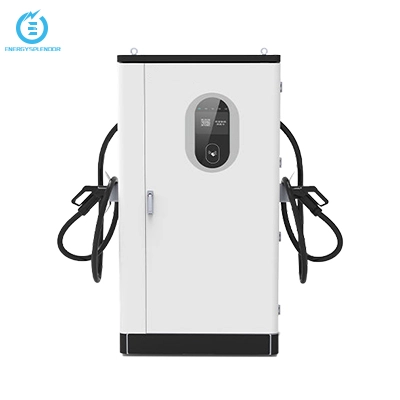


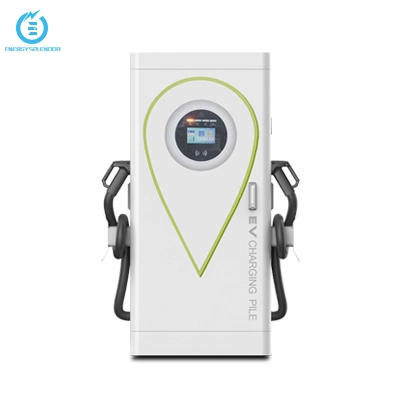


The cost of an EV charging station depends on the power level,
configuration and project requirements.
Please Kontaktieren Sie uns to get a customized quotation.
Yes, we provide DC fast chargers for commercial, public and
highway EV charging station projects.

Eine tragbare Ladestation für Elektrofahrzeuge, auch bekannt als mobile Ladestation für Elektrofahrzeuge oder tragbares DC-Schnellladegerät, ist ein Schnellladegerät, das jederzeit in einem Elektrofahrzeug mitgeführt werden kann.
Um das Aufladen von Elektrofahrzeugen in verschiedenen Szenarien zu ermöglichen, sind mobile DC-Schnellladestationen bequemer als ortsfeste Ladestationen. Sie sind außerdem mit vier Universalrädern ausgestattet und können jederzeit an verschiedenen Orten eingesetzt werden.
Mit tragbaren Ladegeräten können Fahrer ihre Elektrofahrzeuge überall dort aufladen, wo eine kompatible Stromquelle zur Verfügung steht. Damit sind sie ideal für Reisen, Notfälle und Gebiete mit begrenzter Ladeinfrastruktur.
Diese Ladegeräte sind so konzipiert, dass sie in den Kofferraum des Fahrzeugs passen, so dass der Fahrer sie leicht mitnehmen und bei Bedarf aufladen kann.
Sie bieten eine praktische Reserve-Lademöglichkeit ohne die Vorlaufkosten eines permanenten Ladegeräts für zu Hause, insbesondere für Nutzer, die nur selten laden oder Immobilien mieten.
Tragbare Ladestationen sind ideal für Pannenhilfe, Mietflotten und Testfahrten von EV-Händlern und bieten schnelle und flexible Lösungen für das Laden vor Ort.
Leistungsstarke tragbare Gleichstrom-Schnellladegeräte verkürzen die Ladezeit im Vergleich zu herkömmlichen tragbaren Wechselstrom-Ladegeräten erheblich und ermöglichen bei Bedarf eine schnelle Reichweitenverlängerung.
Viele tragbare Ladegeräte laden langsamer als stationäre Gleichstrom-Schnellladegeräte, was die Ausfallzeiten während des Ladevorgangs verlängern kann.
Für den Betrieb ist eine kompatible Steckdose oder ein Generator erforderlich, die in abgelegenen Gebieten oder in Notsituationen nicht immer zur Verfügung stehen.
Tragbare Elektroautos mit eingebauten Batterien liefern nur eine begrenzte Energiemenge, die oft eher für eine Notlaufleistung als für eine vollständige Aufladung ausreicht.
Tragbare DC-Ladegeräte mit hoher Kapazität können schwerer sein, so dass ein häufiger manueller Transport weniger bequem ist.
Tragbare Gleichstrom-Schnellladegeräte sind teurer als tragbare Standard-Wechselstrom-Ladegeräte, was sich auf die anfängliche Kaufentscheidung auswirken kann.
A DC-EV-Ladegerät für Zuhause ist ein Gleichstrom-Schnellladegerät für den Hausgebrauch, mit dem Besitzer von Elektrofahrzeugen ihre Fahrzeuge viel schneller aufladen können als mit herkömmlichen AC-Heimladegeräten. Im Gegensatz zu Wechselstrom-Ladegeräten, bei denen das bordeigene Ladegerät des Elektrofahrzeugs den Wechselstrom in Gleichstrom umwandeln muss, liefert ein Gleichstrom-Heimladegerät den Gleichstrom direkt an die Batterie, was die Ladezeit erheblich verkürzt.
DC fast chargers (Level 3 chargers) supply direct current (DC) directly to your EV’s battery, bypassing the onboard AC-to-DC converter.
Power range: 20 kW – 360 kW (typical home-use units: 20 – 50 kW).
Charging time: 80% charge in 20–40 minutes, depending on your car and charger power.
Connector types: CCS Combo 1/2, CHAdeMO, or GB/T (depending on your region and vehicle).
A DC fast charger needs three-phase power und eine high amperage circuit.
Typical home electrical systems (single-phase, ≤240 V, 100–200 A) often cannot directly support DC chargers.
You may need:
A dedicated 400–480 V, 3-phase supply.
A new transformer or service upgrade from your utility company.
Professional load calculation and wiring.
If your home cannot support this load, consider a Level 2 (AC) charger instead. It’s much easier and cheaper to install (7–22 kW).
| Item | Typical Range (USD) |
|---|---|
| DC Charger Unit | $10,000 – $40,000 |
| Electrical Upgrade (Transformer, Panel, Cables) | $5,000 – $20,000 |
| Professionelle Installation | $2,000 – $10,000 |
| Total (Approx.) | $17,000 – $70,000 |
Prices vary by brand, country, and existing infrastructure.
Assess your home’s power system
Hire a licensed electrician or EV infrastructure specialist to evaluate your load capacity.
Contact your utility provider
Request approval for higher capacity or 3-phase service.
Choose a certified charger
Look for chargers certified under UL, CE, or equivalent safety standards (brands like ABB, Delta, Kempower, or Tesla).
Obtain permits
Local authorities may require electrical or construction permits.
Professional installation
The technician will:
Install new breakers and heavy-duty wiring.
Mount the charger securely (indoor/outdoor).
Connect to the main panel or transformer.
Configure grounding, surge protection, and safety devices.
Inspection and commissioning
The system must pass a safety inspection before use.
Park and power on the charger
Some units start automatically; others require an app or RFID card.
Connect the charging cable
Plug the DC connector (e.g., CCS or CHAdeMO) into your vehicle.
Authenticate (if needed)
Via app, RFID, or screen interface.
Monitor charging
The charger will communicate with your car to regulate current and voltage.
Stop and disconnect
Once charged (usually to 80%), stop charging via the app or charger screen, then unplug.
Regular maintenance
Keep connectors clean, ensure ventilation, and check for fault codes.
If full DC installation isn’t practical:
DC wallbox (20–40 kW) — compact models by brands like ANENGJIENERGY AC/DC or Delta DC-Wallbox may work for larger homes with upgraded supply.
High-power Level 2 (22 kW AC) — far more affordable (~$1,000–$2,500) and still charges most EVs overnight.
Only licensed electricians should handle installation.
Follow local electrical codes (e.g., NEC, IEC).
Install surge protection und ground fault detection.
Keep the charger in a dry, ventilated, and shaded area.
Eine kommerzielle Ladestation für Elektrofahrzeuge ist eine Ladeinfrastruktur, die für das Laden von Elektrofahrzeugen in öffentlichen oder geschäftlichen Umgebungen konzipiert ist. Im Gegensatz zu Ladestationen für den privaten Gebrauch sind diese Stationen für eine höhere Auslastung ausgelegt und können täglich mehrere E-Fahrzeuge zuverlässig, sicher und effizient aufladen. Sie werden in der Regel in Einkaufszentren, auf Parkplätzen, in Hotels, Bürogebäuden, Autobahnraststätten und Fuhrparkdepots installiert und helfen Unternehmen, E-Fahrer anzuziehen und gleichzeitig zusätzliche Einnahmequellen zu erschließen.
Kommerzielle EV-Ladegeräte gibt es sowohl in AC- als auch in DC-Konfigurationen. AC-Ladegeräte mit einer Leistung von 7 kW bis 22 kW eignen sich für Standorte, an denen die Fahrzeuge für längere Zeit geparkt werden, z. B. an Arbeitsplätzen oder in Hotels. Gleichstrom-Schnellladegeräte mit einer Leistung von 30 kW bis 360 kW oder mehr können ein Elektrofahrzeug von 20% bis 80% in 20-60 Minuten aufladen und sind damit ideal für gewerbliche Anwendungen, bei denen die Fahrer eine schnelle Aufladung benötigen, wie z. B. an Tankstellen und Autobahnen.
ower output / speed: For commercial use (businesses, fleet, public parking), faster charging is better (especially if turnover is high). DC fast chargers (100 kW-350 kW+) are more expensive but support quick sessions.
Connectors & standards: Compatibility (e.g., CCS, CHAdeMO, NACS) matters. Also network communication standards (OCPP, ISO 15118) for future proofing.
Network & payment integration: If you plan to charge the public (not just internal fleet), you’ll want billing, user access, management software (remote, data, etc.).
Durability / commercial build: Weather-rated, robust cables/connectors, outdoor rated, high duty cycle.
Site fit & utility readiness: Many sites may not have the required power, so the “best” charger is one your site can support and that fits your workflow. For example one reddit user said:
“If you can’t do at least 150 kW, don’t install a DC fast charger”
Scalability & brand/support: Future expansion, software updates, maintenance support, brand reliability.
Cost & ROI: Lower upfront cost is good, but you also want it to earn or provide the service you expect (fleet turnaround, public station usage, etc.).
Use case alignment: Are you doing a public charging kiosk (high throughput) vs. private fleet depot vs. employee parking? The “best” will vary.
Die Ausgangsleistung einer Gleichstrom-Ladestation hängt von mehreren Schlüsselfaktoren ab. Erstens, der Standort Stromversorgungskapazität und die Grenzen des Transformators wirken sich direkt auf die maximale Leistung des Ladegeräts aus. Zweitens, die Interner Aufbau des Ladegeräts und Modulkonfiguration bestimmen, wie viel Strom kontinuierlich geliefert werden kann. Drittens, die Kompatibilität von EV-Batterien und BMS (Batteriemanagementsystem) begrenzt die tatsächliche Ladeleistung, da das Fahrzeug nur Leistung innerhalb seiner Auslegungsgrenzen aufnehmen kann. Viertens, Kabel- und Steckerleistungen für Strom und Spannung (CCS, CHAdeMO) beeinflussen die sichere Stromversorgung. Zusätzlich, Wärmeabgabe und Umgebungstemperatur kann zu einem Derating führen, wenn die Umgebung zu heiß ist, wodurch die Leistung reduziert wird, um das Ladegerät zu schützen. Zum Schluss, EV-Ladestrategien Die höchsten Ladegeschwindigkeiten werden in der Regel zwischen 20% und 80% Batterieständen erreicht. Die Kenntnis dieser Faktoren gewährleistet ein sicheres, effizientes und schnelles Aufladen bei gleichzeitiger Verlängerung der Batterielebensdauer.
If you’re looking for a commercial-grade DC EV charging station for “powers” (high through-put / faster charging), here’s a breakdown of what to consider + a selection of strong product candidates you can evaluate.
Based on typical specs & market analysis:
Expect input power to be 3-phase (often 400 V/480 V AC) since DC fast charging requires high power.
Output voltage ranges for many DC chargers: often up to ~1000 V DC (e.g., 150-1000 V) for wide EV compatibility.
Output power: Commercial DC chargers commonly in the 60 kW to 240+ kW range (some going higher).
Efficiency & power factor: High efficiency (> 95 %) and PF ≥0.98 typical for good units.
Communication / network features: OCPP support, remote management, multiple connectors (CCS1, CCS2, NACS, GB/T) often.
Site infrastructure: Significant electrical service, possibly transformer upgrade. One comment:
“As a general rule, every 200A of 480V 3-phase service input gets you about 125 kW of output…”
So when you select a station, make sure the site’s power capacity (panel, transformer, service drop) supports the charger’s input requirements.
A Complete Guide to DC Charging Connector Types for Electric Vehicles (EVs)
Da Elektrofahrzeuge (EVs) immer beliebter werden, ist es für eine effiziente und kompatible Schnellladung unerlässlich, die verschiedenen Typen von Gleichstrom-Ladesteckern zu kennen. Weltweit verwenden EV-Hersteller und Regionen unterschiedliche Gleichstrom-Ladestandards mit jeweils eigenen Steckerdesigns, Kommunikationsprotokollen und unterstützten Fahrzeugen. In diesem Artikel werden die fünf wichtigsten Typen von Gleichstrom-Ladesteckern beschrieben: GB/T, CCS1, CCS2, CHAdeMO und der Tesla-eigene Stecker. So können Sie den richtigen Stecker für Ihr Fahrzeug oder Ihre Ladestation auswählen.
| Stecker Typ | Standard | Region | Schnelles Aufladen | Gemeinsame Marken |
|---|---|---|---|---|
| GB/T | China | China | ✅ | BYD, NIO, XPeng |
| CCS1 | Kombi 1 | Nord-Amerika | ✅ | Ford, GM, Tesla (U.S.) |
| CCS2 | Kombi 2 | Europa, Asien | ✅ | VW, Mercedes, Hyundai |
| CHAdeMO | CHAdeMO | Japan, Asien | ✅ | Nissan, Mitsubishi |
| Tesla DC | NACS/Variablen | Global | ✅ | Tesla |
Der GB/T-DC-Ladestecker ist der offizielle, in ganz China verwendete Standard. Er verfügt über einen großen, runden Stecker mit einem robusten Design, unterstützt Hochleistungs-Gleichstrom-Schnellladungen und ist weitgehend kompatibel mit chinesischen Elektromarken wie BYD, NIO und XPeng. Obwohl er international nicht verwendet wird, dominiert er die chinesische E-Infrastruktur.
CCS1, oder Combined Charging System Type 1, ist der wichtigste DC-Schnellladestecker in Nordamerika. Er kombiniert einen AC-J1772-Stecker mit zwei zusätzlichen DC-Pins für das Hochgeschwindigkeitsladen. CCS1 wird von großen amerikanischen Automobilherstellern wie Ford, General Motors und Tesla (mit Adaptern) unterstützt. Er ist mit Ladenetzwerken wie Electrify America und EVgo kompatibel.
CCS2 ist der weltweit bevorzugte Standard für Gleichstrom-Schnellladestecker in Europa, Australien und Teilen von Asien. Er verfügt über einen AC-Sockel vom Typ 2 mit zwei DC-Pins darunter, was eine nahtlose Integration sowohl für AC- als auch für DC-Ladung ermöglicht. Marken wie Volkswagen, BMW, Mercedes-Benz, Hyundai und Tesla (in Europa) verwenden CCS2 als die bevorzugte Ladeschnittstelle.
CHAdeMO wurde in Japan entwickelt und war einst ein führender Gleichstrom-Ladestandard, der für seine Schnellladefähigkeit bekannt war. Er wird von EV-Modellen wie dem Nissan Leaf und dem Mitsubishi i-MiEV verwendet. Aufgrund seines sperrigen Steckers und der abnehmenden weltweiten Unterstützung wird CHAdeMO jedoch allmählich zugunsten des CCS-Systems abgeschafft, insbesondere außerhalb Japans.
Tesla employs different DC connector standards depending on the region:
In North America, Tesla uses its proprietary NACS (North American Charging Standard) plug, known for its compact design and high-speed Supercharging capability.
In Europe, Tesla vehicles use CCS2.
In China, Tesla adapts to the GB/T standard for local compatibility.
Tesla provides adapters to ensure cross-standard support for its vehicles in global markets.
Choosing the right EV charging connector depends on your vehicle’s make, your location, and the DC charging infrastructure available. As global standards consolidate, CCS2 is emerging as the dominant format, but regional variations like GB/T and Tesla’s NACS remain critical to consider.
For EV owners and charging station operators alike, understanding these DC fast charging plug types ensures compatibility, speed, and convenience on the road to a greener future.
Gleichstrom-Schnellladestationen sind für das Wachstum von Elektrofahrzeugen (EVs) von entscheidender Bedeutung, da sie im Vergleich zu herkömmlichen Wechselstrom-Ladestationen eine schnelle Energieauffüllung bieten. Während alle DC-Ladegeräte Gleichstrom an die Fahrzeugbatterie liefern, gibt es unter der Motorhaube mehrere Lademethoden, die von den Fähigkeiten der Station, der Stromarchitektur und der intelligenten Systemintegration abhängen.
| Methode der Aufladung | Grundprinzip | Leistung | Wichtige Anwendungsfälle | Bemerkenswertes Merkmal |
|---|---|---|---|---|
| Konstante Leistung beim Aufladen | Feste Ausgangsleistung mit dynamischem V/I | 250-600+ kW | Ultraschnelle Ladegeräte, hochwertige E-Fahrzeuge | Maximale Effizienz während des gesamten Ladevorgangs |
| CC-CV Aufladung | Konstantstrom- und Spannungsstufen | 30-250 kW | Standard-Schnellladestationen | Ausgewogene Geschwindigkeit und Batteriesicherheit |
| Planmäßige Aufladung | Der Ladevorgang beginnt zu bestimmten Zeiten | Variabel | Fuhrparks, Logistik, öffentliche Systeme | Kosten- und netzoptimiert |
| Dynamische Energieverteilung | Intelligenter Lastausgleich zwischen Anschlüssen | Gemeinsame Nutzung von Häfen | Ladestationen, Depots | Gleichzeitiges Laden mehrerer Elektrofahrzeuge |
| Flüssigkeitsgekühlte Ladung | Kabelkühlung mit Flüssigkeitsumlauf | 350-600+ kW | Leistungsstarke E-Fahrzeuge, Elektro-Lkw | Sichere, effiziente Ultra-Hochleistung |
Im Folgenden werden die fünf wichtigsten DC-Lademethoden vorgestellt, die heute in der kommerziellen und industriellen Ladeinfrastruktur für Elektrofahrzeuge eingesetzt werden:
Definition: The charging station maintains a fixed output power by dynamically adjusting voltage and current within a defined range.
Benefits: Maximizes charging speed throughout the session.
Application: Ultra-fast chargers (e.g., 350kW, 480kW systems), premium EVs and electric trucks.
Key Feature: Power remains stable while voltage and current fluctuate.
Definition: Charging starts in constant current (CC) mode, and switches to constant voltage (CV) once a threshold is reached.
Benefits: Stable, safe, and battery-friendly.
Application: Standard DC fast chargers for passenger vehicles.
Key Feature: Fast charging up to ~80%, then slower top-off.
Definition: Charging is delayed or scheduled to begin during off-peak hours or based on operator settings.
Benefits: Optimizes electricity costs, reduces grid stress.
Application: Fleets, taxis, buses with centralized management platforms.
Key Feature: Charging starts automatically based on time or pricing signals.
Definition: A centralized charging cabinet dynamically allocates power across multiple charging guns based on demand.
Benefits: Increases site efficiency, reduces wait time, balances load.
Application: Multi-vehicle charging hubs, smart charging depots.
Key Feature: Real-time power adjustment across connected EVs.
Definition: Charging cables are cooled using a liquid circulation system to safely handle very high currents.
Benefits: Enables charging powers exceeding 500kW, shortens charge times dramatically.
Application: High-end EVs, electric buses, heavy-duty trucks.
Key Feature: High power delivery with safe thermal management.
Netzanschlussverfahren für DC-Ladestationen
Da Elektrofahrzeuge immer beliebter werden, spielen Gleichstrom-Ladestationen eine entscheidende Rolle bei der Ermöglichung eines schnellen und zuverlässigen Ladevorgangs. Um Echtzeitüberwachung, Fernsteuerung, Abrechnung und Software-Updates zu gewährleisten, müssen diese Ladestationen mit robusten Netzwerkverbindungsmethoden ausgestattet sein.
Nachfolgend sind die gängigsten Möglichkeiten aufgeführt, wie DC-Ladestationen mit dem Internet oder Backend-Systemen verbunden werden:
A wired Ethernet connection offers a stable and high-speed method for connecting DC charging stations.
Ideal for: Fixed installations such as public charging depots, commercial parking lots, and service stations.
Benefits:High data reliability,Low latency,Strong resistance to interference
Many modern DC charging stations use 4G or 5G mobile networks to connect wirelessly.
Ideal for: Urban environments, roadside charging, and areas without existing network infrastructure.
Benefits:Easy deployment without cables,Real-time data exchange and OTA (Over-the-Air) updates,5G enables ultra-low latency and high bandwidth, making it suitable for smart EV charging infrastructure
Wi-Fi is a flexible networking option when local wireless networks are available.
Ideal for: Underground garages, office buildings, and shopping centers.
Limitations:Signal strength may vary,Less reliable than Ethernet or cellular in high-interference environments
PLC enables data transmission over existing electrical power lines, reducing the need for separate network wiring.
Ideal for: Integrated systems in parking structures or residential complexes.
Benefits:Cost-effective in retrofitting environments
Drawbacks:Limited bandwidth and more vulnerable to interference
While not used for internet access, RS485 and CAN bus protocols are essential for internal communication between the charging station components or with a local controller.
Ideal for: Device-to-device communication
Function: Ensures stable control signals, fault reporting, and energy metering.
Regardless of the method used, every DC charging station must incorporate strong cybersecurity measures, including:VPN tunneling
,Data encryption,Firewall protection,Secure authentication protocols
These measures are vital for protecting user data, preventing unauthorized access, and maintaining system reliability.
Die Wahl der richtigen Netzwerkverbindung für eine DC-Ladestation hängt vom Einsatzort, den Anforderungen an die Skalierbarkeit und den betrieblichen Anforderungen ab. Ob über 5G, Ethernet oder PLC - eine zuverlässige Verbindung ist entscheidend für den Aufbau einer zukunftsfähigen, intelligenten Ladeinfrastruktur.
Gleichstrom-Ladestationen werden immer fortschrittlicher und weiter verbreitet, Interoperabilität zwischen Hardware- und Software-Plattformen wird kritisch. Dies ist der Punkt, an dem OCPP (Open Charge Point Protocol) ins Spiel kommt.
OCPP (Open Charge Point Protocol) is an open-source communication standard that enables charging stations and central management systems (CMS) to communicate effectively—regardless of the manufacturer.
Developed by: Open Charge Alliance (OCA)
Current versions: OCPP 1.6 (widely adopted), OCPP 2.0.1 (latest and more advanced)
Supported by: Most major EV charging hardware and software providers globally
For DC fast chargers, which require advanced functions like remote diagnostics, load balancing, user authentication, and dynamic pricing, OCPP ensures seamless integration between different systems.
Key Benefits:
Interoperability: Connect any OCPP-compliant charging station to any OCPP-compliant backend.
Remote Management: Enables remote monitoring, firmware updates, diagnostics, and control.
Scalability: Easily add new chargers to the network without vendor lock-in.
Real-time Data Exchange: Facilitates communication of charging status, error codes, energy usage, and payment data.
Cost Efficiency: Reduces dependency on proprietary systems and lowers integration costs.
OCPP acts as a translator between:
The Charging Station (Charge Point)
The Central System (Backend or CMS)
Data such as charging session start/stop, authentication via RFID or app, meter values, error codes, and transaction status are exchanged over the network layer (Ethernet, 4G/5G, Wi-Fi) using OCPP messages formatted in JSON over WebSockets (for OCPP 1.6) or JSON over MQTT (for OCPP 2.0.1).
The effectiveness of OCPP depends heavily on the reliability of the network connection:
Ethernet or 5G is ideal for stable, high-bandwidth OCPP communication.
Wi-Fi and PLC may work but are more prone to disruption, which can affect session reporting or remote control functions.
With OCPP 2.0.1, security features have been significantly improved:
End-to-end TLS encryption
Secure firmware updates
Digital certificates for authentication
Stronger session integrity
These enhancements make OCPP a secure and future-proof protocol for modern smart DC charging networks.
OCPP ist das Rückgrat des intelligenten Ladens von Elektrofahrzeugen, insbesondere für DC-Schnellladestationen. Durch die Einführung von OCPP-konformen Lösungen können Betreiber Flexibilität, Skalierbarkeit und volle Kontrolle über ihre Ladeinfrastruktur gewährleisten und gleichzeitig ein konsistentes und sicheres Erlebnis für E-Fahrer bieten.
Mit der zunehmenden Verbreitung von Elektrofahrzeugen ist die Gewährleistung eines reibungslosen und flexiblen Bezahlvorgangs an DC-Ladestationen von entscheidender Bedeutung. Die Betreiber müssen mehrere Abrechnungsmethoden unterstützen, um den Bedürfnissen von Privatfahrern, Flottenbetreibern und gewerblichen Nutzern gerecht zu werden.
Many DC charging networks issue RFID cards to registered users.
How it works: Users swipe the RFID card on the charging station to start and end sessions.
Advantages:Quick and contactless,Useful for frequent users and fleets,Integrated with: User accounts for postpaid or prepaid billing
Most modern DC charging stations support payments through mobile apps.
Features:Start/stop charging remotely,Real-time status monitoring
,Digital payment via credit/debit card, Apple Pay, Google Pay, etc.
Benefits:User-friendly,Supports loyalty programs, promotions, and subscriptions
In markets like China and Southeast Asia, QR code payments are the norm.
How it works: Scan the QR code on the charger using WeChat, Alipay, or any supported e-wallet.
Advantages:No app download required,Widely adopted and trusted
Some stations are equipped with POS terminals or contactless card readers.
Accepted methods: Visa, MasterCard, American Express, etc.
Compliant with: EMV and PCI-DSS standards for secure transactions
Convenient for: Walk-in or first-time users
For B2B clients or fleet operations, centralized billing is common.
Features:Monthly invoicing,Usage reports,Account-level limits and control,Integrated with: Fleet management platforms and CMS
Next-generation Plug & Charge technology enables fully automated payment.
How it works: The EV and charger authenticate each other via encrypted communication.
Benefits:No app, card, or scan required,Highly secure and seamless user experience
Note: Requires compatible vehicles and chargers
Alle Zahlungstransaktionen müssen den Datensicherheitsstandards entsprechen, wie z.B.: PCI-DSS (Payment Card Industry Data Security Standard), Ende-zu-Ende-Verschlüsselung, sichere Benutzerauthentifizierung, Tokenisierung für gespeicherte Zahlungsarten
Das Angebot mehrerer Bezahloptionen an DC-Ladestationen verbessert die Nutzerzufriedenheit, erweitert die Kundenreichweite und unterstützt das Wachstum einer intelligenten Ladeinfrastruktur für Elektrofahrzeuge. Ob App-basiert, RFID-fähig oder Plug-and-Charge - ein sicheres und nahtloses Bezahlsystem ist der Schlüssel zu einem zukunftsfähigen Ladeerlebnis.
Um ein sicheres, zuverlässiges und intelligentes Ladeerlebnis zu gewährleisten, sind moderne DC-EV-Ladestationen sind mit fortschrittlichen Schutzmechanismen ausgestattet. Diese Systeme schützen nicht nur die Ladegeräte, sondern auch das Fahrzeug und den Benutzer. Unten sind 12 wesentliche Schutzfunktionen die üblicherweise in hochwertige DC-Ladegeräte integriert sind.
Schützt das Ladegerät vor Schäden, die durch abnormale Frequenzschwankungen im Stromnetz verursacht werden. Gewährleistet einen stabilen Betrieb auch in instabilen Netzumgebungen.
Schützt vor plötzlichen Spannungsspitzen durch Blitzeinschläge oder Überspannungen. Diese Funktion ist für Installationen im Freien und in gewitteranfälligen Regionen unerlässlich.
Überwacht und schützt den Ladestecker, um Überhitzung, Verschleiß oder eine falsche Verbindung zu verhindern. Sorgt für eine sichere Verbindung zwischen dem Ladegerät und dem Elektrofahrzeug.
Wird aktiviert, wenn die Eingangs- oder Ausgangsspannung unter den sicheren Schwellenwert fällt. Verhindert die Beschädigung interner Komponenten und gewährleistet die Ladeeffizienz.
Verhindert, dass das Ladegerät unter extrem kalten Bedingungen arbeitet. Es verzögert den Ladevorgang oder passt die Parameter an, um Hardware-Stress und Batterieschäden zu vermeiden.
Erkennt eine unsachgemäße Erdung oder Erdungsfehler. Dies ist entscheidend für die Vermeidung von Stromschlägen und die Gewährleistung der Sicherheit der Benutzer.
Ein Mechanismus zur sofortigen Abschaltung im Falle einer Fehlfunktion oder eines Notfalls. Ermöglicht Benutzern oder Systemen die sofortige Unterbrechung der Stromversorgung für maximale Sicherheit.
Verhindert, dass das Ladegerät läuft, wenn die Ausgangsspannung unter ein sicheres Betriebsniveau fällt. Hilft bei der Aufrechterhaltung der Systemstabilität und vermeidet unvollständige Ladevorgänge.
Unterbricht bei einem Kurzschluss sofort die Stromzufuhr, um elektrische Brände, Geräteausfälle oder Batterieschäden zu verhindern.
Schützt sowohl das Ladegerät als auch das angeschlossene Fahrzeug vor schädlichen Hochspannungen. Regelt oder unterbricht automatisch die Stromversorgung, wenn die Grenzwerte überschritten werden.
Überwacht die internen Leistungsmodule auf Überhitzung. Reduziert die Leistung oder schaltet das Ladegerät ab, um einen thermischen Ausfall zu verhindern.
Eine systemweite Temperatursicherung, die gewährleistet, dass das Ladegerät innerhalb sicherer thermischer Grenzen arbeitet. Besonders nützlich in heißen Klimazonen oder bei hoher Auslastung.
DC charging stations handle high power levels and operate in diverse environments. These 12 protection mechanisms ensure:User safety
/Equipment longevity/Consistent performance/Compliance with international standards
By integrating these protections, manufacturers meet the demands of modern EV charging infrastructure, from urban stations to highway fast-charging hubs.