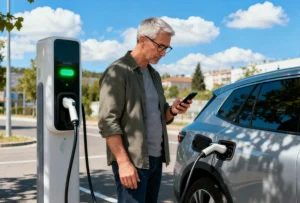


Scenario 1: When you need to travel long distances, you need to fully charge your electric vehicle’s battery.
Scenario 2: Tesla recommends fully charging and discharging lithium iron phosphate batteries at least once a week to balance the battery pack voltage and ensure accurate charge estimates.

1. When you need to fully charge your electric vehicle, should you choose a fast-charging DC charging station or a slow-charging AC charging station?
1. Fast Charging
1.1 Advantages of Fast Charging:
1.1.1 80% Charge in 30 Minutes: Fast charging (60 kW to 360 kW DC charging equipment) typically charges the battery to 80% in 30 minutes, then automatically switches to trickle charging, requiring an additional 1-2 hours to fully charge.
1.1.2 For unexpected vehicle needs (such as last-minute trips), fast charging can quickly alleviate battery anxiety.
1.2 Disadvantages of Fast Charging:
1.2.1 Risk of Battery Loss: High-current fast charging can cause uneven lithium ion deposition, which can accelerate battery capacity degradation over long-term use (e.g., capacity may drop to 60% after 40 fast charges).
1.2.2 Overheating: High-power charging can easily cause battery temperatures to rise, potentially triggering side effects (such as electrolyte decomposition and electrode corrosion).

2. Slow Charging
2.1 Advantages of Slow Charging:
2.1.1 AC charging (slow charging) takes 6-12 hours to fully charge, and the stable current can extend battery life (approximately 30% longer than fast charging).
2.1.2 Low-power charging slows battery temperature rise, significantly reducing the risk of overheating and avoiding safety hazards caused by high temperatures.
2.2 Disadvantages of Slow Charging:
2.2.1 Slow charging takes 6-12 hours to fully charge, making it unsuitable for emergency charging needs (such as long-distance travel).
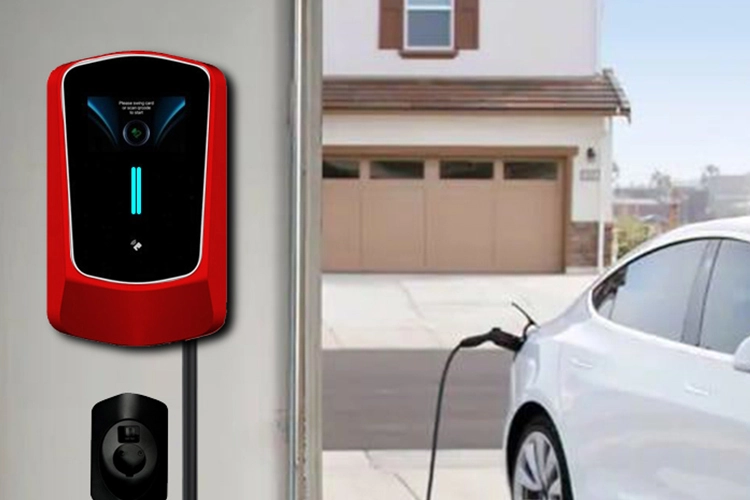
2.2.2 Requires a home charging station. Public slow charging stations are less prevalent than fast charging stations, making them less flexible. Therefore, if you’re not in a rush, you can choose a slow-charging AC device.
2. What charge level should an electric vehicle battery maintain during daily use?
2.1 Shallow Charge and Shallow Discharge
The battery life of a new energy vehicle is determined by a complete cycle: using it from 100% to 100% is considered a complete cycle. Lithium batteries have no memory effect and can be charged on-the-go. Furthermore, maintaining a charge level between 20% and 90% significantly increases battery life. Overcharging or over-discharging damages the battery, affecting its capacity and lifespan.
2.2 Charge When Charged
Charge when needed, rather than waiting until the battery is completely depleted or fully charged. Lithium batteries don’t need to be fully charged every time, nor should they be over-discharged. Charging as needed is the best option. This is suitable for daily city commuting or short trips, where the required mileage is sufficient.
2.3 Avoid Overcharging
Try to avoid charging the battery to 100%. For ternary lithium batteries, due to their unstable positive electrode, overcharging can cause lithium ion crystallization, shortening their lifespan and even posing safety risks. Lithium iron phosphate batteries are relatively stable, but regular full charging helps calibrate their charge level. It’s recommended to maintain a charge level between 20% and 80% for ternary lithium batteries; lithium iron phosphate batteries should be fully charged and discharged at least once a week.
3. How to Extend the Lifespan of Electric Vehicle Batteries?
In addition to the charging strategies mentioned above to extend the lifespan of electric vehicle batteries, the following points should also be considered:
3.1 Temperature Management
3.1.1 High Temperature Protection: In summer, avoid charging immediately after exposure to sunlight. Charge in a cool, shady area or in an underground garage. After exposure to sunlight, ventilate and cool down before charging.
3.1.2 Low Temperature Management: In winter, preheat the battery remotely 10 minutes in advance (such as with the Tesla app). Before charging, wait one minute for the battery to warm up.
3.1.3 Extreme Weather: Avoid fast charging when the temperature is below -10°C or above 40°C. In extremely low temperatures, enable the “Battery Warmth” function.
3.2 Optimizing Driving Habits
3.2.1 Smooth Driving: Avoid frequent sudden acceleration (“floor charging”) and keep the power below 50kW to reduce high-load battery loss.
3.2.2 Kinetic Energy Regeneration: Use medium/high recuperation modes in urban areas. Strong recuperation replaces braking when descending hills, reducing mechanical wear and energy waste.
3.2.3 Load Control: When running high-power devices such as the air conditioner and audio system, the recommended vehicle speed is ≤ 80 km/h.
3.3 Long-Term Parking and Maintenance
Battery Retention: When parked for more than 30 days, maintain the battery level at 40%-60% (50%-70% for lithium iron phosphate batteries). Start and recharge once a month.
Regular Inspection: Inspect the battery’s internal resistance and capacity balance annually or after 20,000 kilometers. Repair any abnormalities promptly.
Environment Selection: For long-term parking, prefer an indoor garage to avoid outdoor exposure or extreme cold.
4. How to Extend Battery Life After a Full Charge?
The key principle is to avoid prolonged high voltage, high temperature, and extreme discharge, and utilize the vehicle’s intelligent features for management assistance.
4.1 Control Usage Habits
4.1.1 Reduce High-Power Operations: Avoid using air conditioning, high-power audio equipment, or other devices while charging. High temperatures can accelerate battery wear.
4.1.2 Steady Driving: Rapid acceleration and braking significantly increase battery load. Driving at a steady speed (60-80 km/h) can extend battery life.
4.1.3 Regenerative Energy Recovery: Enable medium/high regenerative energy recovery mode to recharge the battery using energy gained while descending hills or decelerating.
Summary
The battery is the core component of your electric vehicle. When you need it urgently, you can fully charge it at a dc fast-charging station. For non-urgent situations, ac slow-charging equipment is recommended. During normal use, maintain a battery charge between 20% and 80%. Prolonged full charging (100%) or deep discharge (<20%) will accelerate battery degradation. When parked for more than 30 days, maintain the battery level at 40%-60% (ternary lithium) or 50%-70% (lithium iron phosphate). Start and charge the vehicle once a month.
Lithium iron phosphate batteries require a full charge once or twice a month to calibrate the BMS. Ternary lithium batteries can be deep-charged to 100% once a week.