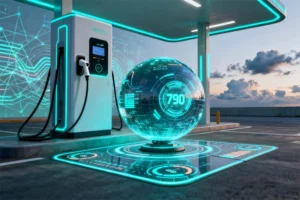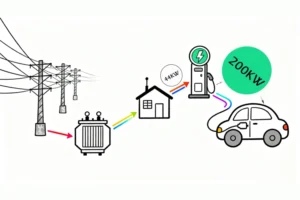


The world is currently experiencing an unprecedented pace of technological development, with Artificial Intelligence (AI) standing out as one of the most significant innovations. AI has already begun transforming countless industries, and the electric vehicle (EV) sector is no exception. As the demand for electric vehicles continues to surge, the critical infrastructure required to support these vehicles—particularly EV charging stations—is rapidly evolving. In this context, AI promises to bring a transformative and necessary impact on charging station operations, user experiences, efficiency, sustainability, and crucially, security.
This article will delve into how AI is set to shape the future of EV charging stations, analyze the opportunities and challenges it presents, and detail how Anengjienergy is proactively responding to these changes to maintain a leading position at the forefront of the industry.
1. The Core Role of AI in Revolutionizing EV Charging Infrastructure
The integration of AI into EV charging stations will have a far-reaching influence on how these facilities operate, bringing substantial advancements in several key areas:
1.1 Optimizing Charging Efficiency and Energy Management
AI can help optimize the entire charging process by dynamically adjusting charging speeds and power delivery based on a complex array of factors, including grid power availability, real-time demand at the charging stations, and even weather conditions. This level of granular optimization ensures that the charging station utilizes energy as efficiently as possible, leading to reduced operational costs and minimizing undue strain on the local power grid.
Dynamic Load Balancing (DLB): AI continuously analyzes energy demand in real-time and employs predictive modeling to forecast usage patterns. It then intelligently adjusts the individual charging rates across all connected vehicles. This process is crucial for balancing the electrical load during both peak and off-peak hours, thereby mitigating grid congestion and ensuring higher charging speeds are available during periods of low general demand.
Intelligent Energy Forecasting and Integration: Sophisticated AI algorithms predict future energy requirements based on vast historical data and observed user behavior trends. By seamlessly integrating with smart grid systems, EV charging stations can be optimized to function in sync with intermittent renewable energy sources, such as solar and wind power, paving the way for truly sustainable charging solutions.
1.2 Enhancing the User Experience
AI has the potential to fundamentally transform the user experience by making EV charging stations more intuitive, highly personalized, and readily accessible to all drivers.
Personalized Charging Schedules: AI systems can track and learn individual user preferences and automatically adjust suggested charging times. They can notify users promptly when their EVs are fully charged or when the most optimal, cost-effective charging times become available based on dynamic pricing.
Smart Charging Applications: AI-powered mobile applications can provide accurate, real-time availability updates for nearby EV charging stations, suggest the quickest routes to those locations, and allow users the convenience of reserving charging spots in advance. This significantly improves the overall charging journey.
Voice-Activated Assistance: The integration of popular voice assistants like Siri or Google Assistant enables hands-free operation. Users can easily interact with the charging station interface using natural language commands, eliminating the need to rely heavily on physical interfaces.
1.3 Predictive Maintenance and Diagnostics
AI can dramatically improve the operational uptime and maintenance efficiency of EV charging stations. While traditional maintenance relies on routine, fixed-interval schedules, AI can predict potential equipment failures before they occur, leading to significant reductions in downtime and substantial cost savings for station operators.
Predictive Maintenance: By rigorously analyzing operational data from charging station components, AI can predict when specific hardware is likely to fail. It can then automatically schedule targeted, preventative maintenance, thereby avoiding unplanned service interruptions and extending the operational lifespan of the charging equipment.
Real-Time Diagnostics and Remote Troubleshooting: AI continuously monitors the health and performance of all charging units, immediately identifying potential faults and enabling remote troubleshooting capabilities. This capability reduces the frequency and necessity of expensive on-site technician visits, saving both time and operational expenditures.
1.4 Smart Payment Systems and Dynamic Pricing
AI can seamlessly integrate with payment systems to allow for frictionless transactions and sophisticated dynamic pricing models that flex based on current demand, specific user habits, and fluctuating market conditions.
Dynamic Pricing Strategies: AI algorithms are equipped to implement intelligent pricing strategies based on factors such as the time of day, current load demand, station location, and user frequency. For instance, lower, off-peak pricing can successfully encourage users to charge during non-peak hours, which helps to alleviate strain on the electrical grid and simultaneously reduces costs for consumers utilizing the EV charging stations.
Automated Payment Integration: Charging stations equipped with AI can facilitate effortless, contactless payments. This allows users to pay automatically through connected mobile applications or subscription services, streamlining the payment process and greatly enhancing the user experience.
1.5 Bolstering Cybersecurity for Charging Infrastructure
As EV charging stations become highly digitized and interconnected, they also become potential targets for cyberattacks. AI is essential for establishing a robust security posture, protecting both the grid infrastructure and sensitive user data.
Anomaly Detection and Intrusion Prevention: AI algorithms continuously monitor network traffic and operational data flows within the charging station. They are trained to identify subtle patterns that deviate from normal behavior—such as unusual data requests or unauthorized communication attempts—indicating a potential cyber threat or system intrusion. This proactive detection is far faster and more accurate than traditional rule-based security systems.
Secure Communication Protocols: AI can manage and verify the complex encryption keys and authentication processes required for secure vehicle-to-grid (V2G) and vehicle-to-charger (V2C) communication. This ensures that the data exchanged regarding battery status, payment information, and charging schedules remains private and tamper-proof.
Self-Healing Capabilities: In the event of a minor cyber incident, sophisticated AI systems can be programmed to isolate the affected component, apply necessary patches or reconfigurations, and automatically restore normal operations without human intervention, ensuring high resilience for the EV charging stations.
1.6 Integrating with Autonomous Vehicles (AVs)
As autonomous vehicles become more prevalent, AI will play a central and indispensable role in enabling autonomous charging infrastructure. These self-driving vehicles will gain the capability to navigate to the EV charging stations, position themselves, plug in, and recharge without any human intervention—representing a significant technological leap in EV infrastructure.
Automated Charging Stations: In the near future, AI-powered autonomous charging stations could enable vehicle-to-charger communication to automatically detect the specific EV type, negotiate power delivery, and initiate the charging process. This level of automation will drastically improve the speed and convenience of recharging for the next generation of electric cars.
2. How Anengjienergy is Adapting to AI Innovations
At Anengjienergy, we fully recognize the transformative potential of AI within the EV charging sector. As a leading manufacturer of high-powered DC fast charging solutions, we are deeply committed to integrating advanced AI technologies into our charging infrastructure to deliver smarter, more efficient, secure, and truly future-ready solutions. Here is how we are adapting our approach:
2.1 Implementing AI for Dynamic Charging Management
Anengjienergy is incorporating AI-powered load balancing and energy optimization systems directly into our DC fast chargers. By integrating these sophisticated technologies into our EV charging stations, we aim to significantly reduce peak electrical load, improve overall charging speed for users, and ensure that valuable energy resources are utilized in the most efficient and sustainable manner possible.
AI-based Smart Charging System: This proprietary system dynamically allocates and adjusts power based on real-time demand across the entire site, optimizing the charging rate for every connected vehicle while simultaneously maintaining overall grid stability and minimizing operating energy costs.
2.2 Leveraging AI for Predictive Maintenance and Security Monitoring
To ensure our chargers are always operational and secure, we are integrating advanced AI-powered predictive maintenance and real-time security monitoring capabilities. By continuously monitoring the operational health of our charging units and analyzing performance data for subtle anomalies, we can proactively address both maintenance needs and potential security breaches well before they could cause any service disruption at the EV charging stations.
Remote Diagnostics & Security: With integrated AI, Anengjienergy chargers will provide comprehensive, real-time diagnostics and continuous security threat detection. This capability significantly improves the resilience and overall uptime of our vast network of chargers.
2.3 AI-Powered User Interface and Payment Solutions
Anengjienergy is actively developing and refining AI-powered mobile applications and payment systems designed to enhance user convenience and streamline the entire charging process. These intuitive apps will empower users to quickly locate available EV charging stations, reserve their spots, and complete payments seamlessly through their mobile devices.
Smart Scheduling & Payment: Our AI-powered applications will allow users to schedule their charging times for maximum personal convenience and efficiency. Furthermore, they will offer transparent dynamic pricing based on current demand, allowing users to strategically take advantage of the best available rates.
2.4 Expanding into Autonomous Charging Infrastructure
As autonomous vehicles rapidly become a reality, Anengjienergy is strategically planning to integrate AI-enabled autonomous charging station capabilities. This will allow self-driving cars to seamlessly connect themselves to the charger without any human interaction or physical assistance required.
Future-proofing for Autonomous Vehicles: Anengjienergy is already developing the foundational technologies that will enable our chargers to intelligently interact with autonomous vehicles, guaranteeing a smooth and uninterrupted charging experience for the next generation of electric mobility.
3. Conclusion
AI is undeniably set to revolutionize the EV charging industry, making EV charging stations demonstrably smarter, dramatically more efficient, and far easier to use and more secure for everyone. By implementing cutting-edge technologies like AI-powered load balancing, proactive predictive maintenance, robust security monitoring, and intelligent payment systems, Anengjienergy is strategically positioning itself at the very forefront of this critical transformation. We fully comprehend the vital importance of AI innovation in creating future-ready charging infrastructure that can effectively meet the massive demands of a growing global EV market.
As AI technology continues its rapid evolution, Anengjienergy remains committed to adopting and seamlessly integrating the latest advancements into our DC fast charging stations. This commitment ensures that all of our valued customers—whether they are business owners, fleet operators, or individual EV drivers—will benefit from the most advanced, efficient, secure, and ultimately sustainable charging solutions available anywhere.