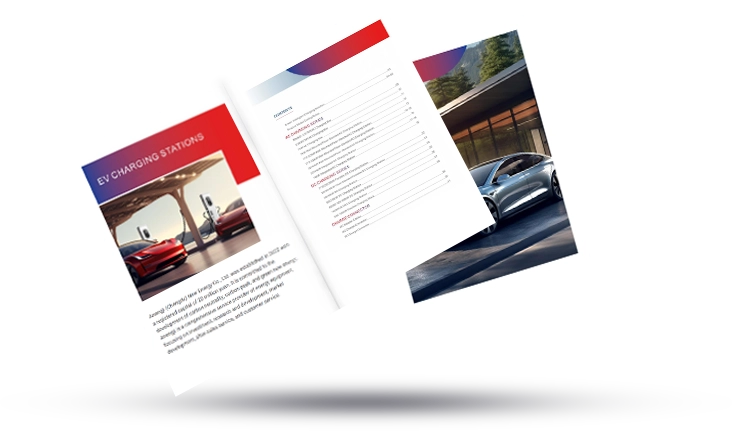
Our alternating current (AC) charging stations offer flexible, reliable charging solutions for electric vehicles, covering 7kW to 44kW(Level 2 EV charger). Designed for homes, commercial spaces, and public charging networks, these AC chargers ensure safety, energy efficiency, and intelligent load management for a seamless EV charging experience.

随着电动汽车 (EV) 的普及,便携式交流电动汽车充电器正成为越来越多车主的热门选择,他们希望随时随地都能获得可靠、灵活、便捷的充电体验。无论是在家、在工作场所还是在旅途中,便携式交流充电器都能提供无与伦比的灵活性。
便携式交流电动汽车充电器是一种小巧的即插即用充电设备,可将您的电动汽车连接到标准电源插座或专用插座。它将交流电 (AC) 输送至车辆的车载充电器,车载充电器再将其转换为直流电 (DC) 为电池充电。
这些充电器的额定电压通常为:
1 级:120V,标准墙壁插座(主要在北美);
2 级:220–240V,适用于家庭或工作场所的快速充电。
适用于大多数使用 1 型(SAE J1772)或 2 型(IEC 62196)连接器的电动汽车。可
根据车辆要求自动调节充电功率。
有些型号允许用户根据插座容量选择电流等级(例如 8A、10A、13A、16A),以便更安全地充电。
LCD屏幕实时显示状态:电压、电流、时间、温度等。
可选配应用程序或蓝牙/Wi-Fi控制,用于监控和日程安排。
轻便易携,
配有耐用的便携包,方便旅行或应急使用。
过压/欠压保护、
过流保护、
接地故障保护、
过温保护、
IP65-IP67防水防尘等级(取决于型号)
家用充电(车库或车道)、
公寓或住宅楼居民(无固定充电桩)
、工作场所(使用标准插座)充电、
紧急路边充电、
长途旅行和电动汽车公路旅行
充电速度取决于:
插座电压(110V 与 220V)、
充电器和插座支持的电流、
车辆车载充电器的容量。2
级便携式充电器每小时可增加 10-30 英里的续航里程,而 1 级充电器通常每小时增加 3-5 英里的续航里程。
无需安装费用,
易于存放和运输,
是壁挂式充电站的经济实惠的替代方案,
非常适合租房者、经常旅行的人或作为备用充电器。
对于重视灵活性、便捷性和安全性的电动汽车车主来说,便携式交流电动汽车充电器是必备配件。无论是在家充电还是外出充电,它都能确保您的电动汽车始终电量充足,随时准备出发。
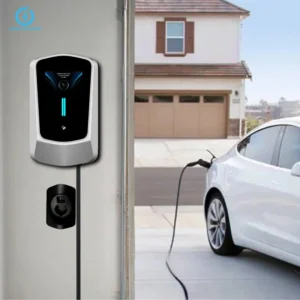
对于希望在家中、停车场或工作场所实现更快、更智能、更持久充电的电动汽车车主来说,壁挂式电动汽车充电器是理想之选。与便携式充电器相比,它提供更快的充电速度和更先进的控制功能,同时凭借其简洁的固定安装方式节省空间。
壁挂式电动汽车充电器(也称为壁挂式充电器)是一种永久安装在墙上的交流充电装置——通常安装在室内或室外——连接到 220V–240V 电源(2 级)。它使用 1 型(SAE J1772)或 2 型(IEC 62196)连接器直接与车辆连接,提供高效安全的充电。
二级充电(最高功率 7kW–22kW)
每小时可增加 25–100 公里(15–60 英里)的续航里程,
非常适合夜间或工作日充电。
Wi-Fi/蓝牙应用程序控制;日程
安排和定时器功能;
动态负载均衡(可选,集成太阳能);
兼容OCPP后端监控(商业用途)
IP65-IP67防护等级,适用于户外环境;
抗紫外线、阻燃外壳;
可在宽温度范围内工作(例如,-30°C至55°C)。
过压/欠压保护、
过流和短路保护、
接地故障检测、
过温关机和自动重启
壁挂式设计节省地面空间;
内置电线收纳架,方便整齐存放;
适用于住宅、公寓、办公楼、酒店和车队仓库。
住宅充电设施,例如车库、车棚和车道;
工作场所员工充电站;
商用电动汽车充电设施,例如车队或公寓楼;
酒店或零售停车场,提供顾客电动汽车充电服务
220V–240V 电源(硬线连接或工业插头)
建议由专业人员安装,以确保安全和符合规范
可与太阳能或能源管理系统集成
Faster charging than portable options
Smart energy management for lower electricity costs
Safe and weatherproof for permanent installation
Increased home resale value as EV adoption grows
A wall-mounted EV charger is a future-proof investment for convenient, efficient, and intelligent EV charging at home or in any commercial setting. Whether you’re a homeowner or fleet operator, this charger keeps your electric vehicle powered up and road-ready—day or night.
As electric vehicle adoption expands, businesses, property developers, and municipalities are turning to Commercial AC EV Chargers to meet growing demand. These chargers offer smart, scalable, and cost-effective solutions for locations such as workplaces, apartment complexes, shopping centers, and public parking lots.
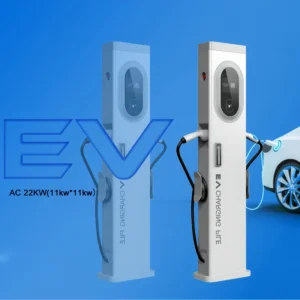
A commercial AC EV charger is a Level 2 charging station designed for shared, multi-user environments. It delivers alternating current (AC) power—usually at 7kW to 22kW—suitable for most electric cars and plug-in hybrids. Unlike basic home chargers, commercial chargers come with features for user management, payment integration, and remote operation.
Output ranges from 7kW to 22kW, depending on grid connection
Compatible with Type 2 (IEC 62196) or Type 1 (J1772) connectors
Charges most EVs in 3–8 hours, ideal for long-stay locations
OCPP 1.6 / 2.0.1 compliant for backend system integration
Real-time monitoring, firmware updates, load balancing
Supports centralized control platforms or third-party apps
Built-in RFID card readers, QR code support, or mobile app access
Optional credit card terminals or integration with external billing systems
Public or private access settings for user group control
IP65+ enclosure for outdoor installations
IK10-rated vandal-resistant casing
Wide operating temperature (-30°C to +55°C)
Overvoltage / Undervoltage
Overcurrent / Short-circuit
Ground fault detection
Overtemperature shutdown with auto-recovery
🅿️ Shopping malls and retail parking lots
🏢 Office buildings and business parks
🏨 Hotels and hospitality venues
🏘️ Multi-unit residential complexes (MURBs)
🚚 Fleet depots for delivery or logistics operations
🏙️ Public and municipal charging infrastructure
Revenue generation through pay-per-use or subscription
Improved brand image through green energy adoption
Attract and retain EV-driving customers or tenants
Government incentives and carbon compliance
Remote diagnostics reduce maintenance costs
Commercial AC chargers can be upgraded with:
Solar integration for clean energy charging
Dynamic load balancing across multiple chargers
Energy metering for analytics and carbon tracking
Plug & Charge (ISO 15118) for secure automatic user authentication (future-ready)
The connector, often referred to as the charging gun or plug, is the interface between the EV and the charging station. For AC EV chargers, three main types of connectors dominate the global market depending on the region and vehicle type.
| Connector Type | Region | Max Power | Phases | Standard | Common Vehicles |
|---|---|---|---|---|---|
| Type 1 (J1772) | USA, Japan | 7.4 kW | Single-phase | SAE J1772 | Nissan Leaf, Chevy Bolt |
| Type 2 | Europe, China | 22 kW | 1P / 3P | IEC 62196-2 | BMW i3, VW ID, Tesla (EU) |
| GB/T (AC) | China | 7–14 kW | 1P / 3P | GB/T 20234.2 | BYD, XPeng, NIO, Li Auto |
Connector Shape: 5-pin round plug
Voltage/Current: 120V–240V, single-phase
Max Power: Up to 7kW
Regions Used: USA, Canada, Japan
Compatible Vehicles: Nissan Leaf (North America), Chevy Bolt, Toyota Prius Prime
✅ Pros: Simple design, widely used in North America
⚠️ Limitation: Single-phase only, slower charging speeds
Connector Shape: 7-pin round plug (supports both single-phase and three-phase)
Voltage/Current: 220V single-phase / 380V three-phase
Max Power: Up to 7kW (1P) or 22 kW (3P)
Regions Used: Europe, China (in some private networks), Southeast Asia, Australia
Compatible Vehicles: BMW i3, Tesla (EU), VW ID series, XPeng, BYD, NIO
✅ Pros: Fast charging with three-phase support, highly compatible
⚠️ Note: Type 2 and GB/T connectors may look similar but are not interchangeable
Connector Shape: 7-pin layout, distinct design with black/white casing
Voltage/Current: 220V single-phase / 380V three-phase
Max Power: Typically 7 kW to 14 kW
Region Used: Mainland China (mandatory for public use)
Compatible Vehicles: All Chinese EVs – BYD, NIO, XPeng, Li Auto, etc.
✅ Pros: Standardized for Chinese EVs and grid specs
⚠️ Note: Physically similar to Type 2, but not compatible (different protocols and pin configurations)
For export markets, Type 1 (US) and Type 2 (EU) are the most common standards
For mainland China, GB/T is mandatory for all public charging infrastructure
Some AC chargers support dual connectors (Type 2 + GB/T) for wider compatibility
Always check the on-board charger (OBC) of the EV to ensure charging compatibility
AC EV chargers, also known as Level 1 or Level 2 chargers, deliver alternating current (AC) to the EV’s on-board charger (OBC), which then converts it to DC to charge the battery. The charging speed depends on several factors:
Power output of the AC charger (in kW)
Maximum AC input supported by the EV’s OBC (e.g., 3.5kW, 7kW, 11kW, 22kW,44kw)
Voltage and current of the power supply (single-phase vs. three-phase)
Battery capacity and state of charg
| Charger Type | Voltage | Power (kW) | Typical Charging Speed | Time to Full Charge |
|---|
| Level 1 (Mode 2) | 110–120V | 1.4 – 2 kW | ~5–8 km/hour (3–5 mi/hour) | 8–20 hours (small battery) |
| Level 2 (Mode 3) | 220–240V (1P) | 3.3 – 7.4 kW | ~15–40 km/hour (10–25 mi/hour) | 4–8 hours (typical EV) |
| Level 2 (3P) | 380–415V (3P) | 11 – 22 kW | ~50–120 km/hour (30–75 mi/hour) | 2–4 hours (mid-to-large battery) |
To guarantee the safety, durability, and reliability of AC electric vehicle charging equipment, manufacturers integrate a range of protection mechanisms. These systems are designed to prevent electrical faults, environmental damage, and user hazards. Below are the main protection categories to look for in modern AC EV chargers.
The IP rating (Ingress Protection) defines the device’s resistance to dust and water.
IP54-Dust protected; protected from splashing water – suitable for indoor or covered use.
IP65-Fully dust-tight; protected from water jets – suitable for outdoor residential and commercial use.
IP66/IP67-Dust-tight and waterproof under immersion – ideal for harsh environments or public infrastructure.
Most wall-mounted or portable AC EV chargers use IP65 housings for outdoor safety.
AC EV chargers are equipped with multiple built-in electronic protections, such as:
Overvoltage Protection (OVP)
Prevents damage from excessive grid voltage.
Undervoltage Protection (UVP)
Avoids equipment malfunction during low-voltage conditions.
Overcurrent Protection (OCP)
Automatically limits current to prevent overheating or fire risk.
Short Circuit Protection (SCP)
Immediately disconnects in the event of a short circuit.
Residual Current Device (RCD) / Leakage Protection
Detects electric leakage and cuts power to prevent electric shock (often Type A or Type B RCD).
Ground Fault Protection
Ensures safe earthing and user safety.
Overtemperature Protection
Monitors internal temperature; auto shutdown on overheating to protect components.
Modern AC charging connectors (guns) also include:
Connector lock detection – ensures charging starts only when the plug is safely inserted
Temperature sensors in the connector head – to prevent overheating
Flame-retardant materials – ensure safe operation even under high loads
Top-quality AC EV chargers comply with international or regional safety standards:CE (Europe)/UL (USA)/GB/T (China)
IEC 61851-1 / 62196 – Global safety standards for EV charging
OCPP compliance – for backend monitoring and safety control
Without proper protection mechanisms, AC chargers may face:
Shortened lifespan
Risk of electric shock or fire
Incompatibility with local electrical codes
Increased maintenance costs
Choosing an EV charger with certified protection features ensures long-term safety, reduced liability, and better performance in all weather and usage conditions.